
SurFunction and Zeiss Form Strategic Partnership
SurFunction GmbH and Zeiss have entered into a comprehensive strategic partnership. Together, they are driving the industrial scaling of functional metasurfaces—a new technological category with the potential to fundamentally redefine industrial surface technology.
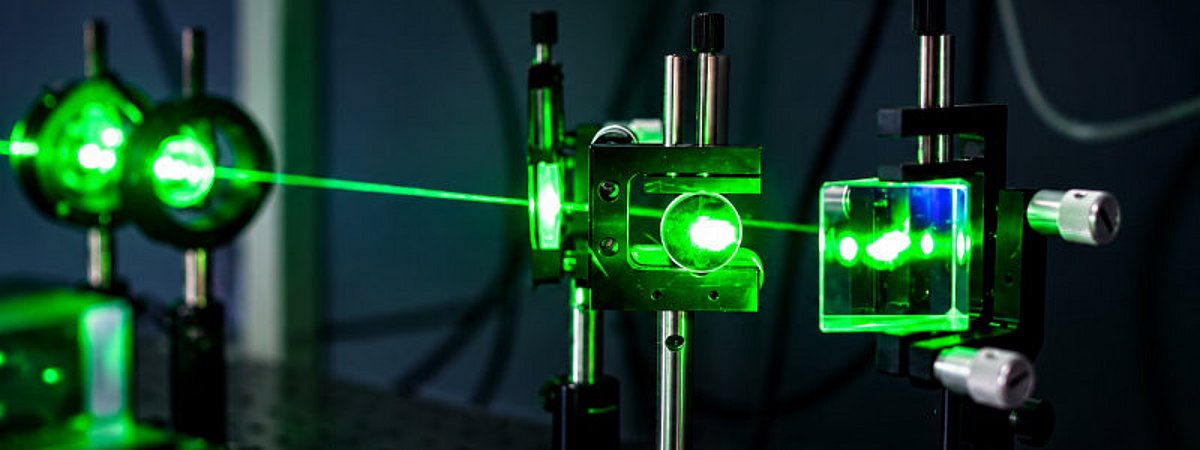
SurFunction GmbH and Carl Zeiss AG have entered into a strategic partnership to establish functional metasurfaces for industrial applications. The collaboration is based on the Elipsys platform developed by SurFunction, which utilizes the Direct Laser Interference Patterning (DLIP) process. In this process, multiple coherent laser beams are superimposed so that an interference pattern creates periodic micro- and nanostructures directly in the material’s surface. Unlike conventional methods, the desired surface properties are not created by coatings or chemical treatments, but rather by precisely defined structures in the base material. The technology operates without masks, is material-independent, and, thanks to simultaneous area patterning, is suitable for high throughput and reproducible industrial manufacturing. Elipsys complements the actual laser patterning with process control, quality assurance, and integration modules to create a scalable production platform.
SurFunction and Zeiss Continue to Develop the Technology
The partners intend to jointly further develop the technology and establish it in industrial applications. SurFunction contributes the Elipsys platform and technological expertise, while Zeiss contributes its expertise in the areas of system integration, metrology, quality assurance, and market access. The companies see potential applications in precision optics, photonics, medical technology, industrial automation, consumer optics, automotive sensor technology, and the semiconductor sector, among others. In addition, functional metasurfaces can reduce friction and wear, create wetting and antifouling properties without PFAS-containing chemicals, optimize electrical contacts, or improve heat transfer. Since the functionality arises solely from the surface geometry, the structures are considered durable and resource-efficient. Against the backdrop of stricter environmental regulations such as PFAS regulations and REACH, the companies view this as an alternative to traditional coating and chemical processes. The collaboration aims to accelerate the transition from technological development to widespread industrial use and to establish functional metasurfaces as a new standard in surface engineering.
Contact details and information on the companies and institutions presented here can be found in our interactive surface technology industry directory.