
Plasmatreat: Surface Treatment Processes for Chip Manufacturing
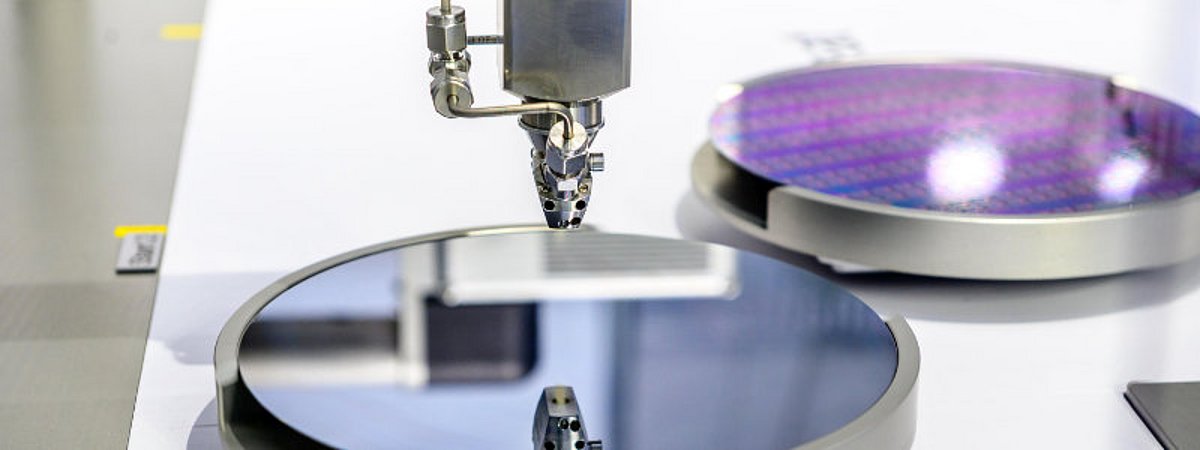
At Semicon Europe 2026, Plasmatreat will showcase various plasma processes for semiconductor manufacturing. The focus will be on achieving specific surface conditions for stable bonding, interconnect, and packaging processes.
When the semiconductor industry gathers at Semicon Europe in Munich from November 10 to 13, 2026, Plasmatreat will showcase coordinated surface treatment solutions for modern chip and packaging processes at Booth 567 in Hall C1. Depending on the application, organic residues must be removed, oxide layers reduced, wetting and adhesion improved, or specific surface properties achieved. To achieve this, the company combines Openair Plasma for atmospheric-pressure processes, Aurora Plasma for low-pressure processes, and PlasmaPlus for functional surface coatings. Specialized processes such as GlowPlasma, the Redox Tool, and HydroPlasma round out the portfolio. The goal is to achieve controlled surface conditions that support stable process windows, reproducible manufacturing results, and high yields in die attach, wire bonding, hybrid bonding, TCB, as well as underfill, molding, and encapsulation processes.
Low-Pressure and Atmospheric-Pressure Plasma for Chip Manufacturing
For the first time, Plasmatreat is presenting a system from the Aurora-Plasma product family at Semicon Europe. The GHz remote plasma technology generates the plasma outside the process chamber, thereby enabling treatment without direct ion exposure at low substrate temperatures. The uniform plasma distribution is designed to reach even three-dimensional structures and complex topographies. On display at the booth is the automated Aurora 450 with robot-assisted loading and unloading of wafers and lead frames. Another demonstration system combines contactless wafer movement using Beckhoff’s XPlanar with plasma treatment at atmospheric pressure. The PDW100 and PFA10 plasma nozzles, developed for semiconductor applications, are used in this process. In addition, Plasmatreat will demonstrate dry and selective oxide reduction on copper surfaces. The redox process reduces oxide layers immediately prior to bonding and contacting processes. For mass production, the Plasma Control Unit monitors relevant process parameters and enables recipe management, real-time monitoring, and documentable process data. The systems can be integrated into automated production lines via interfaces such as SECS/GEM, SMEMA, Profinet, or EtherCAT.
Contact details and information on the companies and institutions presented here can be found in our interactive surface technology industry directory.