
Plasmatreat at the PCIM: Plasma for high-quality power modules
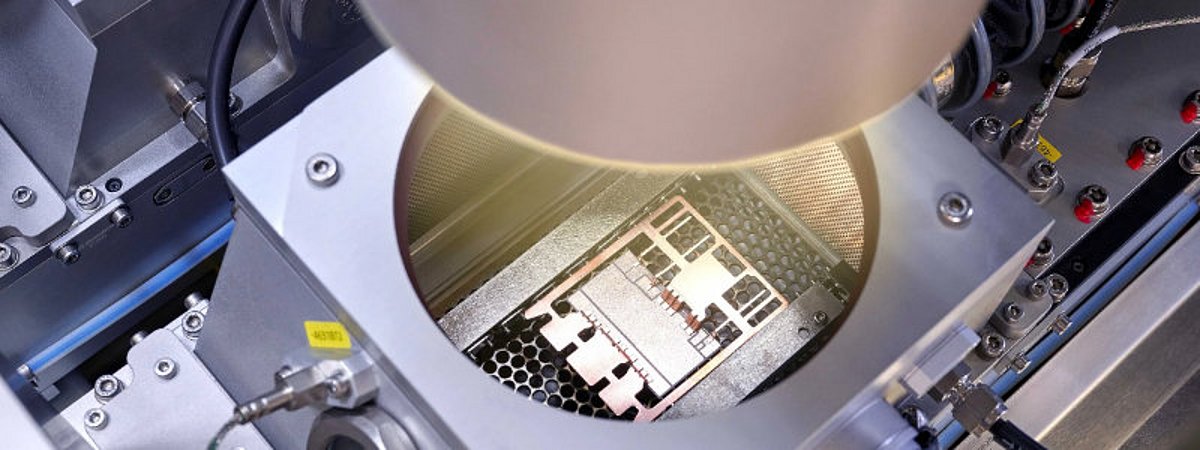
At PCIM 2026, Plasmatreat will be presenting an expanded portfolio for surface pretreatment in this area in Hall 7, Stand 169. The focus will be on solutions for atmospheric and, for the first time, low-pressure plasma treatment of power modules.
The demands placed on power modules are constantly increasing. Higher power densities, more compact designs and the increasing use of SiC and GaN semiconductors are increasing the thermal and electrical loads within the assemblies. Critical stresses arise particularly at material transitions between metal, ceramic and potting material, which can lead to delamination, voids or electrical failures in the long term. In order to improve long-term reliability, surface pre-treatment is increasingly becoming the focus of production. At PCIM 2026, Plasmatreat will therefore be showcasing various plasma systems for cleaning, activation and oxide reduction along the power module production process. In addition to open-air plasma for inline processes, the company will also be presenting solutions for low-pressure plasma treatment for the first time. With the new Aurora plasma series, Plasmatreat is expanding its portfolio to include systems for applications with high demands on homogeneity and flexible process control. Thanks to a multi-frequency approach, the plasma effect can be specifically adapted to the material, geometry and process window. This enables uniform activation even with complex 3D structures and sensitive material composites.
Plasmatreat as an enabler for the next generation of power electronics
Open-air plasma remains a key component for series production. The process works under atmospheric pressure and can be integrated directly into existing production lines. Surfaces are cleaned dry and selectively, organic residues are removed and oxide layers are reduced immediately before critical process steps such as die bonding, wire bonding, underfill or encapsulation. This creates reproducible conditions for wetting and adhesion at a high process speed. Another focus is the targeted oxide reduction of metallic surfaces. With the REDOX tool, Plasmatreat presents an inline-capable solution for the treatment of copper and aluminum surfaces without flux or wet chemical processes. This is intended to improve adhesion and reduce delamination, particularly in potting and overmolding applications. By combining atmospheric pressure and low-pressure plasma, the company addresses the different requirements of modern electronics production - from high cycle rates to the homogeneous treatment of complex geometries.
Contact details and information on the companies and institutions presented here can be found in our interactive surface technology industry directory.