
Dürr: New generation of the RoDip electrical rotational dip process
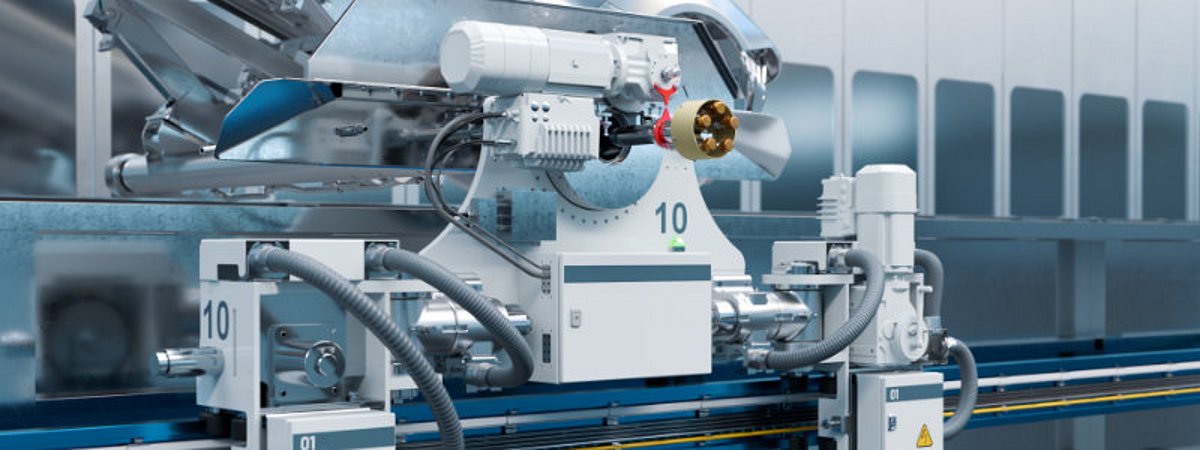
Dürr has further developed its RoDip electric rotational dip process: It is now curve-capable, flexible to use and technically simplified. RoDip Ezy replaces RoDip E, but remains true to the proven rotational dip coating process for pre-treatment (VBH) and cathodic dip painting (KTL).
The name of the latest generation of Dürr's RoDip electric rotational dip process is "Ezy" - derived from "easy" and the cycloidal rotary drive. Central components - from the carriage and rail system to the energy transmission and control system - have been newly developed. The result is a compact system that is easy to maintain and install and allows additional scope for system planning. The rotary drive uses a compact cycloidal gearbox that has long proven itself on an industrial scale in Dürr's robots. According to the manufacturer, RoDip Ezy ensures a standardized carriage concept for different weight classes - from cars to vans.
Curved travel replaces turntable with RoDip from Dürr
Another key innovation is the curved track guidance. While RoDip E used turntables to change direction, the trolleys on RoDip Ezy can turn right and left. Technically complex turntables are no longer necessary. This reduces the complexity of the system and the process line can be designed more variably. In addition to the classic two-loop system with separate carriages for VBH and KTL, a common loop ("one loop") is also possible, in which the same carriages are driven through both VBH and KTL. This configuration requires less external conveyor technology, rails and trolleys. "RoDip Ezy is just as suitable for new systems as it is for modernizations in existing plants," says Klaus Heinsohn, Product Manager at Dürr. "As RoDip Ezy travels through curves of 180 degrees and more, we can adapt the routing to challenging space conditions or to different distances between process steps as required." The new rail system consists of standardized aluminium profiles, which Dürr also uses elsewhere, for example in final assembly. Due to their lower weight, the elements are easier to insert and quicker to install. Extensive adjustment work as with the previous steel elements is no longer necessary. More than 100 million vehicles worldwide have received their corrosion protection with RoDip. The system is regarded as the benchmark for rotational dip coating processes. The space- and resource-saving method rotates car bodies on their own axis and requires shorter tanks for dipping, flooding and dripping.
Contact details and information on the companies and institutions presented here can be found in our interactive surface technology industry directory.