
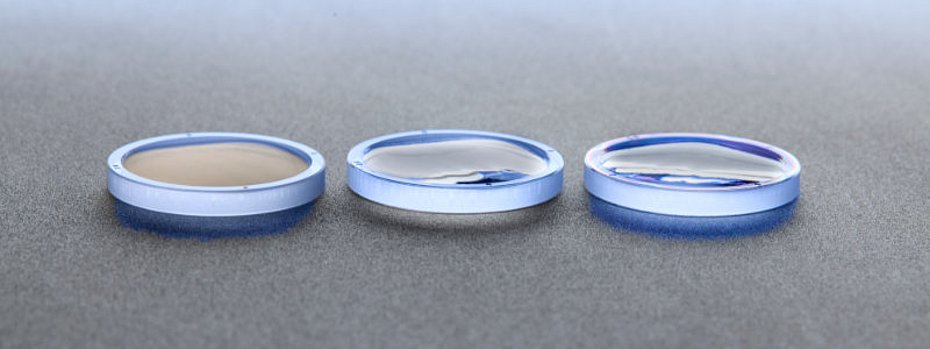
From optical design, shaping, laser polishing, and laser shape correction to alignment and packaging, Fraunhofer ILT offers a fully integrated, laser-based manufacturing process that is unique in the world. The institute thus serves, among others, manufacturers and users in fields such as medical technology, laser optics, and microelectronics. For over two hundred years, the name Fraunhofer has stood for advances in optics. In the early 19th century, physicist and optician Joseph von Fraunhofer developed new methods for the production and characterization of precision glass optics, thereby laying important foundations for modern optical manufacturing.
Today, researchers at Fraunhofer ILT are continuing this tradition while simultaneously driving a disruptive technological transformation: Laser-based processes are intended to replace conventional manufacturing steps that still require regular manual intervention, enabling fully digital, highly automatable process chains. The result: even complex geometries such as aspherics, free-form optics, or microstructured surfaces can be efficiently manufactured and corrected—whether microlens arrays in the submillimeter range or complex aspherics on a centimeter scale.
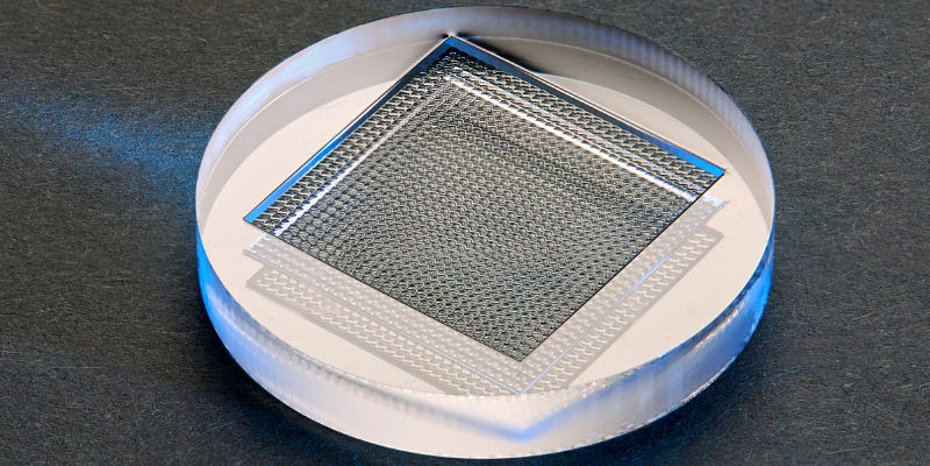
Manufacture complex optical components using lasers without additional effort
At Fraunhofer ILT, the individual laser-based processing steps flow seamlessly into one another. Starting with laser-based shaping, glass blanks can be precisely preformed. In subsequent steps, laser polishing and, if necessary, laser shape correction ensure that surfaces are smoothed and shape deviations in the nanometer range are compensated for. The manufacturing technology is complemented by production-oriented optical design and by processes for active adjustment and packaging of optical components. This creates a continuous, digitally controllable process chain that allows both individual optical components and complete optical assemblies to be efficiently manufactured and integrated.
“The laser is indifferent to the complexity of the optical geometry,” explains Dr. Edgar Willenborg, Group Leader for Polishing at Fraunhofer ILT, highlighting the decisive advantage. “Aspherics, free-form surfaces, or special geometries can be produced with the same tool without significant additional effort. Only the metrology becomes more complex.” Willenborg refers to this principle as “Complexity for Free.” In conventional manufacturing, however, an aspheric surface can easily cost five times as much as a comparable spherical surface—a difference that is eliminated with laser-based processes. Martin Kratz, Group Leader of In-Volume Structuring & Lithography at Fraunhofer ILT, explains another technical benefit: “By having the laser work through the glass, the front surface, back surface, and edge cylinder of an optical element can be manufactured in a single setup with the highest precision of the optical axes relative to one another. The spectrum ranges from microlens arrays with individual lenses starting at 500 micrometers up to macro-optics currently with diameters of up to 80 millimeters.” In the future, the research groups also plan to scale their manufacturing processes to larger diameters.
Laser-based optical manufacturing is making its way into industry
Fraunhofer ILT believes the time has come to bring these technologies into industrial practice. “After many years of fundamental process development, we are on the cusp of industrial implementation,” says Edgar Willenborg. “The growing collaboration with machine manufacturers shows that the industry is ready to take this step.” Fraunhofer ILT is therefore specifically targeting companies that wish to integrate laser-based optical manufacturing into their own production processes.
Laser-based optical manufacturing opens up new possibilities for applications that require complex geometries and flexible manufacturing. These include, for example, optical systems for medical technology, as well as laser optics for industrial applications and optical components for microelectronics. The demand for high-precision specialty optics is also growing in future-oriented fields such as quantum technology, EUV lithography, and fusion research. “Many modern optical systems today require custom geometries that are very difficult to produce using conventional methods,” explains Martin Kratz. “Laser-based processes make it possible to manufacture such optics flexibly and cost-effectively—especially when complex geometries are required.”
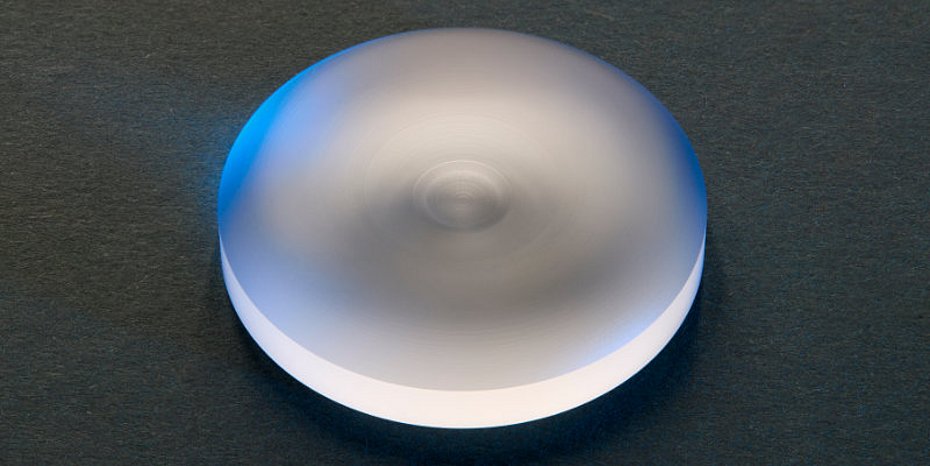
Technology transfer from research to production
“Fraunhofer ILT’s range of services covers the entire spectrum, from the initial concept to support for industrial implementation. The process often begins with a feasibility study in which we work with the customer to determine whether and how laser-based processes can be adapted to their specific optical designs and requirements,” adds Dr. Christian Vedder, Head of the “Surface Technology and Ablation” Department. Building on this, Fraunhofer ILT manufactures prototypes and small series as demonstrators and for process validation. In the next step, the institute supports its clients and project partners in the industrial introduction of the new manufacturing processes into their own production. Where no suitable machines are available on the market, Fraunhofer ILT develops and builds them itself upon request.
About 12 scientists are currently working on laser-based optics manufacturing at Fraunhofer ILT. Two research areas are currently the focus: First, the integration of sensor systems into the manufacturing processes to further increase the dimensional accuracy of the manufactured optics. Second, the optimization of the process chain with the goal of raising the laser-induced damage threshold of optical surfaces, a critical quality parameter, particularly for high-power laser optics. (OM-6/26)
Contact
Fraunhofer Institute for Laser Technology ILT
Steinbachstraße 15
52074 Aachen (Germany)
Phone: +49 241 8906-194
Email: info@ilt.fraunhofer.de
www.ilt.fraunhofer.de
About Fraunhofer ILT
The Fraunhofer Institute for Laser Technology ILT is one of the world’s leading contract research and development institutes in its field. Under one roof, the Fraunhofer Institute for Laser Technology ILT offers research and development, system design and quality assurance, consulting, and training. To carry out research and development projects, the institute has access to numerous industrial laser systems from various manufacturers as well as an extensive infrastructure.