

Whether pans, cutlery or packaging - per- and polyfluorinated chemicals (PFAS) have been used for years in a wide variety of everyday products and processes for coating. Due to known risks of these substances for humans and the environment, an at least partial ban on the production and use of PFAS is expected in the near future. The use of comparable alternatives is therefore essential for numerous companies. Fraunhofer IFAM specializes in fluorine-free coatings and has developed a PFAS-free non-stick coating using Plaslon technology, which meets the required property profile and can be used immediately.
Eternity chemical PFAS
PFASsare a group of several thousand individual chemicals. They do not originally occur in nature, are extremely stable and therefore constantly accumulate in the environment. The fluorine compounds, also known as "eternity chemicals", can occur in the blood serum of humans and lead to health effects [1]. For this reason, the European Chemicals Agency (ECHA) is considering a ban on the production, use and marketing of PFAS. A decision by the European Commission on this is expected in 2025, according to the German Federal Environment Agency.
Companies that use PFAS will face greater challenges as a result of a ban. Alternative solutions will have to be found to maintain processes and production. Plasma technology offers ideal conditions for this. The plasma coatings developed at Fraunhofer IFAM are not only fluorine-free (Zero-F), but also free of additives. They can be applied to almost all materials. Due to their property profile, some of the coatings are particularly suitable as PFAS-free non-stick coatings, sliding coatings, and hydrophobic finishes.
Plaslon, the PFAS-free non-stick coating
The researchers at Fraunhofer IFAM have developed a PFAS-free alternative in the form of the Plaslon coating, which is characterized by excellent non-stick properties combined with high mechanical resistance. The coating, which is produced by means of plasma technology, is designed as a gradient layer in order to enable excellent adhesion to the product body on the one hand and to express optimum non-stick properties on the other. The coating is also characterized by good easy-to-clean properties and is resistant to cutting and abrasion. It is non-porous and food-safe. It also exhibits oleophilic behavior with regard to edible oils and fats.
A unique selling point of the Plaslon coating is that - unlike other non-stick coatings - it is also suitable for enamel, glass, stoneware and porcelain due to its good adhesion and outstanding hardness. Products made of these materials in particular are highly scratch-resistant, but have poor non-stick properties.
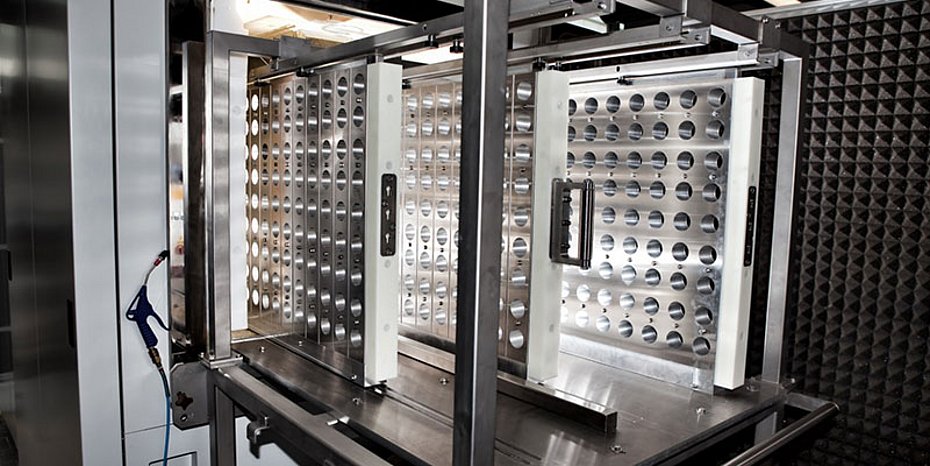
The institute's scientists also have the necessary know-how of appropriate manufacturing processes to be able to finish products economically in large quantities. Depending on the customer's needs, different concepts such as XXL plants or, in particular, throughput plants are available for this purpose. Combined with low energy consumption during production, unrestricted heat transfer during use and a long coating life, Plaslon is particularly sustainable and therefore trend-setting. (OM-10/23)
Contact
Fraunhofer Institute for Manufacturing Technology and Applied Materials Research IFAM
Wiener Straße 12
28359 Bremen (Germany)
Phone +49 421 2246-0
Email: info@ifam.fraunhofer.de
www.ifam.fraunhofer.de
About Fraunhofer IFAM
Founded in 1968 and integrated into the Fraunhofer-Gesellschaft in 1974, Fraunhofer IFAM is one of Europe's most important independent research institutes in the fields of adhesive bonding technology, surfaces, shaping, and functional materials. The focus is on research and development work at the five institute locations in Bremen, Dresden, Stade, Wolfsburg, and Braunschweig, as well as on the North Sea island of Helgoland, with the aim of providing reliable and application-oriented solutions.