
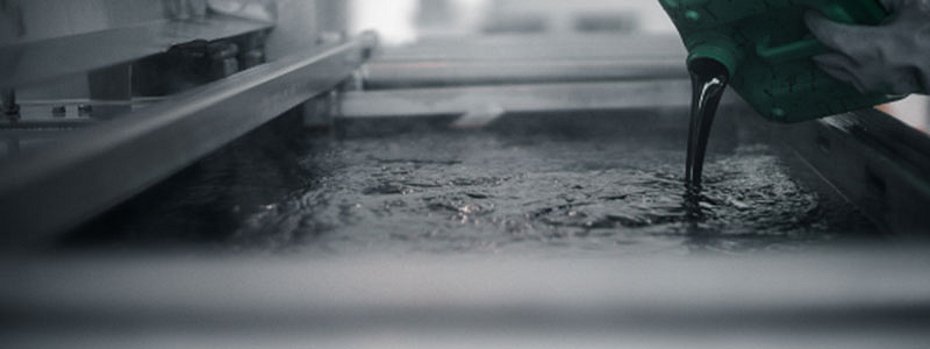
In an era in which buzzwords such as "climate crisis" and "environmental protection" haunt the media on a daily basis, the question arises: Have we really understood what sustainability means? For Chemische Werke Kluthe GmbH, sustainability is a fundamental change in the way we look at the world and act in it. Kluthe has been consciously addressing the growing challenges in industry and chemistry for years and makes an active contribution in the area of sustainability. In this context, surface treatment, in particular paint stripping, plays a decisive role.
Aspects of sustainable paint stripping
The manufacturing industry, as one of the biggest drivers of climate change, has a significant responsibility in finding solutions. This task, although associated with many challenges, also offers the industry the opportunity to rethink its practices and make a positive contribution. In addition to reducingCO2 emissions, it is essential to integrate sustainable processes into all phases of production: From product development to the selection of environmentally friendly raw materials and sustainable suppliers, distribution as well as innovative concepts for the recycling of used products.
The development of sustainable methods for paint stripping is a decisive step towards environmental and climate protection. Kluthe focuses on three key aspects in the field of sustainable paint stripping: health & safety,CO2 reduction and resource conservation through closed loops.
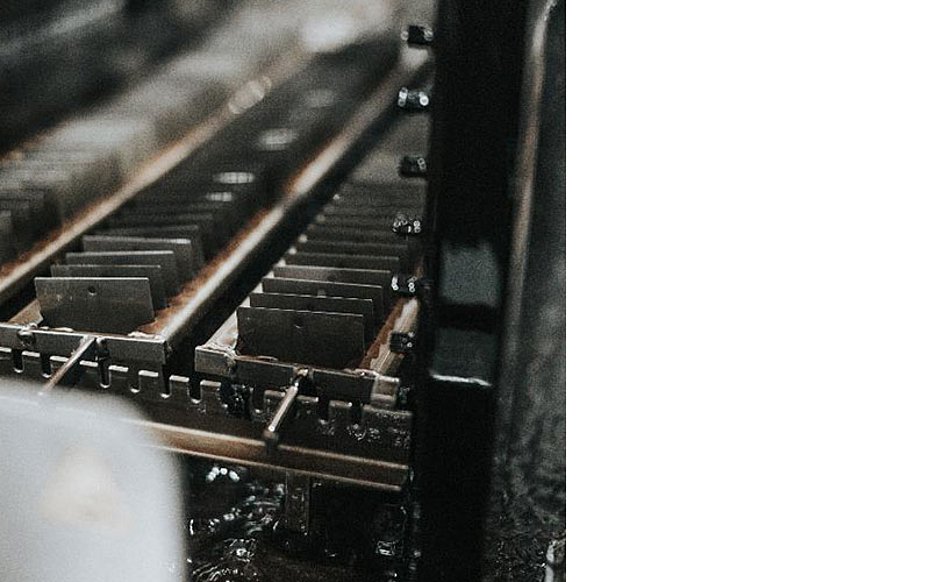
Health and safety
The use of hazardous and toxic substances in paint stripping poses risks to the health and safety of workers and the environment. It is therefore crucial to draw attention to these risks and look for alternatives. For this reason, sustainability aspects are already taken into account during product development.
Where the use of harmful substances is unavoidable, a) their use should be minimized as far as possible and b) their release should be controlled and avoided. Technological advances enable the development of increasingly safe methods that reduce these risks.
CO2 reduction
Significant progress in sustainable paint stripping can be achieved through CO2 reduction strategies. This includes reducing energy consumption and extending bath life, as well as using low temperature paint stripping processes, minimizing the use of fossil resources and using innovative recycling technologies. Careful maintenance of the baths, including titration, pH stability, sharpening and removal of paint sludge by centrifuges, filters and sedimentation, can extend the life of the baths and thus significantly reduce resource consumption.
Closed loops
Sustainable economic activity is only possible in the long term if resource flows are closed. Limited resources can be used efficiently through innovative recycling processes. As early as the product development stage, great attention should be paid to the recyclability of products so that the materials used can be reused. This approach can be applied to paint stripping, where the specialty chemicals are not disposed of but can be reprocessed and reused.
Organic paint stripping media can be taken back by Kluthe's subsidiary Rematec at the end of the life cycle. The waste stream is not sent for thermal recycling, as is usually the case, but is distilled using a professionalized treatment process. At the end of this refining process, a distillate product with the same properties as virgin material is produced, which is then made available to the customer again as a paint stripping medium. This practice conserves valuable resources and can significantly reduceCO2 emissions- by up to 90%.
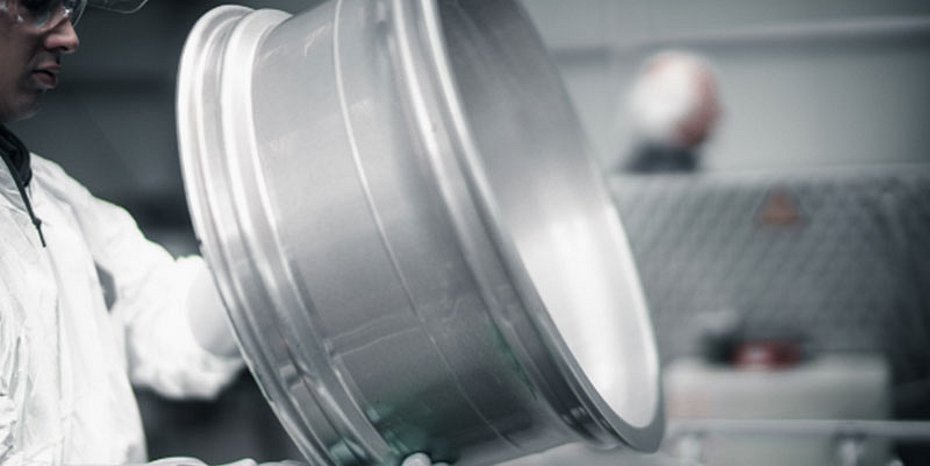
Sustainability in paint stripping and beyond
The development of sustainable paint stripping processes is essential for protecting the environment and conserving resources. Sustainable paint strippers, free of harmful chemicals, are a significant step towards environmentally friendly surface treatment. Strategies such as extending bath life, low-temperature processes and recycling are promising approaches.
As a specialist in surface treatment, Kluthe develops and produces chemical products and innovative process solutions for the areas of Metalworking & Cleaning, Surface Treatment and Paint Shop Materials. In addition to first-class quality and safety, the company has focused on environmental protection and sustainability in product development since its foundation. These principles are firmly anchored in the business model. In addition to paint stripping, Kluthe offers a range of sustainable products that significantly reduce theCO2 footprint while maintaining the same level of efficiency.
Kluthe can draw on decades of expertise in the field of solvent recycling and has been able to make a lasting impact on the paint processing industry. The circular economy approach to solvent rinsing not only saves resources, but also reducesCO2 emissions by more than 60% compared to conventional solvents. Kluthe also focuses on sustainable alternatives when selecting raw materials. This has resulted in a range of cooling lubricants based on recycled used oils, which offer impressive performance andCO2 savings of up to 75%. (OM-12/23)
Contact
Chemische Werke Kluthe GmbH
Gottlieb-Daimler-Straße 12
69115 Heidelberg (Germany)
Phone: +49 6221 5301-0
E-mail: info@kluthe.com
www.kluthe.com
About Kluthe
As a specialist in surface treatment, Chemische Werke Kluthe GmbH develops and produces chemical products and innovative process solutions for the areas of Forming & Protection, Metalworking & Cleaning, Pretreatment and Paint Shop. Kluthe has 53 locations worldwide with more than 15,000 customers.