
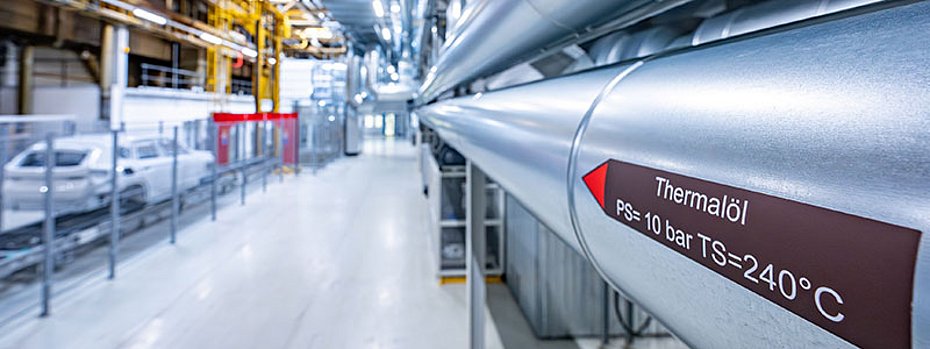
Away from fossil natural gas and towards the use of renewable energies: As part of the decarbonization of vehicle production, the BMW Group is currently electrifying its paint shops step by step. A recently completed pilot project at the Regensburg plant now shows how this changeover can be made easier and faster. The solution lies in the installation of a thermal oil system. The use of thermal oil as a heat transfer medium makes it possible to decouple heat generation from the other system components. This means that the energy supply to the painting systems can be flexibly converted at any time.
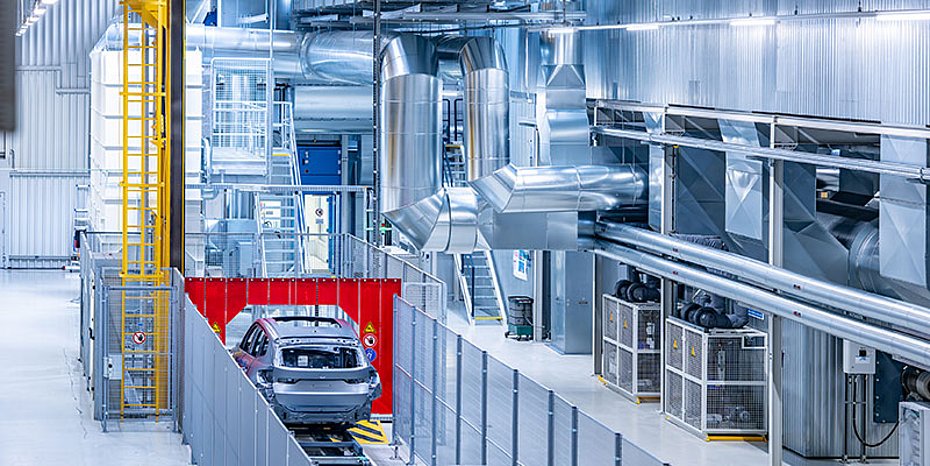
Thermal oil makes paint shop flexible with energy source
"One advantage of converting to thermal oil is that we become flexible in terms of the energy source for heat generation in our paint shops. For example, the thermal oil can be heated using electricity, geothermal energy, solar thermal energy or a hydrogen-powered heating system. The ability to quickly switch energy sources at any time increases the resilience of our paint shops. If an energy source becomes scarce or fails completely, we can react at short notice," says Samuel Flieger, Technical Planning Project Manager at the BMW paint shop in Regensburg.
This means that the paint shops can already be prepared for operation with renewable energies, even if natural gas-free heating is not yet possible. This is because the electricity grid supply is not yet designed everywhere to cope with the enormous connected load of a fully electrified paint shop with its very energy-intensive drying processes. A system with thermal oil can also be operated with gas on a transitional basis.
Test successfully completed in Regensburg BMW paint shop
Those responsible for the Regensburg pilot project took advantage of a production interruption over the turn of the year to install the thermal oil technology. Within a few days, they replaced the natural gas-heated drying system on one of the three top coat lines with an electrically heated thermal oil system including an innovative eRTO exhaust air purification system, which is also electrically operated.
The innovation: instead of directly heating the air with which the car bodies are coated in the drying room after the paint has been applied, as was previously the case, the new electric heating unit transfers the heat to the thermal oil. The heated oil circulates in a ring line and, in a second step, heats the air in the drying room via heat exchangers. The circulating oil reaches temperatures of several 100 degrees Celsius. Unlike water, the heat transfer oil remains stable even at such high temperatures.
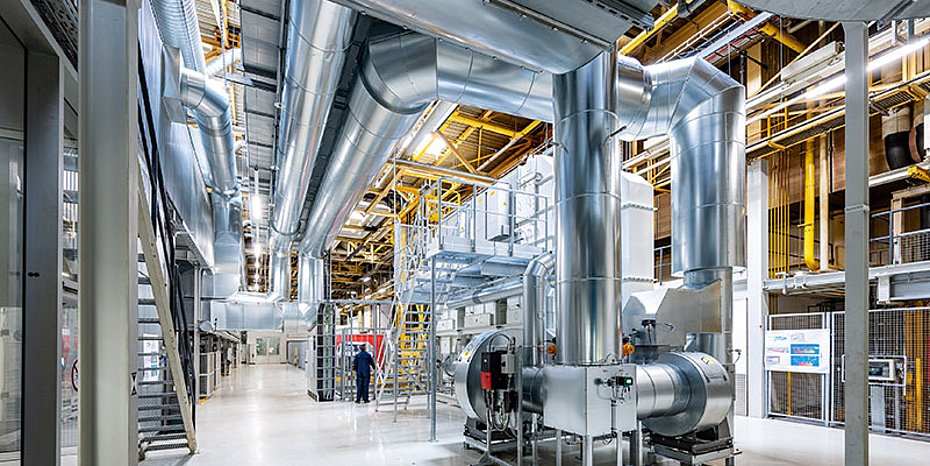
More energy efficiency through retrofitting
Wherever waste heat is generated, it is fed back as process heat. This reduces the temperature of the exhaust air, which is discharged via the hall roof. Overall, the energy consumption of the drying plant has been reduced by around 40 percent as a result of the conversion. The switch to thermal oil heating and higher energy efficiency of the system thus reduces theCO2efootprint of the paint shop at the BMW Group plant in Regensburg by around 480 tonsof CO2eper year. (OM-8/25)
Contact
BMW Group
Regensburg Plant
Herbert-Quandt-Allee
93055 Regensburg (Germany)
www.bmwgroup-werke.com/regensburg/de.html
About BMW Group
With its BMW, MINI, Rolls-Royce and BMW Motorrad brands, the BMW Group is the world's leading premium manufacturer of automobiles and motorcycles and provider of premium financial and mobility services. The BMW Group production network comprises 31 production and assembly plants in 15 countries; the company has a global sales network with representatives in over 140 countries.