
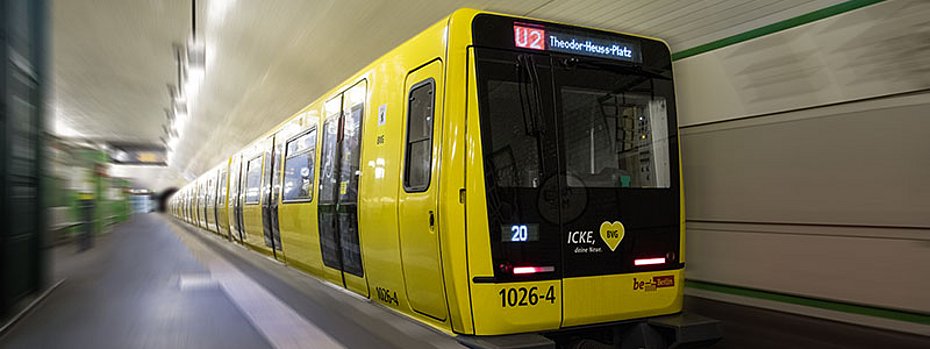
12.1 million euros: this is the amount of damage caused by graffiti to Deutsche Bahn in 2022. One sixth of this was on regional and S-Bahn trains in Berlin and Brandenburg alone. Berliner Verkehrsgesellschaft (BVG) is also well aware of the problem: Vandalism damage amounts to four to five million euros a year, around one million euros for graffiti alone. Graffiti appears on floors, walls, interior parts and above all in the toilets. Railroad companies, BVG and many other operating companies are now increasingly using video surveillance on trains to deter and identify offenders. In addition, films or coatings are applied at stations, window glass is fitted with protective films and vehicles are equipped with transparent protective coatings. The latter are intended to help make graffiti and tags - lettering with thick fiber markers - easier to remove.
The system coatings from FreiLacke make additional protective coatings against graffiti in rail vehicles superfluous. This has now been confirmed by an independent testing institute, paving the way for approval by Deutsche Bahn. In addition, the system coatings have already been successfully used in series production by the Berliner Verkehrsgesellschaft (BVG) for three years.
Graffiti protective coatings with high resistance and easy cleaning
These protective coatings have to fulfill two tasks at once: They must be resistant to regular and sometimes harsh cleaning agents and allow graffiti and other soiling to be removed easily. The quality requirements are high, as the components in trains and subway trains are subject to the high stresses typical of operation. "A service life of at least ten years is required for the durability of the surfaces, while the trains themselves should last up to 40 years," explains Dr. Hilmar Weisse, Sales Manager at FreiLacke.
Endurance test for surfaces
Subways and trains are cleaned almost daily on the inside, while the outside is usually cleaned once a week in a car wash. "The better the surface, the easier it is to remove the graffiti. If the paint has open structures, it becomes difficult," explains Bohne. In order to remove all soiling quickly and effectively, the operators use strong, sometimes aggressive cleaning agents. Graffiti must always be removed manually, which is not possible in car washes or with cleaning machines. Train attendants therefore carry special cleaning cloths to wipe it off as quickly as possible. Otherwise, a special graffiti remover is applied to the respective area, which is similar to a typical paint stripper, says Weisse: "The process often has to be repeated several times. This is very strenuous for the employees due to the high physical strain and unfortunately often also involves health risks from solvent vapors." The "artists" don't even know what a rat's tail of effort and costs they trigger with their quickly scrawled tags and graffiti, and that in the end it is people who make a huge effort for this. The treatment is also a regular endurance test for the surfaces.

Qualification of paint systems
As an operating company, Deutsche Bahn imposes specific coating requirements on manufacturers such as Stadler, Siemens and Alstom. For example, the standards DBS 918300 apply to liquid coatings and DBS 918340 to powder coatings. The specifications from sheet 38 of the DBS must be applied for powder or liquid coating in the passenger compartment. If the railroad purchases powder-coated parts, the paints must meet the standards of DBS 918340. This guideline specifies how a powder coating must be tested to ensure that it meets certain parameters with regard to the interior or exterior coating of technical or decorative components.
The DBS qualifies the manufacturers' coating systems and also makes recommendations within the railroads. For example, when long-distance transport buys new ICEs, DBS supports the specifications, draws up a coating plan and specifies the quality level according to DBS. But DBS also makes recommendations if a vehicle operator requires increased graffiti protection, for example.
Requirements of Deutsche Bahn fulfilled
The two lists of DBS-qualified paints currently (as of July 2024) contain a total of around 230 paints from various manufacturers. However, only one combination of powder and liquid paint also meets the requirements of Sheet 50, "Technical delivery conditions for coating materials for rail vehicles": the Freiotherm PZ5 powder coating system and the DC1983 liquid coating from FreiLacke. "The product also meets the requirements for barrier effect, resistance to cleaning agents, graffiti removal agents and the repeated removal of graffiti of Sheet 50 of DBS 918300," according to the product qualification of DB Systemtechnik. With PZ5 and DC1983, there is no softening and/or swelling, no cracking, no flaking, no ink residue or the formation of "shadows". Graffiti can be removed repeatedly without leaving any residue or discoloration. In addition, powder and liquid paints can be recoated with themselves without adhesion problems during repair or paint refreshing.
No need for additional permanent protection
"A separate protective coating is no longer necessary, as our coating systems also provide the protective effect. They also meet the high requirements of the railroad according to Sheet 50, as an independent institute has now confirmed," reports paint specialist Weisse.
When developing PZ 5 and DC1983 as powder and liquid coating systems, the best possible technology was used, a particularly high-quality polyurethane, in order to provide maximum protection for customers. The PZ5 powder coatings have already been in use at BVG in Berlin for three years on handrails, ceiling panels, seat and lamp covers and on the inside of the doors; the door pillars of the subway trains are made of GRP and are coated with the color-coordinated liquid coating. The paints are already being applied by rail vehicle manufacturer Stadler in Berlin and its suppliers: "The PZ5 is highly cross-linked and therefore very tightly meshed, which makes it extremely resistant to chemicals and durable even with aggressive cleaning agents," says Kevin Sloniecki, Quality Manager Specialist Engineer for Surface Technology at Stadler and responsible for surface technology.
Costs, time and effort reduced
The certified Frosio coating inspector also develops specifications for the paintwork and is responsible for body painting. "The PZ5 also meets Stadler's internal standards and offers a high level of corrosion protection against washing systems and cleaning residues." What does his team like about FreiLacke? "The flat structures and the fact that you don't get stuck with the salesperson, but can speak directly to the technicians," says Sloniecki.
"The PZ5 DC1983 system coating is now also used by other rail vehicle manufacturers," explains Weisse. He is certain that there are no other coating systems on the market that offer this level of performance. And thus offer such effective protection against graffiti and tags and help rail operators to save costs, time and effort in the long term. (OM-9/24)
The lacquers in detail
Solvent-based 2K polyurethane topcoat with isocyanate hardener for rail vehicles and components with very good light and weather resistance on primers and fillers.
In addition to DBS 918 300, sheet 38, the product also meets the requirements for barrier effect, resistance to cleaning agents, graffiti removal agents and the repeated removal of graffiti of sheet 50 of DBS 918 300.
PUR-based powder coating for decorative interior use with very good temperature resistance and chemical resistance on primers and fillers for rail vehicles and components.
In addition to DBS 918 340, the product also meets the requirements for barrier effect, resistance to cleaning agents, graffiti removal agents and the repeated removal of graffiti of sheet 50 of DBS 918 300.
Contact
Emil Frei GmbH & Co. KG
Am Bahnhof 6
78199 Bräunlingen-Döggingen (Germany)
Phone: +49 7707 151-0
Email: info@freilacke.de
www.freilacke.de
About FreiLacke
FreiLacke has stood for innovative paints and coatings since 1926. The family-run company is now in its third generation and, with 600 employees at its site in Döggingen/Black Forest, develops customized solutions for customers in the fields of wheels, vehicle construction, mechanical and apparatus engineering, contract coating, rail vehicles, wind power, functional furniture, storage technology, construction and sanitary facilities.