
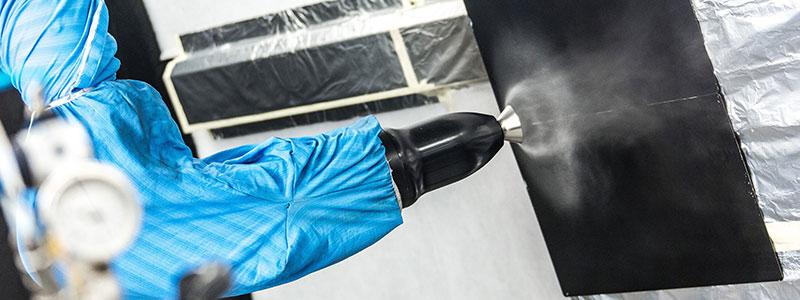
Reducing the ecological footprint towardsCO2 neutrality is a key objective for many industries and value chains. This also applies to pretreatment and painting processes in the automotive industry. With the GLASS tool, BASF's Coatings division offers an analysis approach that creates transparency and supports customers in making informed decisions for sustainable surface solutions.
The abbreviation GLASS stands for Global Life Cycle Assessment of Automotive Surface Solutions. This refers to the respective calculation and reporting of environmental impacts, such asCO2 emissions, as well as the costs incurred. The assessment is based on the cradle-to-grave approach. For BASF's surface coatings, this means the value chain from raw material extraction and pre-treatment through to the clear coat, the final step in the coating process. From this transparency, customers can derive optimizations in terms of cost, performance and environmental footprint. The GLASS tool has been tested by an independent third party and fulfills the relevant components according to DIN EN ISO 14040 and 14044.
Transparency for both Product Carbon Footprint and Paintshop
"A paint, with its various layers, causes around 30 kg ofCO2 per car produced. However, the actual painting process has a much greater impact with at least 150 kg ofCO2 per vehicle, which corresponds to around a third of the entire vehicle manufacturing process," explains Sabrina Platzek, Vice President Global Marketing Automotive OEM Coatings. "In addition to the product carbonfootprint, it is therefore important to also make the footprint of the paint store, as well as energy consumption and costs, transparent. Effective measures can only be derived with a comprehensive database and simulation. This is exactly what we can do for our customers with GLASS, providing the industry with extraordinary insights."
GLASS is based on a customized life cycle analysis model. This not only takes into account individual aspects of the application process of a coating, such as a specific oven or a specific coating system, but also allows BASF Coatings and the customer to analyze the environmental influences of all key components in the application process - in a modular approach across all layers. Furthermore, region- and site-specific conditions such as local climatic conditions, energy use and the customer's respective application processes or production structures are taken into account. The modular structure of the model means that specific aspects or the entire painting line can be considered and analyzed.
"Once transparency has been established, we can provide our customers with targeted advice and develop solutions together. These can beCO2-reduced technologies at the beginning of the value chain or solutions that have aCO2-reducing effect when used," says Tim Banik, Lifecycle Assessment Expert at BASF Coatings and developer of GLASS. "We want to lead the way when it comes to sustainability in our industry. It is therefore at the heart of everything we do. The positive feedback from the market encourages us here. We are therefore all the more pleased that we will not only be offering GLASS for series coating in the long term, but are also currently developing GLASS tools for other areas of application," adds Dr. Markus Piepenbrink, Director Sustainability, BASF Coatings.
Compatibility with BASF method for calculating the CO2 footprint
In addition, the information of all products determined according to BASF'scarbon footprint calculation method is available and usable in BASF Coatings' GLASS tool. TÜV Rheinland has certified that BASF's cradle-to-gate product carbon footprint calculation method and reporting is fully compliant with the requirements of the Greenhouse Gas Protocol, relevant ISO standards and Together for Sustainability (TfS), the chemical industry's pioneering alliance. (OM-2/24)
Contact
BASF Coatings
Glasuritstraße 1
48165 Münster (Germany)
Tel. +49 2501 14-0
www.basf-coatings.com