
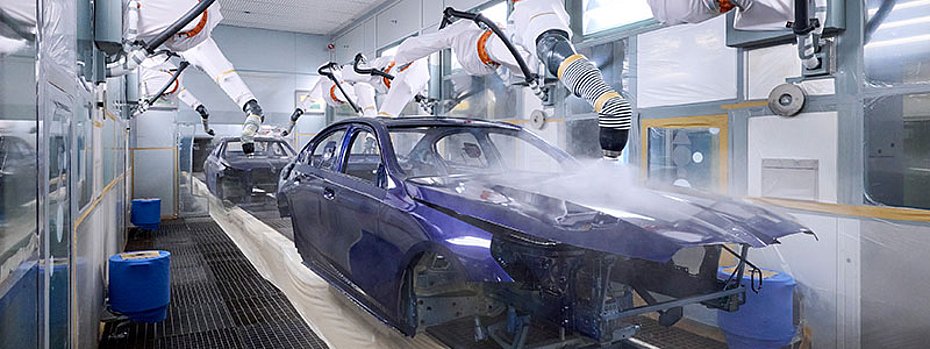
The paint shops at the BMW Group plants in Dingolfing and Regensburg in eastern Bavaria will be completely converted to dry separation with limestone powder in the near future. All four paint lines in Dingolfing have already been converted. At the Regensburg plant, the first of two lines will start at the beginning of 2024, followed by the second in August 2025. The process saves 17 million liters of water and around 17,400 megawatt hours of energy per year. This reduces CO2 emissions by more than 5,000 tons.
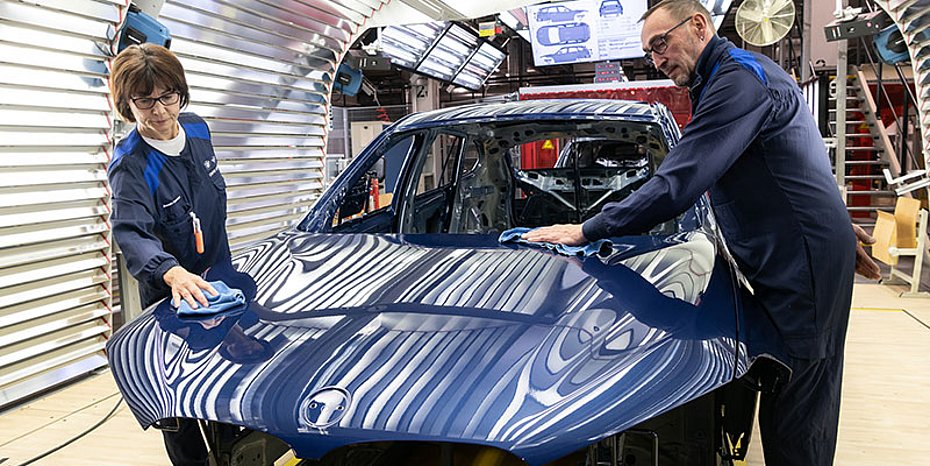
New coating process for dry deposition with limestone powder
The BMW Group plants in Dingolfing and Regensburg in eastern Bavaria are leading the way in reducing their environmental impact: the paint shop in Dingolfing is the first in the company's global production network to switch completely to the new paint process of dry separation with limestone powder. Within two years, all four painting lines were successfully converted during the production process. The conversion is currently underway at the Regensburg plant: one of a total of two basic coating lines will be converted and go into operation by mid-January 2024. The conversion of the second line to dry separation is planned for August 2025 - depending on production.
With this measure, the BMW Group sites in Dingolfing and Regensburg are investing in resource and climate protection. The dry separation process saves a total of 17 million liters of the valuable resource water per year in both plants. This corresponds to the annual consumption of almost 100 families of four. In addition, the recirculating air operation made possible by dry separation reduces the heating energy requirement by 17,400 megawatt hours per year and thus the annual CO2 emissions by more than 5,000 tons. In addition, the stone powder used as a binding agent is recycled after use and reused in the building materials industry.
This has a significant impact on the CO2 footprint of both plants, as painting is the most energy-intensive production process in vehicle construction. "By converting the painting process, we are moving another step closer to the BMW Group's goal of reducing CO2 emissions by 40 percent over the entire life cycle of a vehicle by 2030," says Anton Kronseder, Head of the Dingolfing paint shop.
Even though the paint shop at the Dingolfing plant in Lower Bavaria was the first to be converted, the new technology celebrated its Group-wide premiere in the Upper Palatinate. The Regensburg plant converted the clear coat application of the two paint lines back in 2010. "This was not only the first use of dry separation with stone powder at the BMW Group, but the first time it was ever used in the automotive industry," says Dr. Jürgen Stiegler, Head of the Regensburg paint shop.
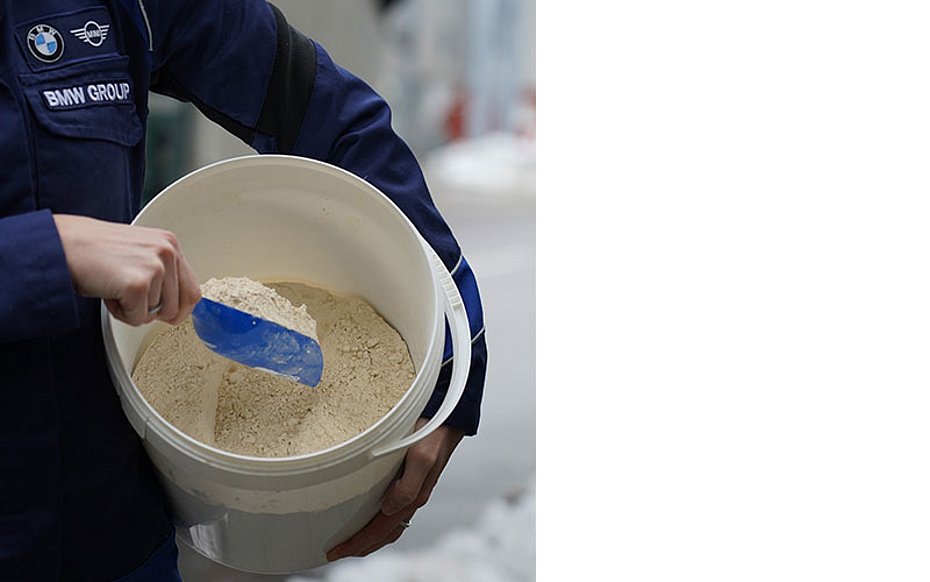
Process enables recycling of paint overspray
All converted paint lines at the BMW Group locations in eastern Bavaria use a system for the dry separation of paint particles that works with limestone powder as a binding agent. The paint mist that does not land on the car body in the booth, the so-called paint overspray, is collected with limestone powder instead of water, as was previously the case. This significantly reduces water consumption. Four million liters of water are saved per year in Dingolfing and 13 million liters in Regensburg.
Dry separation takes place 80 percent of the time in recirculating air mode - unlike the previous process with wet scrubbing. This means that only 20 percent of the air needs to be tempered and humidified instead of 100 percent. This saves a large amount of energy. In concrete terms, the heating energy requirement in Dingolfing is reduced by 13,000 megawatt hours per year and thus the annual CO2 emissions by more than 4,000 tons. The Regensburg plant consumes 4,400 megawatt hours less energy per year in the form of natural gas, thus avoiding around 1,150 tons of CO2. The third advantage of the new coating system is that the limestone powder does not have to be treated and disposed of like contaminated waste water, but is returned to the recycling loop.
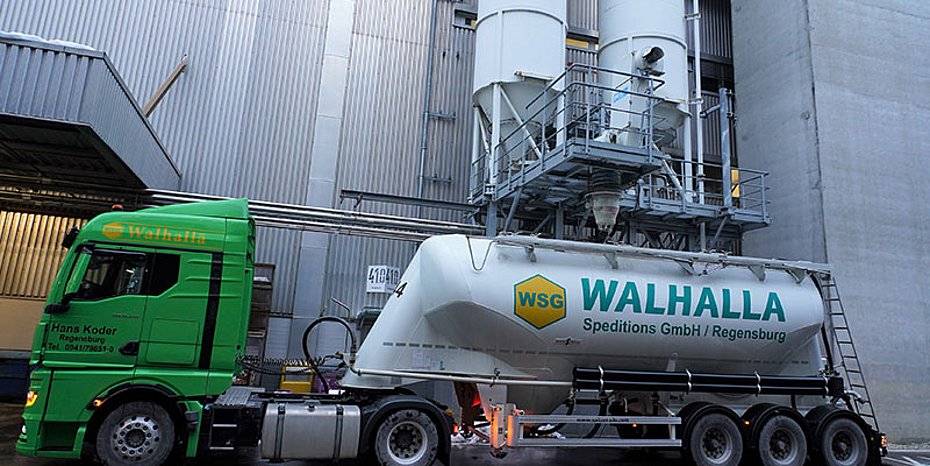
From binder to building material - with limestone powder from the foot of Walhalla
The limestone powder comes from the region. It is Walhalla lime, which is quarried at the foot of the Keilberg near Regensburg. An average of three trucks a week currently deliver the fresh mineral material to Dingolfing and one or two trucks to Regensburg. It is then filled into huge silos. From there, it is transported safely and dust-free via pipelines to the paint booths.
The paint shops use around 20 kilograms of stone powder per vehicle as a binding agent and then feed the stone powder-paint mixture into the recycling loop via regional disposal companies. Among other things, it serves as a raw material for cement. In this way, the paint shops also produce building materials when they give color and shine to around 2,850 bodyshells every day. (OM-1/24)
Contact us
BMW Group
Dingolfing Plant
Karl-Dompert-Str. 7
84130 Dingolfing (Germany)
www.bmwgroup-werke.com/dingolfing/de.html
BMW Group
Regensburg Plant
Herbert-Quandt-Allee
93055 Regensburg (Germany)
www.bmwgroup-werke.com/regensburg/de.html
About BMW Group
With its BMW, MINI, Rolls-Royce and BMW Motorrad brands, the BMW Group is the world's leading premium manufacturer of automobiles and motorcycles and provider of premium financial and mobility services. The BMW Group production network comprises 31 production and assembly plants in 15 countries; the company has a global sales network with representatives in over 140 countries.