
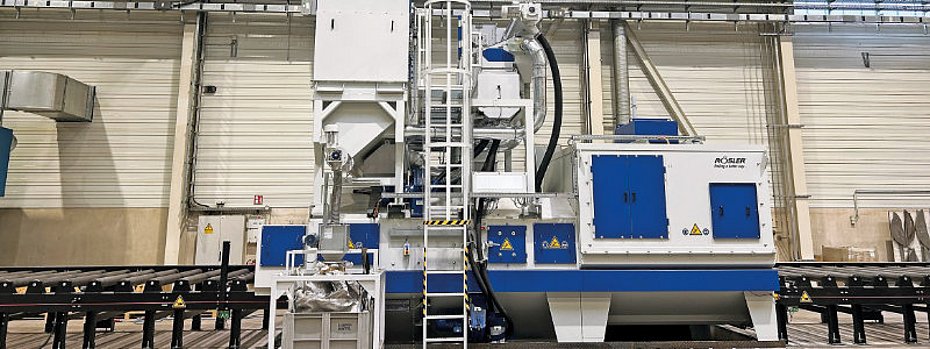
The goal was maximum efficiency across the board. To achieve this, a German manufacturer of propulsion and maneuvering systems, as well as complete control systems for ships and offshore applications, invested in, among other things, the RRB 22/5 roller conveyor blasting machine from Rösler. The system, which is optimally integrated into the production process, enables the semi-automated processing of various flame-cut parts and steel sheets. It thus largely replaces the manual blasting that was previously performed.
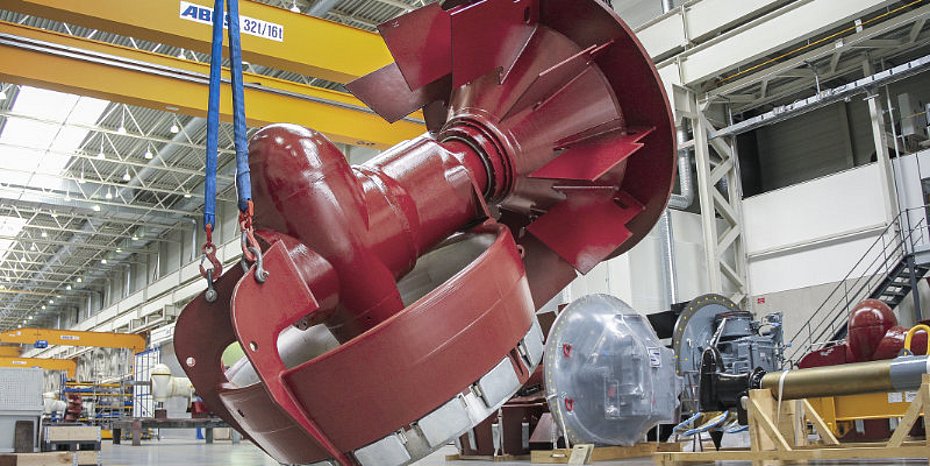
The impressive success story of Schottel GmbH is based on the groundbreaking invention of the fully controllable rudder propeller in 1950. This innovation quickly established the company, founded in 1921, as a globally sought-after developer and manufacturer of marine propulsion systems. With nine product series covering a power range from 50 to 30,000 kW, the company now offers the largest portfolio of propulsion and control systems for ships and offshore applications of all types and sizes. In addition, the company provides comprehensive marine services: intelligent solutions for remote access, data collection, data analysis, condition monitoring, and predictive maintenance. Production takes place at the German sites in Dörth and Wismar. The combination of many years of propulsion experience with high-performance hardware and software, as well as the latest scientific findings, ensures that all products are state-of-the-art and meet high quality standards.
Increased Efficiency Through Changes to the Blasting Process
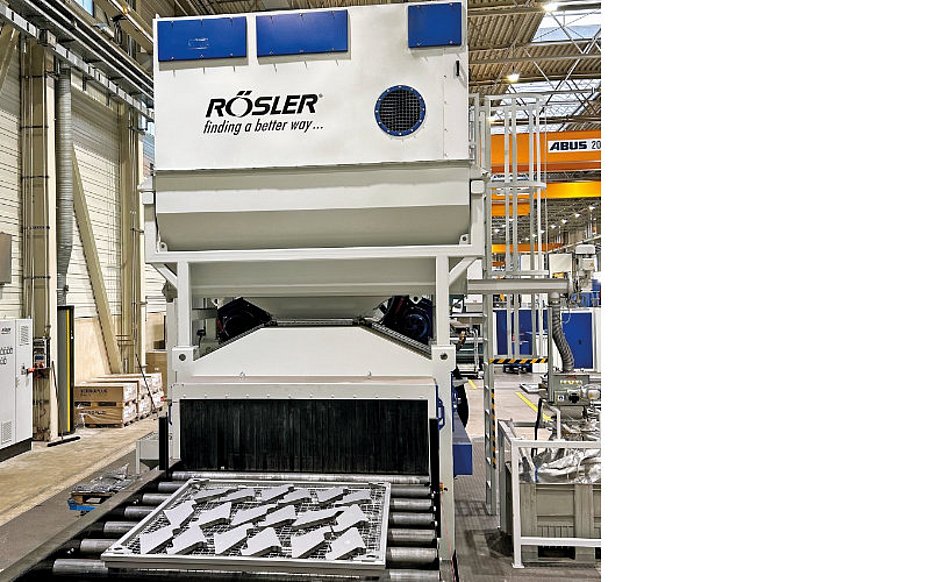
To this end, the company is also making continuous investments in manufacturing. For example, production processes in the welding shop at the Dörth plant were made more efficient and productive through the integration of a sheet metal line. This included the integration of an automated sheet metal storage system and a plasma/oxy-fuel cutting system, as well as the transition from cabinet blasting to continuous-flow blasting. To minimize both labor costs and intralogistics, the new roller conveyor blasting system was placed directly behind the flame-cutting system—in a straight line. One of the key processing requirements was that the blasted surfaces have a roughness depth of at least Rz 70 µm. This must be achieved to ensure the paint adhesion required for maritime applications during the subsequent painting process. Schottel therefore used an angular, abrasive blasting media for the cabin blasting to ensure the required quality. In addition, the new blasting system was designed to accommodate parts with a wide range of dimensions and to ensure high availability.
A Well-Thought-Out Design for the Blasting System
While searching for a suitable blasting equipment manufacturer, Frank Steinert, production manager at Schottel, contacted Rösler Oberflächentechnik GmbH, among others. The Untermerzbach-based equipment manufacturer designed a solution based on the standard RRB 22/5 roller conveyor system, tailored to the customer’s requirements and including a custom paint finish. The system can process steel plates up to five meters long, up to two meters wide, and up to 500 mm high. At the same time, the roller conveyor—with a roller pitch of 400 mm—allows for the blasting of individual parts with a minimum length of 1,500 mm. By using an additional transport rack, even solid parts shorter than 1,500 mm can be processed. As a result, a large proportion of the forged parts used in Schottel’s final products can be manufactured much more efficiently. The plant operator conveniently selects the respective blasting program—stored in the system control—via the touch panel.
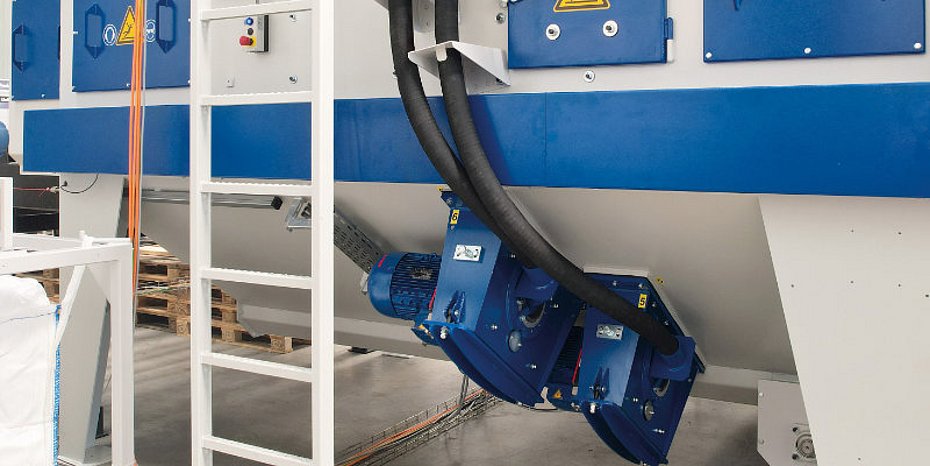
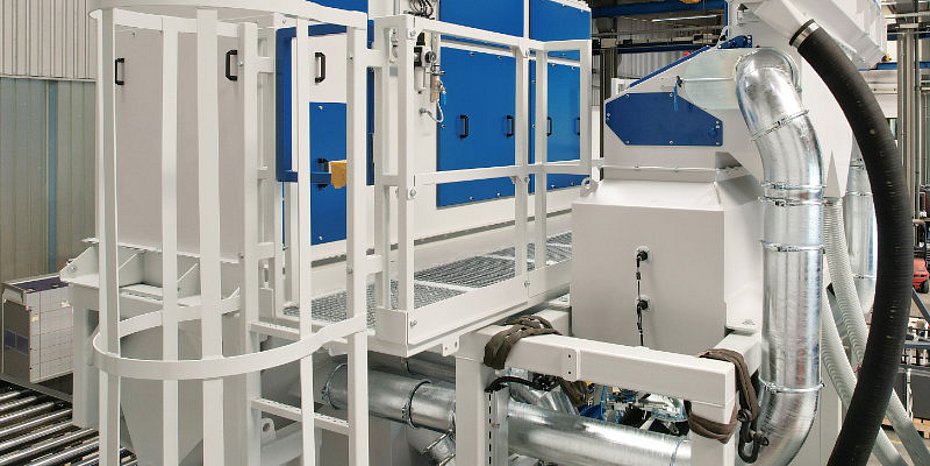
The system is constructed as standard from 8-millimeter-thick manganese steel; in addition, the blasting chamber contains replaceable, overlapping plates made of wear-resistant material. Six high-performance Gamma 400G turbines, each with 15 kW of drive power, ensure consistently high-quality blasting results—three blast from above and three from below onto the parts. They feature Y-shaped impeller blades and achieve up to 20 percent higher blasting performance compared to conventional turbines, while simultaneously reducing energy consumption. Furthermore, the Y-shaped impeller blades can be used on both sides, which at least doubles their service life. The blades can be changed easily using a quick-change system, even with the turbine installed. Another advantage is the filter unit mounted on the roof of the system, which therefore requires no additional floor space. “We were impressed by the system and equipment concept. However, before making a final decision, we wanted to know whether our requirements would actually be met,” reports Frank Steinert.
Blasting tests under actual production conditions
Accordingly, blasting tests were conducted on various Schottel parts. In this case, the tests were not carried out at Rösler’s Customer Experience Center, but were instead performed at a Rösler customer’s facility, which has been operating a system of nearly identical design with identical turbine equipment for about three years. The tests not only confirmed that the required blasting result is reliably achieved—but also that it is achieved using a round blasting media that is gentle on the equipment. The parts blasted at the reference customer’s site were evaluated using metrological measurements. “To be on the safe side, we also subjected the test parts to internal paint adhesion and salt spray tests,” adds the production manager.
Another decisive factor in choosing the RRB 22/5 was the open dialogue Frank Steinert was able to have with the reference customer regarding operating costs, wear behavior, and maintenance frequency. “The results of the blasting tests and the reference customer’s experience ultimately convinced us that the RRB 22/5 is the right solution for us and meets our quality standards,” explains Frank Steinert.
Optimal integration for easier and more convenient maintenance
Another advantage was the early involvement of the equipment manufacturer in the planning process at Schottel. This ensured that information and layouts were available early on, indicating the dimensions that needed to be taken into account for the equipment and how it could be optimally integrated into the facility. As a result, not only was it easier to construct the foundation for the blasting system, but it also provides maintenance personnel with more space and thus greater comfort. (OM-8/26)
Contact
Rösler Oberflächentechnik GmbH
Vorstadt 1
96190 Untermerzbach (Germany)
Phone +49 9533 9240
www.rosler.com
About Rösler Surface Technology
For over 80 years, Rösler Oberflächentechnik GmbH has been operating as an owner-managed company in the field of surface treatment. As an international market leader, it offers a comprehensive portfolio of equipment, process media, and services related to vibratory finishing and blasting technology for a wide variety of industries.