
Properly Sizing Exhaust Air Systems in Electroplating Facilities
Exhaust ventilation systems in electroplating facilities must effectively control corrosive vapors, aerosols, and pollutants. Key factors include demand-based extraction and the proper selection of materials, separators, and exhaust scrubbers.
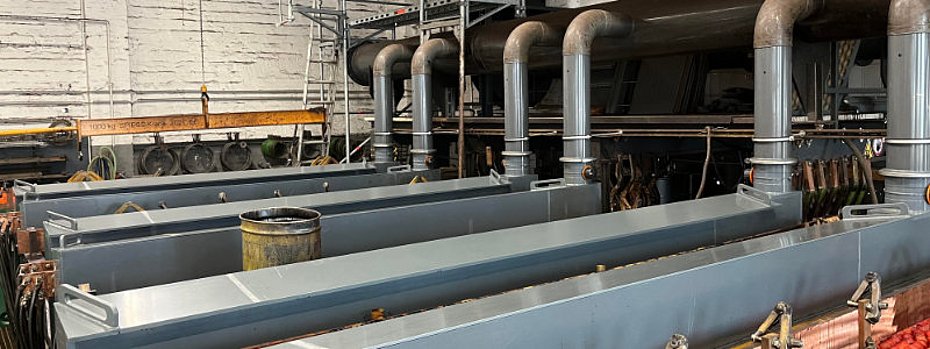
Depending on the process, electroplating operations generate corrosive vapors, ultrafine aerosols, and highly variable loads. To ensure that exhaust systems operate safely and economically over the long term under these conditions, capture, material selection, separation, and maintenance must be planned as an integrated system. Standard solutions are often insufficient for this purpose: Incorrectly calculated airflow rates, unsuitable materials, or inappropriate purification stages can jeopardize emission and occupational exposure limits, accelerate corrosion, and cause unplanned downtime. It is therefore essential to have a design specific to electroplating that takes into account the actual range of pollutants as well as the droplet spectrum, the type of extraction, pollutant capture, accessibility, and integration into the overall process.
Customizing Exhaust Air Treatment in Electroplating Facilities
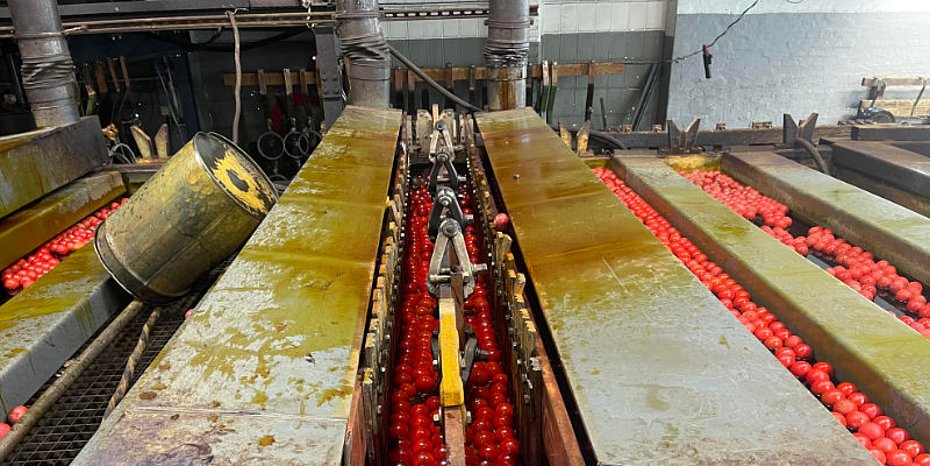
In electroplating facilities, exhaust air systems have a direct impact on occupational safety, equipment availability, and process reliability. Unlike relatively uniform industrial exhaust air streams, the composition and intensity of pollutants can vary significantly within a single production line. Hard chrome plating baths, for example, generate aerosols containing chromic acid, while processes involving nitric acid can release nitrogen oxides. Added to this are hydrogen chloride, ammonia, acidic or alkaline vapors, and fine liquid droplets with a wide range of sizes.
“Exhaust air treatment must always be tailored to the specific range of pollutants, their concentrations, and the required limit values,” explains Patric Hering, a member of the management team at Airtec Mueku, a provider of comprehensive exhaust air treatment and emission reduction systems for industrial applications. “It’s not just what comes out of the stack that matters. It’s equally important that pollutants are reliably captured at the source and that workplace exposure limits are consistently maintained below the threshold.”
Corrosion often starts in inconspicuous places
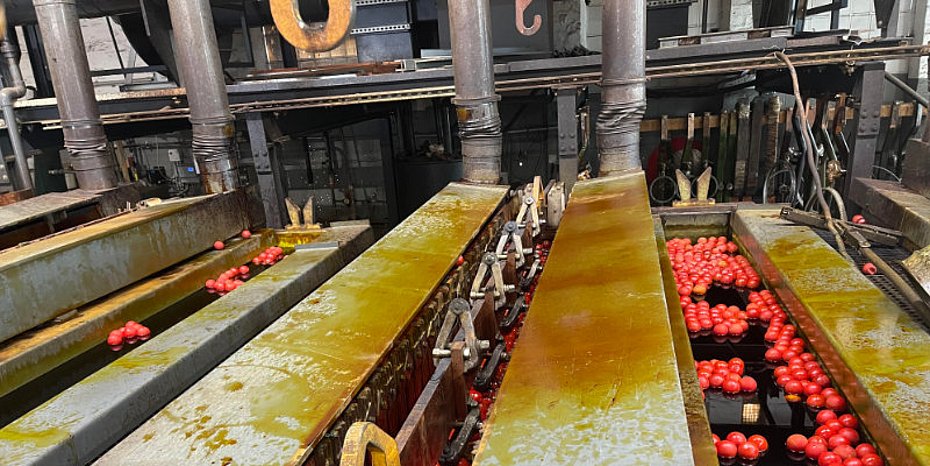
Corrosive media do not affect only visibly wetted components. Aerosols and condensing vapors also settle in piping, fans, or surrounding structures such as steel structures, transport carts, cable trays, etc. Technical systems in the immediate vicinity of emission sources are particularly at risk. Corrosion caused by unaccounted-for pollutants can damage steel structures, transport carts, drives, pool fixtures, and other nearby systems.
The selection of materials for the exhaust air system must therefore be application-specific. In addition to the chemical composition of the exhaust air, factors such as temperature, humidity, concentration, potential condensation, and mechanical and fire safety requirements must be considered. Airtec Mueku, for example, uses plastics in electroplating applications that are suitable and resistant to the specific mix of pollutants. PP, for instance, may be suitable for exhaust air ducts; however, other highly resistant plastics are required for particularly aggressive media.
Aerosols and gases require different levels of purification
Another key planning question is whether the pollutants are predominantly aerosols, liquid droplets, or gaseous substances. “Properly designed separators are suitable for aerosols. Every separator has a characteristic droplet size limit below which its effectiveness decreases,” explains Hering. “By combining multiple systems, the captureable droplet size can be further reduced. This is particularly relevant for hard chrome plating processes, as very fine aerosols can be generated there, for which a conventional lamellar separator alone is not always sufficient.”
Gaseous pollutants, on the other hand, usually require an exhaust gas scrubber, according to Hering, in which they are chemically bound or neutralized. Packing material creates the necessary contact surface between the exhaust air, the scrubbing liquid, and the pollutant. pH measurement, automatic dosing, and conductivity monitoring ensure the sustainable operation of the exhaust air scrubber. At the scrubber outlet, effective droplet separation is again necessary to prevent liquid from the spray zone from being carried into piping, the fan, or the stack.
“Wet separators, exhaust air scrubbers, and droplet separators fulfill different functions and must be coordinated with one another,” emphasizes Hering. “For complex contaminant loads, it is not enough to simply combine individual components. The cleaning stages must be designed as an integrated system based on the type of pollutant, aerosol spectrum, airflow, and regulatory limits.”
Spark-type separators place a strain on the entire system
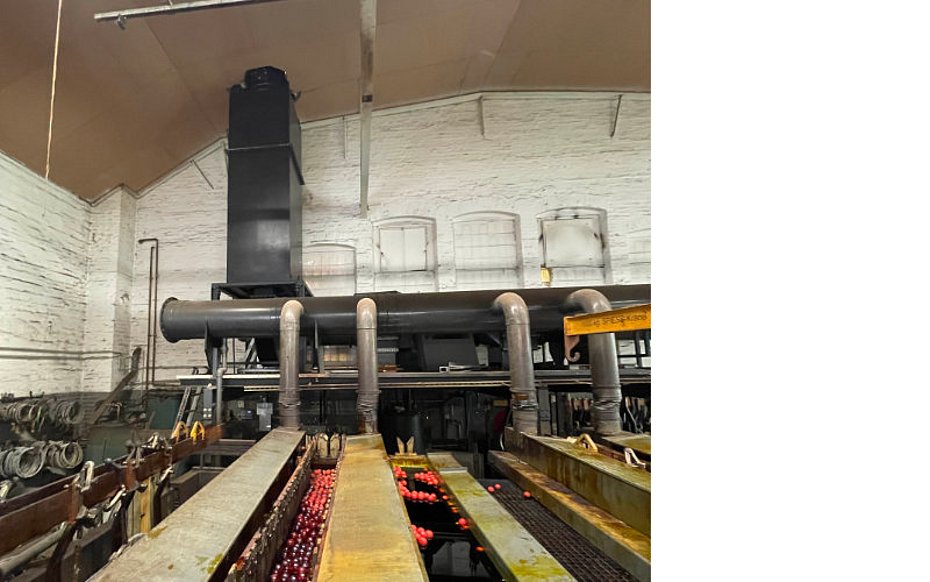
Droplets that are not adequately separated can place a significant strain on downstream components. Pipelines, fans, heat exchangers, and chimneys become contaminated, functionality may be impaired, and the need for cleaning increases. At the same time, deposits can form that narrow cross-sections or cause imbalances. Therefore, the droplet size distribution must be taken into account as early as the planning phase. Equally important is the question of whether separated media can be recycled.
Whether this is possible depends on the purity and process compatibility of the separated media. If wash water, neutralizing chemicals, or different exhaust air streams are mixed, reuse is often only possible to a limited extent or not at all. Dry separation processes can offer advantages here because they do not generate any additional wastewater streams. For chromium processes, Airtec Mueku, for example, recommends a chromium mist or fine separator with a cut-off droplet size of about one micrometer, which can be operated without generating wastewater and combined with additional separation stages. In this case, the separated chromic acid could be returned to the process.
More air does not automatically mean greater safety
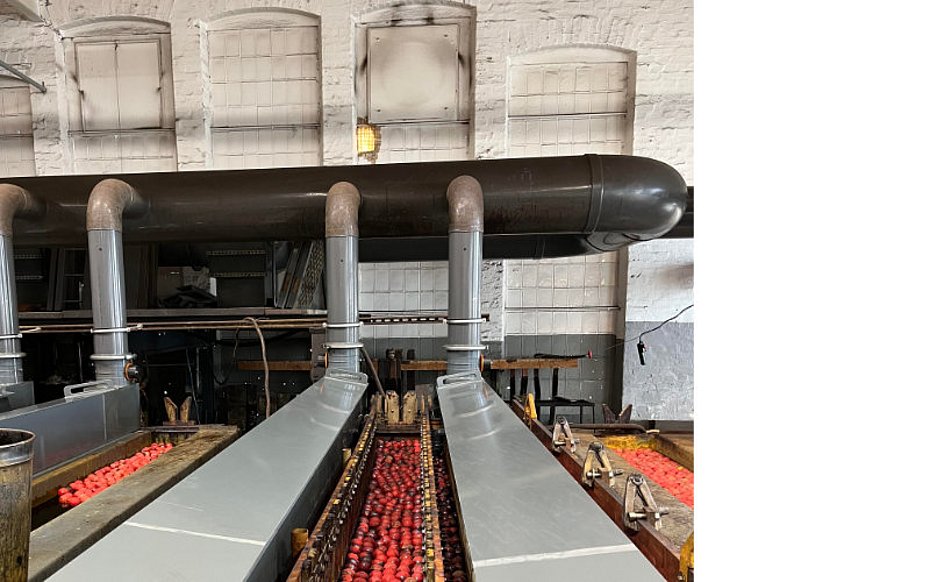
One of the most common mistakes in electroplating exhaust air system design is an incorrectly calculated and sized exhaust air flow rate. If bath size, temperature, process chemistry, extraction method, hydrogen generation, and actual operating conditions are not sufficiently taken into account, this can result in oversized or incorrectly sized systems with high energy consumption and inadequate capture of pollutants. Equally critical are extraction slots that are too large, unnecessarily long extraction distances, or structural resistance. While they move large volumes of air, they do not reliably capture pollutants where they are generated.
During the planning phase, Airtec Mueku, for example, therefore integrates the design of the capture system with the selection of purification stages and the corresponding supply air. The range of services includes consulting, engineering, manufacturing, installation, commissioning, and service. Existing third-party systems are also technically evaluated and, if necessary, adapted when processes, substances, or operating conditions have changed.
Real-world example: less air, better detection
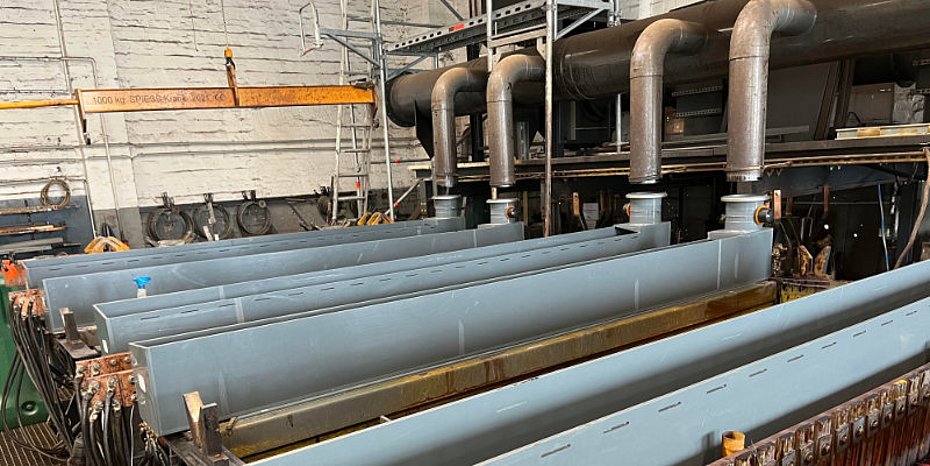
The example of a hard chrome plating line with three baths and an original total exhaust capacity of 10,000 m³/h illustrates just how critical it is to have a flow rate and air volume design specifically tailored to electroplating. Despite the high air volume, it was not possible to bring concentrations below the workplace exposure limits. In addition, another extraction point needed to be integrated without significantly increasing the total airflow. Simply increasing the flow rate would have further raised energy consumption without addressing the root cause and would have required a change to the existing permit.
Following a technical analysis, Airtec Mueku reduced the extraction rate at the baths to 6,000 m³/h. New extraction bars with correctly sized suction slots improved capture directly at the source. The resulting spare capacity of 4,000 m³/h could be utilized for the additional exhaust system. In addition, the fin packs in the separator were replaced and the contaminated chimney was cleaned. The subsequent workplace measurement was passed. This implementation example from Airtec Mueku illustrates that the correct design of exhaust air capture is more important than achieving the highest possible total airflow rate.
Ease of maintenance must be factored into the design
However, a system remains effective only if it can be properly maintained. Components relevant to maintenance must therefore be accessible and removable. Tanks should also be able to be completely emptied; in wet scrubbers, a sloped bottom prevents residual liquid from pooling. Filling media, lamella packs, pumps, nozzles, and measuring probes must be easy to inspect and replace.
“Much damage can be prevented if process changes are detected early and air volumes and cleaning stages are adjusted accordingly,” says Hering. “Predictive maintenance, effective operational monitoring, and clear integration with production facilities significantly increase operational reliability.”
Conclusion
Exhaust air treatment in electroplating is not a standard task. Acids, alkalis, pollutant aerosols, and fluctuating process conditions place high demands on capture systems, materials, cleaning stages, and operational management. Therefore, a customized design tailored to the actual process is of great importance. Suitable materials protect against corrosion, properly matched separators and scrubbers ensure effective purification, and efficient droplet separation prevents carryover into downstream components. (OM-10/26)
Contact
Airtec Mueku GmbH
Im Ganzacker 1
56479 Elsoff (Germany)
Phone: +49 (0) 26 64 / 99 73 86-0
Email: info@airtec-mueku.de
www.airtec-mueku.de
About Airtec Mueku
Airtec Mueku GmbH is a full-service provider of industrial exhaust air purification and emission reduction systems for sectors including the chemical industry, surface technology, and the automotive, printing, and plastics industries. The company develops and implements customized solutions for treating process exhaust air and air streams contaminated with pollutants, such as exhaust air scrubbers and integrated systems for heat recovery and energy optimization.