
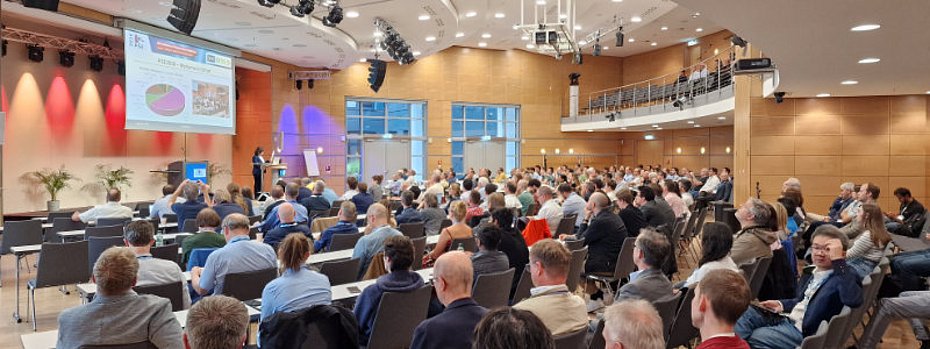
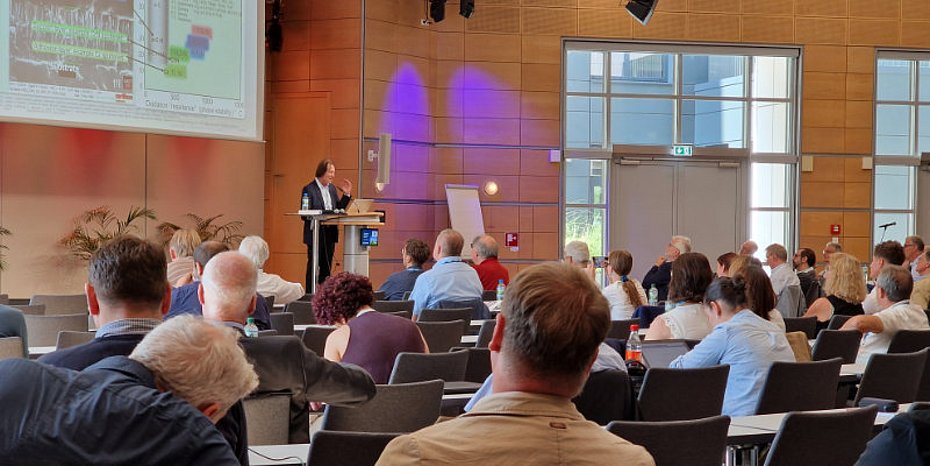
The 20th International Conference on Plasma Surface Engineering (PSE2026) in Erfurt came to a close on September 3, 2026, with an inspiring and highly successful outcome. From August 31 to September 3, 638 participants and 73 exhibitors from the fields of science, research, development, and industry gathered to discuss and advance the latest research findings, technological developments, and application areas in plasma and surface engineering. The conference is organized every two years by the European Joint Committee on Plasma and Ion Surface Engineering in collaboration with the European Research Society for Thin Films e. V. Once again, PSE has impressively demonstrated just how vibrant and forward-looking this professional community is.
The steadily growing number of participants and the increasing number of scientific presentations in recent years clearly demonstrate the central role that plasma and surface engineering plays in the major future challenges of our time. The strong international participation underscores once again that the PSE has long since evolved into a European conference with global appeal. Of the 638 participants, 345 traveled from abroad—meaning that more than half of all guests came from international locations, including numerous European countries as well as Asia, Australia, and North and South America.
Surface Technology for the Energy Transition
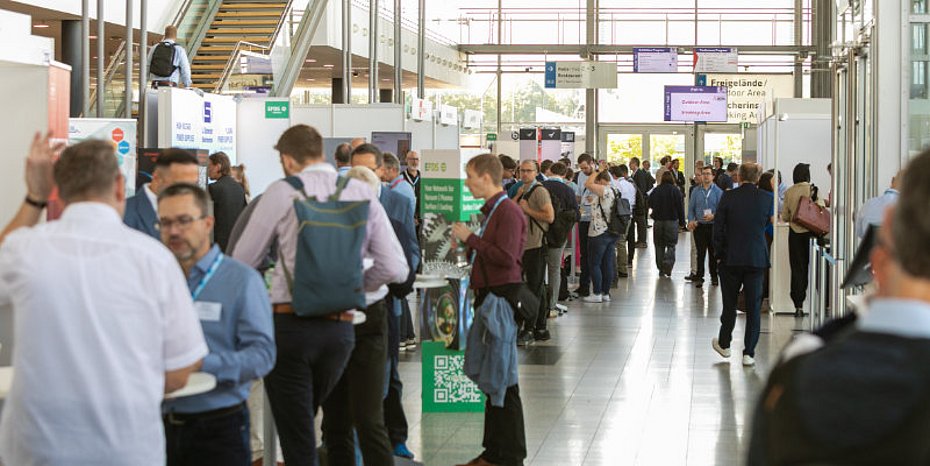
With this year’s conference theme, “Surface Engineering for Clean Energy Solutions,” PSE2026 addressed one of the most exciting and important challenges of our time. Through dynamic scientific sessions, an industry workshop, and new, innovative formats within the exhibition, participants engaged in lively discussions about the valuable contribution plasma and surface technologies can make to the development and implementation of sustainable energy technologies.
The focus included, among other things, forward-looking applications for batteries, hydrogen technologies, photovoltaics, and other energy systems. In addition to new coating processes and materials, there were particularly inspiring discussions on how innovative technologies can be consistently developed toward industrial application. Scalability, energy efficiency, and cost-effectiveness proved to be decisive factors for success—because, especially in the context of the energy transition, it is essential not only for new technologies to be technically sound but also to ensure they can be deployed economically and in a resource-efficient manner under industrial conditions.
Exchange Between Research and Industry
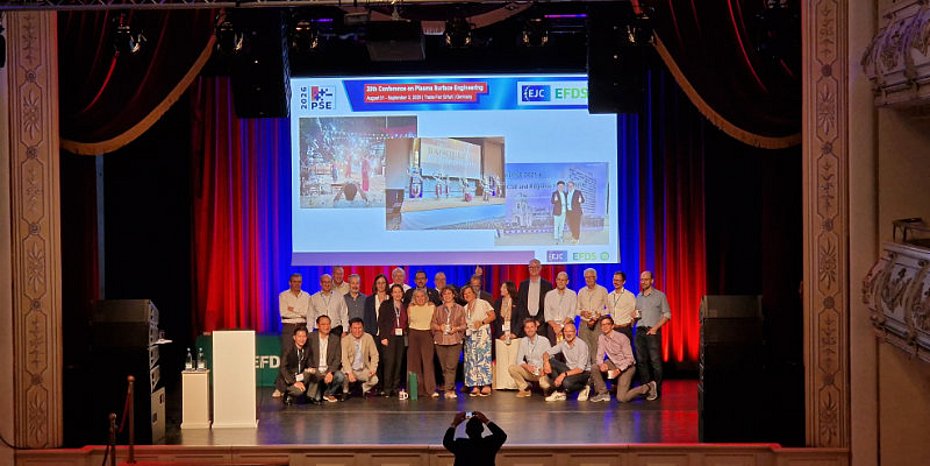
PSE2026 brought together scientists, technology developers, and industrial users in a particularly successful way: 46% of the participants came from industry, and 54% from research and development—a balanced and extremely fruitful mix. Especially when it came to energy topics, it became impressively clear just how valuable direct dialogue is regarding the specific requirements and framework conditions for industrial implementation.
Topics discussed with great enthusiasm included the scaling up of laboratory results, suitable process conditions, and opportunities for testing and scaling new technologies. Formats such as the industry workshop, the “panel discussion,” and the new Silent Forum within the exhibition provided valuable additional spaces for exchange and networking. They made it clear once again: Successful technology transfers are particularly effective when research and industry work closely together to further develop new approaches under real-world conditions and prepare them for industrial application.
Partner Country Iberia: A Dialogue Between Science, Business, and Culture
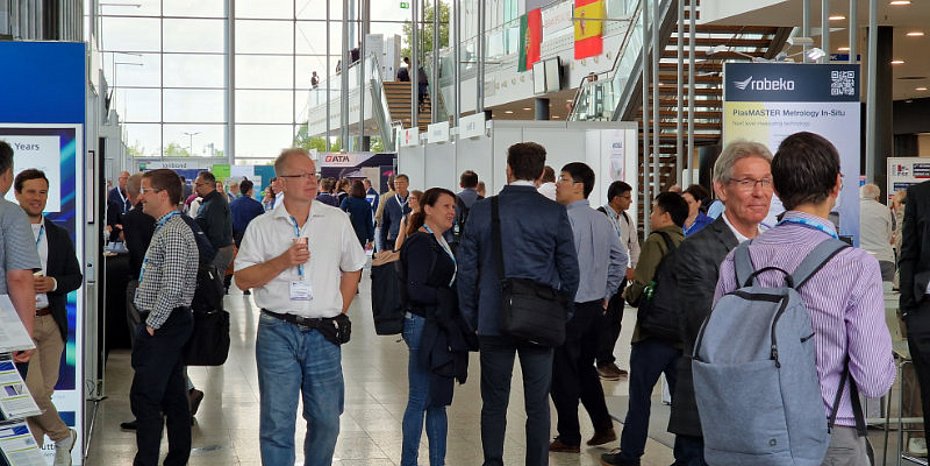
A very special highlight of PSE2026 this year was the Iberian Peninsula as the partner country. Spain and Portugal showcased their diverse research landscape as well as key players from business and academia with impressive visibility and great dedication. Even before the conference began, a joint workshop in San Sebastián had provided a wonderful start to the professional exchange. At PSE2026 itself, this was followed by a dedicated Partner Country Session, numerous scientific presentations in the form of talks and posters, and a specially designed, lovingly curated exhibition area for Iberia. A map of the region highlighted the key players and centers of excellence, supplemented by an informative brochure on selected partners and institutions.
The strong scientific participation was already evident in the abstract submissions: Spain and Portugal together formed the second-largest group of countries after Germany, thereby contributing an impressive range of research papers and expertise across a wide variety of application areas to the conference program. As a result, PSE2026 also served as a wonderful platform for showcasing the expertise and opportunities for collaboration in Iberian plasma and surface research on an international stage. With great warmth, dedication, and a strong sense of hospitality, Iberia also came to life culturally: Spanish ham, Portuguese cheese, and Iberian wine, as well as impressive traditional costumes, made the partner countries’ area a lively, warm gathering place and gave international guests the opportunity to get to know Spain and Portugal not only as strong research and economic hubs, but also as regions with a rich cultural identity.
Honoring Dedicated Experts with International Recognition
A particularly wonderful and moving part of the biennial meeting is the presentation of the prestigious PSE Awards and the Rudolf Jaeckel Prize. This year, the PSE Leading Scientist Award honored an outstanding and extremely active member of the plasma community from Sweden: Prof. Ulf Helmersson of Linköping University received the coveted award for his outstanding and long-standing contributions to plasma surface engineering, thin-film physics, and physical vapor deposition (PVD) over an impressive period of more than four decades. Prof. Helmersson is rightly regarded internationally as one of the leading scientists in the field of plasma-assisted thin-film growth—he combines profound physical insights with technological innovation, strong leadership, and social commitment, and has thus had a decisive influence on the field.
The German Vacuum Society’s 2026 Rudolf Jaeckel Prize was awarded to Dr. Jörg Vetter. With this award, the DVG honors his outstanding scientific and technological contributions to vacuum arc evaporation and its industrial applications. Dr. Vetter has played a pivotal role in shaping the development of modern surface and coating technology over several decades. His notable achievements include the development of the Arc Enhanced Glow Discharge (AEGD) process for ion cleaning and plasma assistance, as well as pioneering work on AlTiN and AlCrN hard coatings, amorphous and diamond-like carbon coatings (DLC/ta-C), and on hybrid coating processes, particularly the combination of arc evaporation and HiPIMS. The PSE Early Career Award honored three young talents of whom the entire community can be particularly proud: Dr. Ramses Snockx from EMPA in Switzerland, Dr. Martin Rudolph from the IOM Leibniz Institute for Surface Modification e. V. in Germany, and Tiago Filipe da Ponte Silva from the University of Lisbon in Portugal. All three early-career researchers have already achieved impressive results—both in their field and through international collaborations and great personal dedication—and have earned an excellent reputation within the community.
Academic substance and an active community
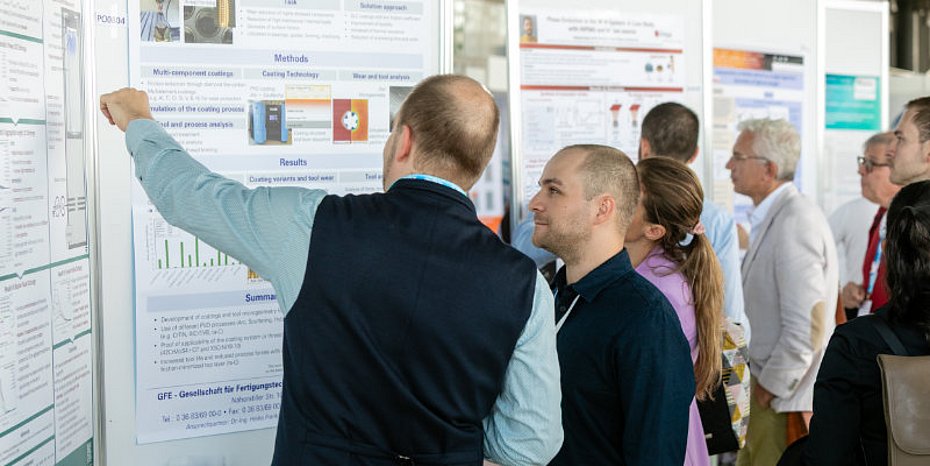
Despite its strong focus on practical applications, the PSE remains, at its core, what has made it so special for the past 20 years: a vibrant scientific conference. Once again this year, the large number of presentations and posters impressively underscored the high level of scientific activity within the international community. The poster session and the conference as a whole offered young scientists in particular a valuable platform to present their findings and exchange ideas with experienced researchers and other rising talents. At the same time, the PSE continues to evolve as a platform for the scientific community, doing so with great enthusiasm. In addition to the traditional conference program, exciting opportunities are increasingly emerging to specifically highlight new topics and introduce one’s own areas of focus. A fine example of this was the invited session “Metallic Glasses,” which was organized by the community itself. Thematically focused sessions like this one make it possible to highlight current developments, bring together different research approaches, and jointly present larger research and project consortia.
The enthusiastic response to this new format shows that the community is delighted to have the opportunity to actively shape the development of the conference program. In this way, PSE combines scientific depth with new forms of exchange and creates space for precisely those topics that will shape the plasma and surface technology of tomorrow. PSE2026 has thus impressively demonstrated how dynamically and forward-looking the field of plasma and surface technology is evolving: The growing number of participants and scientific presentations, international participation, new topic areas and formats, as well as the intensive exchange with industry, make PSE one of the most important platforms for research, innovation, and the transition of new technological ideas into industrial applications. (OM-9/26)
Contact
European Research Society for Thin Films (EFDS)
Gostritzer Straße 63
01217 Dresden (Germany)
Phone: +49 351 8718370
Email: info@efds.org
www.efds.org
About EFDS
The European Research Society for Thin Films (EFDS), based in Dresden, serves as the initiator, platform, and driving force behind the development of innovative surface and thin-film technologies. This nonprofit industry association for vacuum- and plasma-based surface technology was founded in 1992 and has approximately 200 members, including companies, research institutes, and individuals.