
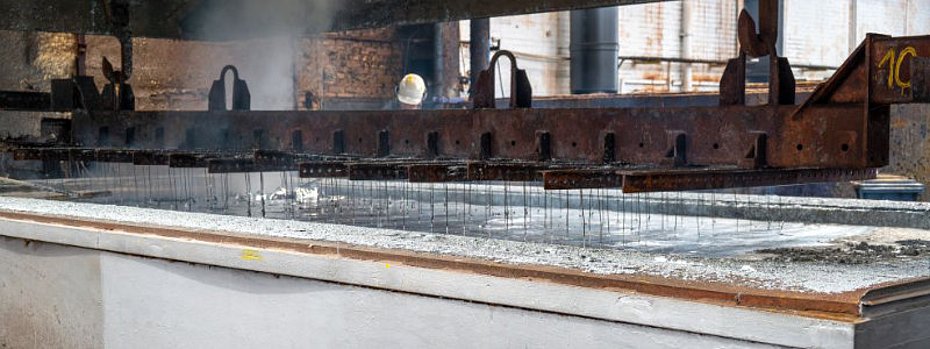
The galvanizing industry must significantly reduce CO2 emissions in its high-temperature processes in the future. Green hydrogen offers itself as an alternative fuel for converting existing systems. Due to the different flame characteristics compared to natural gas, the effects of hydrogen burners on galvanizing boilers, exhaust gas and overall efficiency must be carefully analysed. The aim is to enable the integration of hydrogen-powered burners into existing processes and systems. The H2Rollout research project involving the Westphalian University of Applied Sciences is now investigating the combustion behavior of so-called flat-flame burners and their conversion to hydrogen. This type of burner is frequently used in batch hot-dip galvanizing. The aim of the project is to achieve a hydrogen content of 100% in the galvanizing process.
Hydrogen for a stable, long-term and economical supply
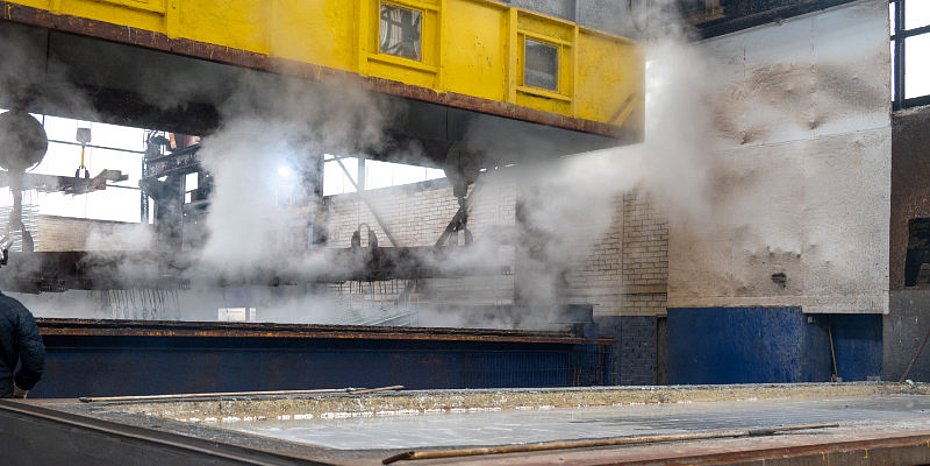
The Zinq company is participating in the project from its site in Castrop-Rauxel. It is making one of its boilers available as a pilot plant to demonstrate the use of hydrogen. Specifically, one of the flat-flame burners used will initially be replaced by a hydrogen-powered variant and embedded in the existing control system. In parallel, Zinq is examining possible approaches for a stable, long-term and economical supply of hydrogen.
"We have high hopes for the project," says Robert Mill, Head of Plant Engineering at Zinq. "It lays the foundation for us to be technically prepared as soon as the framework conditions for the use of hydrogen are in place. However, it will be crucial that not only the technical, but also the regulatory, infrastructural and economic conditions are right in the end."
Low tolerance to temperature fluctuations
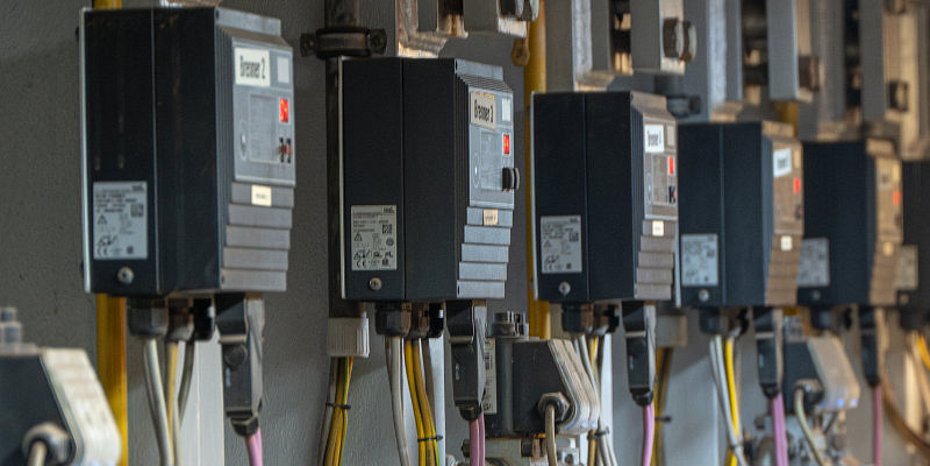
Prof. Martin Habermehl from the Westphalian University of Applied Sciences is responsible for the flow simulations, among other things. These form the basis for adapting the hydrogen flame to the previous operation of the natural gas burners. He and his team also monitor and analyze the trial operation. For example, they record the combustion behavior, temperatures, water content and nitrogen oxides in the exhaust gas flow of the hydrogen flame. Martin Habermehl: "The difficulty lies in ensuring that the combustion remains stable throughout and that it can be integrated into the existing process." This is because the liquid zinc in the boilers only has a small tolerance range within which the temperature must move. In addition, the boiler, the heart of every galvanizing plant, must not be damaged.
The company ProPuls GmbH, a spin-off of the Westphalian University of Applied Sciences, is responsible for the control and regulation technology in the research project. "The data from the simulations and the measured values from the pilot operation are our basis for optimizing the process control," says Philipp Neuhaus, team leader for I&C technology at ProPuls.
Blueprint for galvanizing plants in Germany
The "T!Raum - TransferRäume für die Zukunft von Regionen" funding program from the Federal Ministry of Education and Research is financing the research project. The project is part of the "H2Raum" transfer initiative, initiated by the Westphalian University of Applied Sciences and the Fraunhofer IEG, and is investigating the conversion of flat flame burners to hydrogen using the example of the Zinq galvanizing plant in Castrop-Rauxel until 2028. The joint partners Westfälische Hochschule, ProPuls GmbH and the industrial partner Zinq want to use the project results to develop a blueprint for the galvanizing industry and other process heat-dependent branches of industry.
Initiative H2Raum
The H2Raum initiative is funded by the "T!Raum - TransferRäume für die Zukunft von Regionen" funding program of the Federal Ministry of Research, Technology and Space. The aim of the funding program is to promote both forward-looking innovations and structural change in structurally weak regions in the long term. In particular, the H2Raum aims to ensure that hydrogen players in the Ruhr region learn from each other, discuss together and develop and implement hydrogen projects together. The H2Raum addresses all interested parties, from start-ups to small and medium-sized enterprises, universities, educational and research institutions, students, school pupils and civil society.
The Westphalian University of Applied Sciences has been conducting research in the field of hydrogen technology for over 20 years. It is a partner of numerous regional and supra-regional initiatives. Since the winter semester 24/25, the university has been offering the "Hydrogen Systems and Renewable Energies" course. And with the "H2 Solution Lab", a pioneering hydrogen laboratory is being created at the Westphalian University of Applied Sciences as an important pillar of the hydrogen location Gelsenkirchen - funded as part of the 5-location program of the federal and state governments of North Rhine-Westphalia.
As an institution of the Fraunhofer-Gesellschaft, the Fraunhofer IEG focuses on geothermal energy, energy infrastructures and industry-related hydrogen research. With TransHyDE, it leads one of the three lead projects of the Federal Ministry for Economic Affairs and Climate Protection on hydrogen technologies, develops innovative storage solutions and supports the integration of hydrogen technologies into energy systems (OM-1/26).
Initiative H2Raum
More information on the H2Raum initiative can be found on the website h2raum.de
Contact
Fraunhofer IEG
Research Institution for Energy Infrastructures and Geothermal Systems
Am Hochschulcampus 1
44801 Bochum (Germany)
Phone: +49 234 33858-270
www.ieg.fraunhofer.de
About Fraunhofer IEG
The Fraunhofer Research Institution for Energy Infrastructures and Geotechnologies IEG conducts research at seven locations in the fields of integrated energy infrastructures, geothermal energy and sector coupling for a successful energy transition. The institute develops ideas, technologies and strategies for the next phase of the transformation of energy systems and sees itself as an independent thought leader for politics, business, regulation and society.