
Per- and polyfluoroalkyl substances, or PFAS for short, are virtually unbeatable in terms of functionality: They are extremely chemically and thermally stable, which is precisely why they are under regulatory pressure. However, these established substances cannot simply be replaced: They reduce friction, protect against wear and corrosion, prevent fouling, and ensure emergency running properties when lubricant films fail. Anyone seeking to replace them needs not only a different material but also a process that can reliably apply this material to a wide variety of components. In the RePEEK, EPOS, LEMBAS, and pureWaterSeal projects, the Fraunhofer Institute for Laser Technology ILT is developing laser-based processes for PFAS-free high-performance coatings on large metal components, plain bearings, seals, and sensitive elastomer rollers. Depending on the application, the laser applies coatings, locally melts materials, or selectively structures surfaces. In doing so, it delivers energy to the component precisely, within a limited spatial area, and only for a short time. This makes it possible to process PFAS-free alternative materials that conventional oven-based processes can only apply with high energy consumption or where the required heat would damage the underlying component.
The material alone won't solve the problem
“The desire for PFAS-free alternatives sounds simple at first: one hazardous substance is to be eliminated, and another is to take its place,” says Dr. Samuel Moritz Fink, group leader of Thin-Film Processes at Fraunhofer ILT. “In practice, however, this replacement is significantly more complex. Materials containing PFAS are often found precisely where components are subjected to the greatest stress.” Substitutes must adhere to metal, plastic, or rubber; withstand high temperatures; remain intact under stress; and be economically feasible to apply even on large components. “A material like polyetheretherketone—PEEK for short—is very interesting from both a chemical and mechanical standpoint, but it doesn’t automatically possess all the properties of, say, PTFE,” explains Fink. PTFE stands for polytetrafluoroethylene. “PEEK is stiffer, more expensive, and, depending on the application, more difficult to process. For many industrial components, therefore, simply selecting a different powder, film, or plastic is not enough.”
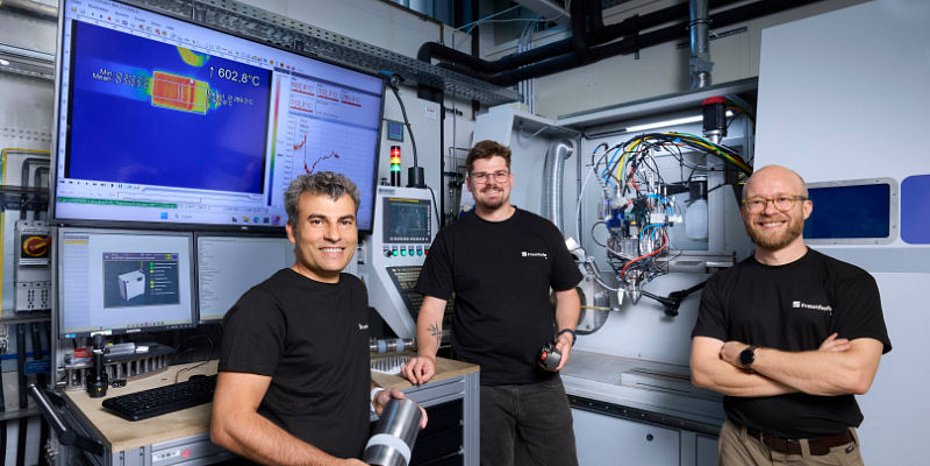
The process is crucial. How is the replacement material applied to the surface? How does it bond with the component? How can damage to a temperature-sensitive material underneath be prevented? “We do not view PFAS alternatives as purely a materials issue,” explains Dr. Christian Vedder, head of the Surface Engineering and Material Removal Department at Fraunhofer ILT. “Our research focuses on laser-based processes that can be used to selectively build up innovative coating systems.” Laser processes come into play precisely where a replacement material does not fully meet the required properties. They structure surfaces, improve the bond to the component, or modify layers locally without significantly heating the entire component.
RePEEK: PEEK Coatings Using a Hybrid Process
In the RePEEK project, surface experts are investigating how PEEK-based coatings can be applied to metal components that operate in moving and heavily loaded systems. The focus is on applications in mechanical engineering: large plain bearings, seals, pistons, and solenoid valves. The challenge becomes particularly evident with large plain bearings, such as those found in wind turbines: a shaft runs in a coated bearing shell, which until now has mostly been coated with PTFE-based systems. As the name suggests, RePEEK also relies on PEEK. “Today, PEEK is often applied as a film to large components or processed as a powder and then thermally bonded,” says Samuel Fink. “This can work for small components. With metal components weighing several metric tons, however, it becomes a complex process: The entire component must be placed in a furnace, heated to a high temperature, and then slowly cooled down again.” The energy consumption is high, the process takes a long time, and ultimately much more material is heated than would be necessary for the actual coating.
The researchers first create a metallic layer using a laser-based deposition process. This surface is intentionally rough, providing a grip for the plastic. They then apply PEEK powder in the same process environment and melt it locally. The plastic anchors itself to the rough metal surface, creating a composite consisting of a metallic functional layer and a PEEK-based top layer. The team has developed a special nozzle technology for the PEEK powder and has already filed a patent application for the process. A cyclone nozzle significantly slows down the gas flow, so that the powder strikes the surface at a low velocity instead of bouncing off. As a result, the process uses more material, is easier to control, and operates more efficiently.
EPOS: Multi-layer PEEK coatings for large plain bearings
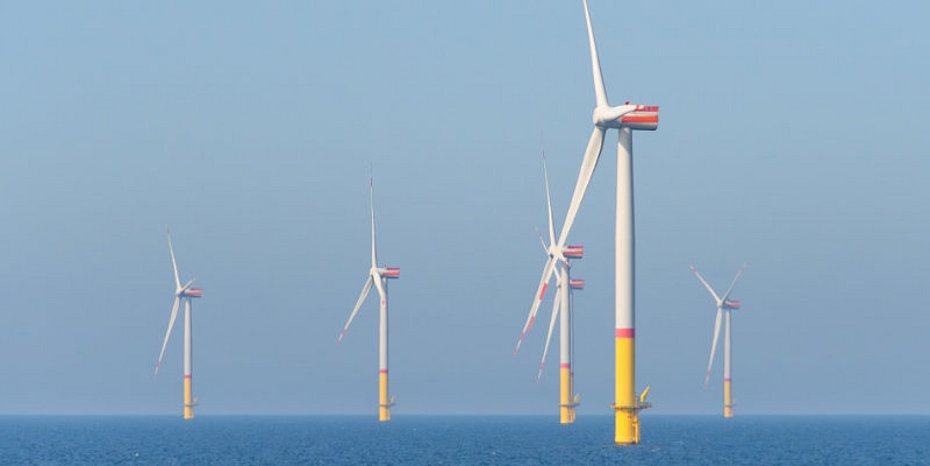
Further work on RePEEK is already underway. As part of the EPOS project, Delil Idris Demir at Fraunhofer ILT is investigating how PEEK-based coatings can be applied reliably and in multiple layers to large-format sliding bearing components. This step-by-step application is intended to enable thicker coatings without having to fully heat components weighing several metric tons in a furnace. ACS Coating Systems is contributing its many years of experience with PEEK coatings to this effort, particularly with regard to such sliding coatings. The company has been developing such coating systems since the mid-1990s and today produces coatings with thicknesses ranging from a few micrometers to one millimeter. Managing Director Dr. Christoph Stecher is overseeing the project with a focus on coating structure, industrial application, and subsequent series production.
Polymer Service GmbH Merseburg (PSM) is testing and evaluating the resulting coatings under the direction of Prof. Dr. Katrin Reincke. The focus includes, among other things, the crystallinity, microstructure, and thermal state of the PEEK, as well as its mechanical and thermomechanical properties. This data is intended to help coordinate the laser process and the multi-layer structure so that the coating adheres uniformly and can permanently withstand the stresses in the plain bearing. EPOS thus combines the laser-based process development of Fraunhofer ILT, the industrial coating experience of ACS, and the materials science expertise of PSM.
LEMBAS: Non-stick coatings for sensitive elastomer rollers
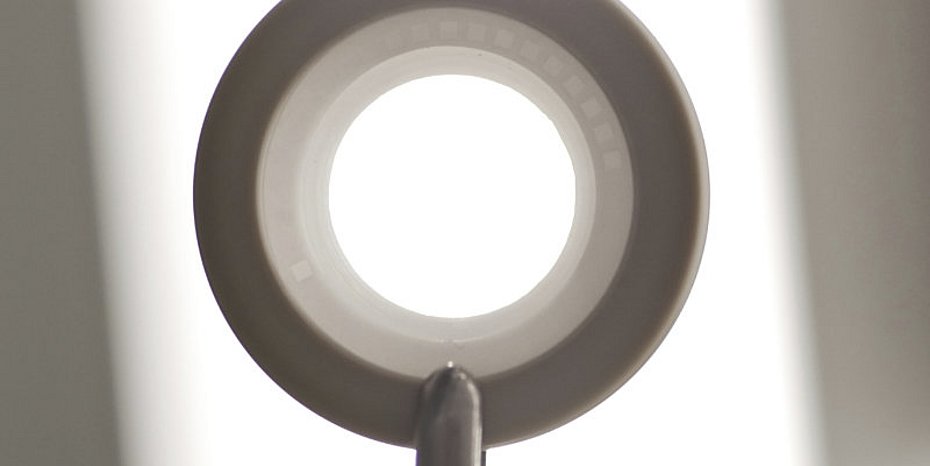
The LEMBAS project focuses on elastomeric rollers and cylinders, such as those used in film manufacturing, the packaging industry, paper production, and medical technology. Particles from the roller surface can quickly become a problem in these applications. ““Until now, companies have frequently used silicone coatings for such applications,” explains Adam El-Sarout, also from the Thin-Film Processes Group at Fraunhofer ILT. “While they offer the necessary non-stick properties, they do not always achieve the durability required by modern high-speed processes.” At LEMBAS, the team is collaborating with coating specialist Rhenotherm to develop laser-based processes that utilize high-performance polymers such as PEEK, polyamide, or polypropylene. These materials are more abrasion-resistant, chemically stable, and durable than silicone and are completely PFAS-free.
“The technical challenge lies in the temperature window,” El-Sarout reveals. “High-performance polymers require high temperatures to melt. However, elastomers like EPDM can only tolerate this heat to a limited extent. If a rubber roller were to be heated entirely in an oven, the substrate would be damaged.” The laser solves precisely this problem: It generates the high temperature only locally and only for a short time within the coating material. This allows the functional layer to melt while the elastomeric component underneath remains thermally protected. To ensure the layer is durable, the researchers are developing not only the anti-adhesive material but also an intermediate layer that protects the elastomer and strengthens the bond to the top layer. In addition, they are adapting the optical and rheological properties of the materials to the laser process and investigating suitable methods for application and laser pretreatment. “A substitute material must not only fulfill the desired function but also be compatible with the component, the substrate’s temperature limit, and the production process,” says Vedder. If this step is successful, the process will offer several advantages: less abrasion, fewer product contaminants, less cleaning and fewer solvents, and significantly lower energy consumption compared to traditional oven processes.

pureWaterSeal: PFAS-free seals for water-based lubricants
In the pureWaterSeal project, researchers at the Fraunhofer Institutes for Laser Technology (ILT) and for Materials Mechanics (IWM) are developing sustainable seals that do not contain PFAS and can be operated with water-based lubricants. In doing so, the team is tackling two environmental problems at once: PFAS accumulate permanently in the environment, while oil-based lubricants contaminate soil and water. Matthias Laermann, head of the Surface Structuring team at the Fraunhofer Institute for Laser Technology ILT, emphasizes: “In Germany alone, around one million metric tons of oil-based lubricants are consumed annually. A single liter can contaminate up to one million liters of groundwater. The consequences are oil-contaminated soil, contaminated food, and destroyed ecosystems. We are finding solutions that address these challenges together.”
Experts at Fraunhofer IMW developed diamond-like carbon (DLC) coatings for this purpose, which are designed for PFAS-free plastic components. The Fraunhofer ILT team then structured the coating using a laser, thereby locally reducing internal stresses and mechanical strains without compromising the stability of the entire layer. At the same time, the combination of the coating and laser structuring reduces friction, increases wear resistance, and extends the service life of the seals. The first prototypes are already in use in pumps at geothermal power plants. Together with industry partners, the researchers are now adapting the seals for use in other fields, including applications in passenger cars, ship propellers, wind turbines, and harvesters. At the same time, the team is preparing to scale up the technology for larger systems and industrial-scale production.
It is the laser that makes changing materials feasible in the first place
The various projects at Fraunhofer ILT demonstrate that phasing out PFAS is not merely a matter of changing materials, but also requires appropriate manufacturing and surface treatment processes. The laser plays a key role in this process: It applies materials locally, selectively melts them, or structures functional layers without placing unnecessary stress on the underlying component.
This opens up new possibilities for companies. They do not have to wait for a single replacement solution that covers all PFAS applications. Together with industry partners, Fraunhofer ILT is developing customized coating systems for various components and requirements: low-friction surfaces for plain bearings, abrasion-resistant non-stick coatings for rollers, and PFAS-free sealing systems for water-based lubricants. (OM-(/26)
Contact
Fraunhofer Institute for Laser Technology ILT
Steinbachstraße 15
52074 Aachen (Germany)
Phone: +49 241 8906-194
Email: info@ilt.fraunhofer.de
www.ilt.fraunhofer.de
About Fraunhofer ILT
The Fraunhofer Institute for Laser Technology ILT is one of the world’s leading contract research and development institutes in its field. Under one roof, the Fraunhofer Institute for Laser Technology ILT offers research and development, system integration and quality assurance, consulting, and training. To carry out research and development projects, the institute has access to numerous industrial laser systems from various manufacturers as well as an extensive infrastructure.