
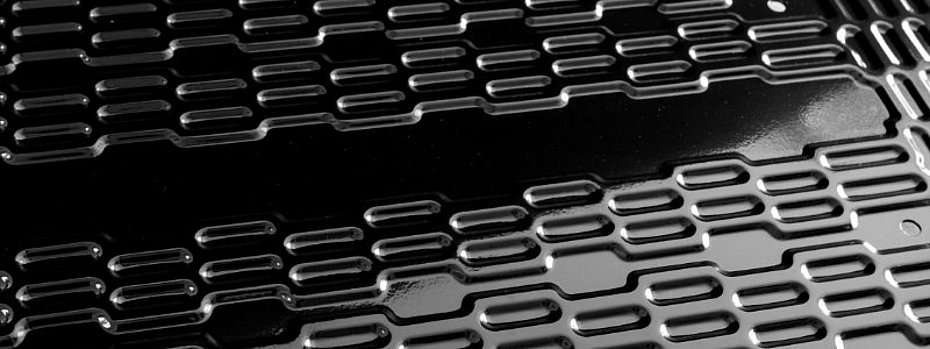
The electrification of drives and energy storage systems presents surface technology with fundamentally new challenges: Metallic components in battery systems must not only be protected against corrosion, but also safely insulated electrically - reliably, permanently and in large-scale production. Benseler offers tried-and-tested high-voltage coatings for automotive and industrial applications. With adapted processes and seamless quality assurance, the company supplies cost-effective solutions to protect against voltage flashovers of up to 7,500 volts.
Whether housings, covers or cooling and side plates of battery systems - metallic components made of aluminum or steel are indispensable in electromobility and stationary battery storage systems. They impress with their static properties, heat resistance and impact resistance. There is therefore a need for economical coating processes that guarantee permanently reliable insulation. And this under the growing voltage requirements of modern energy storage systems.
Insulation is not a standard coating
Due to its required electrotechnical properties, a high-voltage coating differs fundamentally from classic coatings for corrosion protection or visual design. "To ensure complete insulation, a simple coating, even in combination with a previous cathodic dip primer, is usually not enough," explains Björn Dehne, Sales Manager at Benseler Beschichtungen Sachsen GmbH & Co. The finest pores and unevenness in the coating can allow flashovers. Targeted interventions in the coating process and the temperature regime are therefore just as necessary as careful pre- and post-processing of the workpieces.
In addition, due to the system-relevant safety function of the coated components, significantly higher quality assurance requirements apply. A simple visual inspection is not enough. Instead, a technical 100 percent test of the dielectric strength across the entire surface of all parts in a series is required, including complete documentation.
Proven solutions in high-volume coating
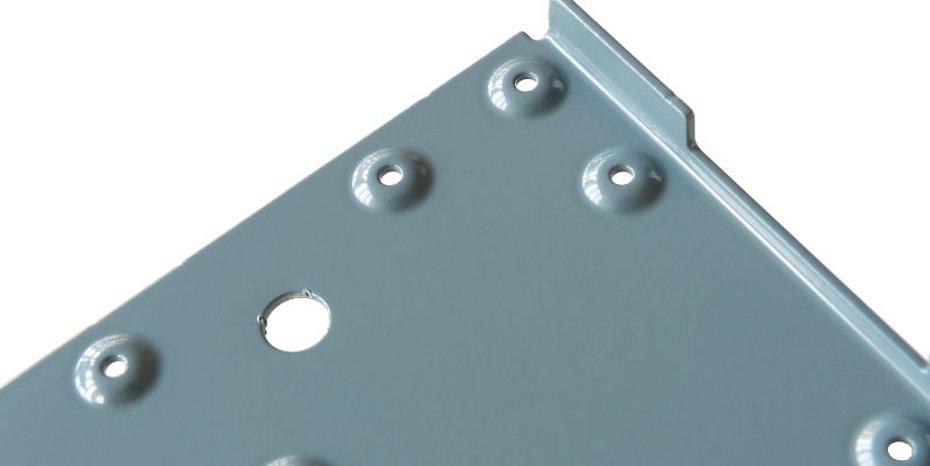
Benseler demonstrates in daily practice that these challenges are manageable. Among other things, the company coats housing covers for battery control units for electric vehicles with quantities in the high six-figure range per year. Coating thicknesses of up to 250 µm guarantee high dielectric strength at voltages of 1,500 volts. In the area of stationary storage systems, Benseler achieves layer thicknesses of 300 to 500 µm using the 2-layer powder process - and thus reliable protection up to over 7,500 volts. The insulation-coated aluminum add-on parts in the battery racks reliably prevent voltage flashovers between adjacent battery packs.
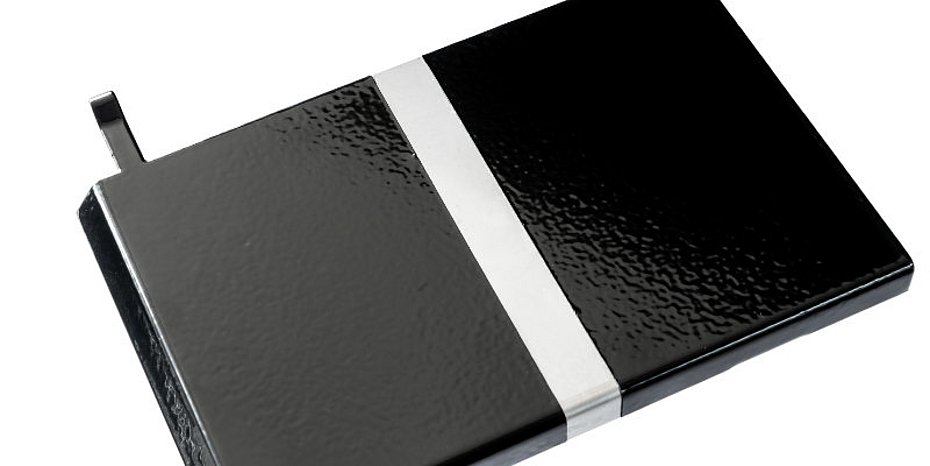
For Benseler, the focus of large-scale coating is always on the cost-effectiveness of the solution. The selected processes must meet technical requirements and economic conditions in equal measure. This includes the forward-looking planning of masking as early as the development phase: Often, not all surfaces of a component may be provided with an insulating coating, such as electrical contact surfaces or subsequent assembly and bonding surfaces. Burr formation on the masking is also much more pronounced due to the sometimes very high layer thicknesses and may require reworking. The important thing here is: "A reworked area must achieve the same technical standards as the original coating structure," emphasizes Björn Dehne. Benseler develops the appropriate solution in close consultation with paint manufacturers and customers.
Multifunctional coatings - insulation, corrosion, fire protection
With the selected processes and decades of experience, Benseler is able to assign multiple functions to surface coatings. In addition to electrical insulation, the high requirements for corrosion protection still apply: vehicles and stationary battery storage systems are exposed to wind and weather for decades. Benseler therefore combines the high-voltage coating with a prior cathodic dip coating (CDC) or a WBK pre-treatment (washing, pickling, preservation). Combinations of powder coating and wet painting offer promising approaches to further increase fire safety in the future. Processes such as zinc flake coating can also be integrated. Benseler is one of the leading suppliers in Germany in this field (OM-5/26).
Contact
Benseler Holding GmbH & Co. KG
Zeppelinstraße 28
71706 Markgröningen (Germany)
E-mail: info@benseler.de
www.benseler.de
About Benseler
Benseler is a service provider and partner for technically sophisticated solutions in the areas of coating, surface finishing, deburring and electrochemical metalworking of series parts. The Benseler Group, based in Markgröningen near Stuttgart, consists of two divisions: Coatings and Deburring.