
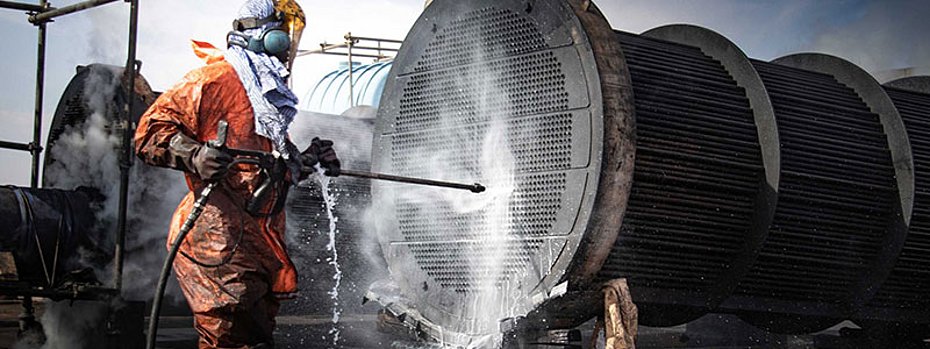
Hot water tanks, washing machines, kettles - every household appliance that comes into contact with (hot) water calcifies, especially in areas with hard, i.e. limescale-rich water. Often, the only solution is to use vinegar or a special descaler to dissolve the rock-hard deposits and restore the appliance's functionality.
This is primarily a nuisance in the home, but in thermal power stations it is a major, expensive problem. This is because even such power plants, for example those used to generate electricity, struggle against limescale. A lot of limescale builds up in the heat exchangers in particular and significantly reduces the efficiency of the systems: a layer of limescale just one millimeter thick in the pipes of the heat exchanger reduces the efficiency of electricity production by around 1.5 percent. To compensate for the Europe-wide loss, an additional 8.7 million tons of hard coal would have to be burned. This is bad for the CO2 balance, the climate and expensive for the electricity producers.
Innovative limescale-repellent surface
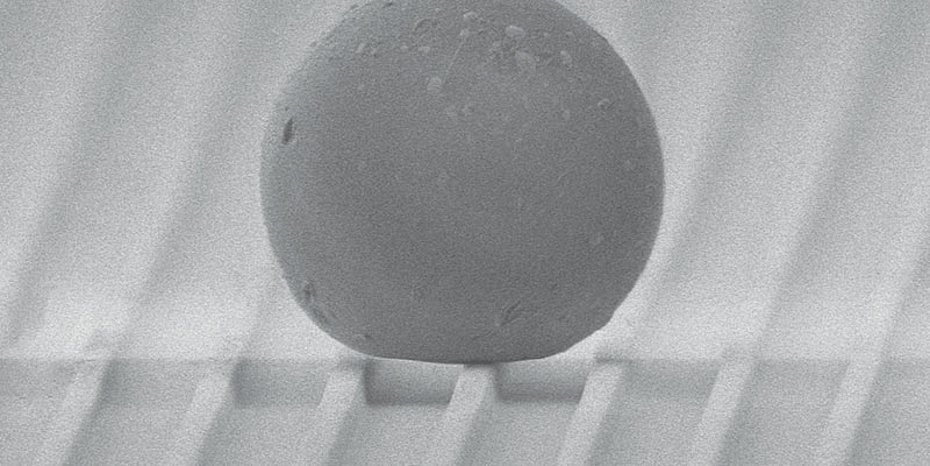
A research team from ETH Zurich and the University of Berkeley has now found a possible solution to this problem: a special limescale-repellent coating that has microscopically small ridges and prevents the adhesion of limescale crystals. The corresponding study has just been published in the journal Science Advances.
As there had previously been little basis for the development of limescale-repellent surfaces, the researchers led by former ETH professor Thomas Schutzius investigated in detail how individual growing limescale crystals, the surrounding water flow and the surface interact on a microscopic level. Based on this, Schutzius' doctoral student Julian Schmid and other team members developed several coatings from various soft materials and tested them in the laboratory at ETH Zurich.
Hydrogel with microstructure is most effective
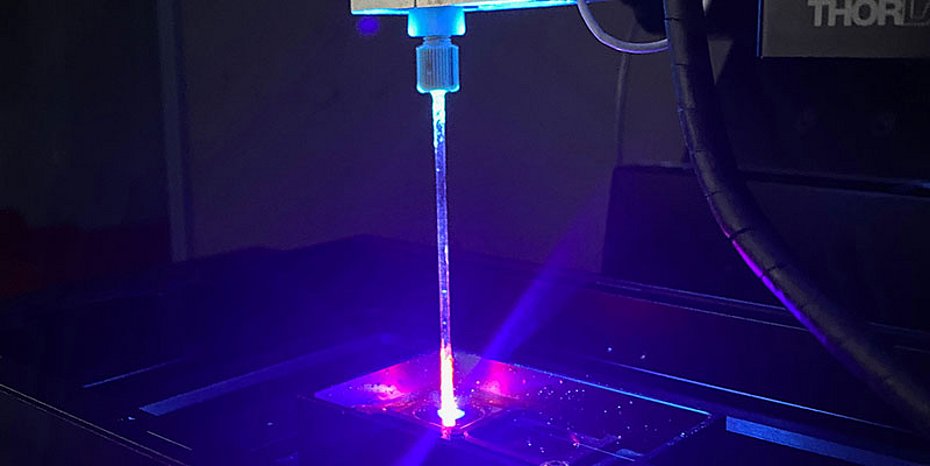
The most effective coating turned out to be a polymer hydrogel, the surface of which the researchers have provided with microscopically small ribs using photolithography. The microstructure of the hydrogel is reminiscent of that of natural models such as shark scales, which also have a ribbed structure, which suppresses the formation of surface deposits in sharks.
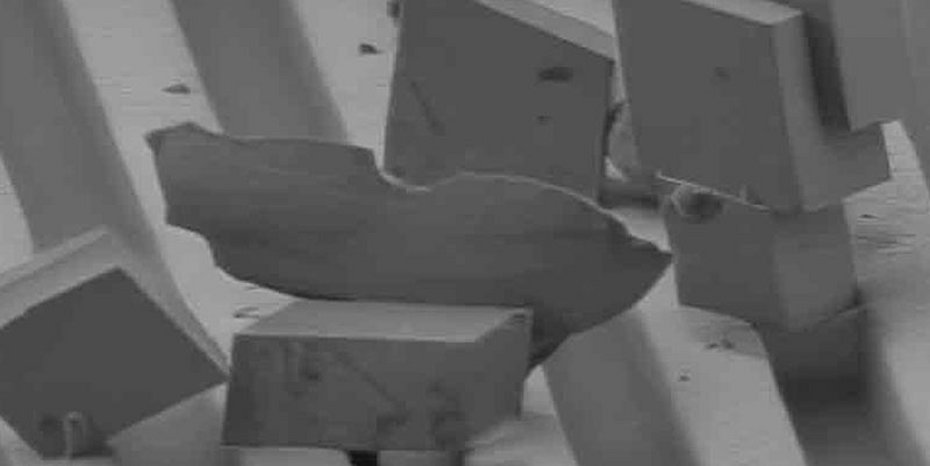
In the kettle or boiler, the ribs ensure that the limescale crystals have less contact with the surface, cannot adhere and can therefore be removed more easily. Water flowing over the hydrogel and through the ribbed structure carries them away. The coating cannot prevent some limescale crystals from forming. However, the constant passive removal of the microscopic crystals prevents the crystals from coalescing into a stubborn layer.
The researchers primarily varied the polymer content in the different coatings. The lower this is and the higher the water content, the less well the calcium carbonate crystals adhere to the surface. Tests with model particles made of polystyrene show that the surface structures of the coating must be smaller than the particles that are deposited on it. This reduces the contact area and therefore the adhesion force. "We varied the surface structure of the material to achieve the greatest efficiency and carried out the crystal experiments with this optimum structure size," says Schmid. Their experiments show that the hydrogel coating is very effective: up to 98 percent of all lime crystals with a size of around 10 micrometers that had previously grown on a hydrogel-coated surface were removed.
Environmentally friendly solution
The researchers emphasize that their solution is more environmentally friendly and efficient than previous approaches to descaling. To date, some toxic and aggressive chemicals have been used for this purpose. The hydrogel, on the other hand, is biocompatible and environmentally friendly. The technology would also be scalable. The coating could be applied in various ways that are already used in industry today.
The researchers have not yet filed a patent for their development, but have deliberately decided to publish it in a scientific journal. This means that all interested parties are free to further develop the new coating and make it usable.
Thomas Schutzius was awarded an ERC Starting Grant for this research in 2019. He no longer works at ETH Zurich, but is now an Assistant Professor of Mechanical Engineering at UC Berkeley. (OM-2/23)
Read more
Schmid J, Armstrong T, Dickhardt FJ, Rameez Iqbal SK, Schutzius TM. Imparting scalephobicity with rational microtexturing of soft materials. Science Advances 9, eadj0324 (2023). DOI: 10.1126/sciadv.adj0324
Contact
Swiss Federal Institute of Technology Zurich (ETHZ)
Rämistrasse 101
8092 Zurich (Switzerland)
Phone: +41 44 632 11 11
ethz.ch