
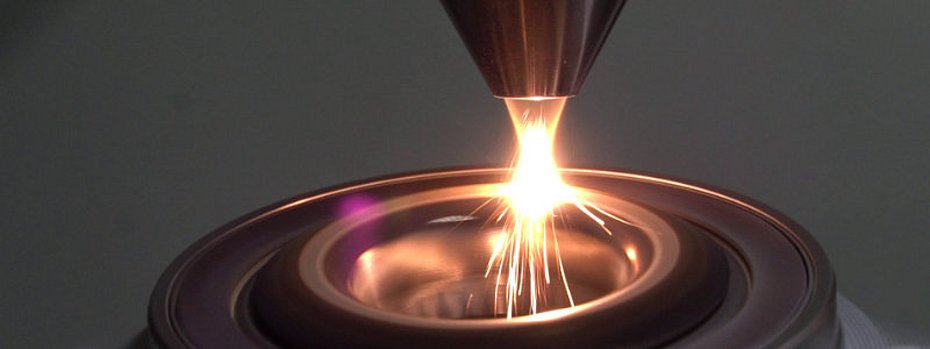
EHLA-Based Functional Layer to Counteract Noise from Electric Vehicles
An EHLA-based functional layer is designed to prevent disruptive noises in electric vehicles at the interface between the wheel bearing and the drive shaft. To this end, a laser process suitable for mass production has been developed.
South Korean automotive supplier Iljin was looking for a solution to a disruptive "ping noise" phenomenon at the interface between the wheel bearing and the drive shaft. In collaboration with Fraunhofer ILT, Iljin developed an EHLA-based functional coating for this purpose, which is now entering mass production. This application demonstrates how a specific industrial problem can lead to a laser process suitable for series production. It also illustrates why the solution lies not in the material alone, but in the function-oriented design of the component, surface, and process.
Laser Cladding to Counter the Ping-Noise Phenomenon
An electric car starts up almost silently. The significant noise reduction provided by the powertrain technology makes acoustic phenomena audible that previously went unnoticed. Cracks, creaks, or metallic clicks are much more noticeable inside the cabin, especially at power transmission interfaces, such as between the wheel bearing unit and the drive shaft. Adam Dmytryszyn is the Wheel Bearing R&D Director for Europe at Iljin, a South Korean automotive supplier and wheel bearing specialist. His development team supports projects for European customers and is constantly on the lookout for new manufacturing processes with potential for mass production. At Iljin, the focus has shifted to the so-called “ping noise” phenomenon: an NVH (Noise, Vibration, Harshness) issue that occurs in many modern vehicles.
Iljin is one of the world’s largest suppliers of wheel bearings and manufactures these components in the millions on highly automated production lines. Based on the requirements and in close collaboration with Iljin, the Fraunhofer Institute for Laser Technology ILT developed an EHLA coating that specifically modifies the contact conditions at the wheel bearing unit. EHLA stands for Extreme High-Speed Laser Cladding. The Fraunhofer ILT has developed this particularly cost-effective and material-friendly coating technology.
Cause at the wheel bearing assembly–drive shaft interface
“The noise isn’t caused by a component breaking or coming loose, as some people assume when they hear it. It occurs because very high forces act on the contact surface between the wheel hub and the constant-velocity joint,” explains Dmytryszyn. When electric vehicles accelerate or regenerate, a very high torque is applied, causing minimal deformation of the drive shaft. As a result, the two steel surfaces at the interface initially stick together, then slip jerkily, and stick together again. This stick-slip effect releases energy in fractions of a second, generating vibrations and noises that are perceptible inside the vehicle. Technically, it is only a tiny relative movement. In the vehicle, however, it sounds like a harsh metallic crack—in other words, “ping noise.” This effect is more pronounced in electric vehicles. They deliver high torque right from a standstill and, at the same time, run so quietly that even brief impulses from the chassis are noticeable.
This is precisely where traditional countermeasures reach their limits. “Greases reduce friction in the short term, but they are displaced during operation and lose their effectiveness over time,” explains the wheel bearing expert. “Adding washers with low-friction coatings introduces new components into an already tight interface, increases effort and costs, and alters the installation space. Furthermore, they may contain PFAS-containing materials, which are considered harmful to the environment.” For a wheel bearing that is manufactured in the millions and is also safety-critical, an approach that only works in testing or merely masks individual noise disturbances is not sufficient. Iljin sought a solution that meets the high quality and cost requirements and integrates seamlessly into existing production. What began as an acoustic problem for the customers thus became a question of design, materials, and process: Which functional coating alters the contact surface in such a way that the noise disappears without weakening the component itself?
Fraunhofer ILT and Iljin Launch Development Project
Adam Dmytryszyn didn’t get the decisive inspiration from a traditional automotive project, but rather by thinking outside the box. At the 2023 Hannover Messe, he saw an EHLA application by Fraunhofer ILT in which a thin metallic layer was applied with high precision and simultaneously machined. The application was actually intended for a slide bearing used in wind turbines. For him, however, the technical core of the matter stood out immediately: a thin, resilient layer with low surface roughness, metallically bonded, with very low heat input and high process speed. This exact combination was the solution to the problem at the wheel bearing interface. The contact made at the trade show led to a development project. Iljin contributed the component, the system knowledge, and the requirements from automotive production. Based on the functional definition of the application, Iljin and Fraunhofer ILT jointly derived the boundary conditions for the coating: material, layer thickness, heat-affected zone, and surface quality.
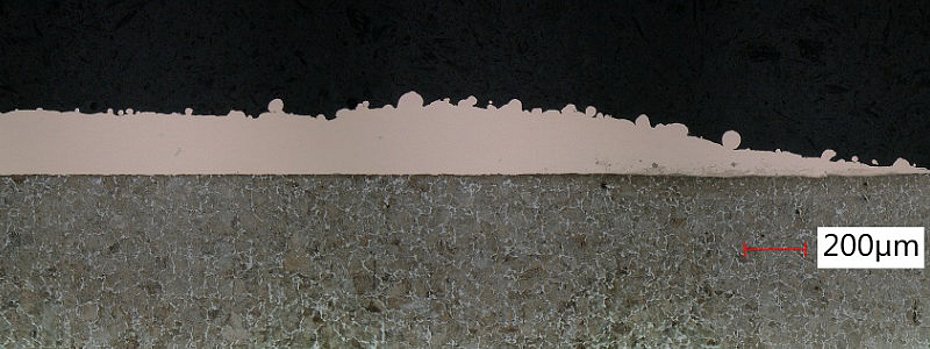
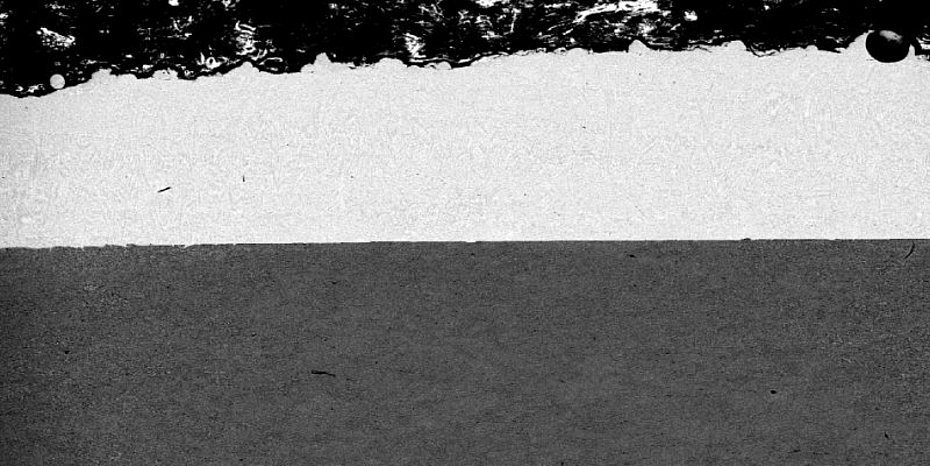
At Fraunhofer ILT, Viktor Glushych, group leader for LMD coating and heat treatment, and project manager Eduard Weisser took on the task of developing a robust and efficient EHLA process based on these parameters. The Iljin team was able to approach the Fraunhofer ILT team directly with technical questions, build an understanding of the process, and work with the Aachen-based experts to define the next steps—from prototype part production to near-series application. The feasibility study quickly revealed that the approach did not follow the principle of “select material, apply coating, problem solved.” Applying a metallic coating to a component is only the first step. Crucial to the success was the technical depth with which the Fraunhofer ILT team tailored the process to the specific application: the component, the surface, the powder material, the process parameters, the layer thickness, and the energy balance. It was only through this interplay that a coating emerged that not only adheres but also performs under real-world loads and is suitable for an industrial process. The Fraunhofer ILT team systematically investigated various coating variants, tested the adhesion to the bearing steel, determined the hardness and heat-affected zone, and transferred the process step by step from a simple sample to the actual wheel bearing.
Iljin tested and compared the test samples produced by Fraunhofer ILT. To this end, Iljin operates a test facility in Germany where the company conducts tests under conditions similar to those encountered in vehicles. The results of the initial functional tests were incorporated into the final process design. Precisely because the affected area is safety-critical, Iljin set particularly high standards for the coating process. The coating required a flawless, bond-type adhesion but was not allowed to damage the underlying steel through thermal effects. At the same time, it had to perform under high surface pressure in such a way that the contact surface would fulfill its function throughout the entire service life of a vehicle.
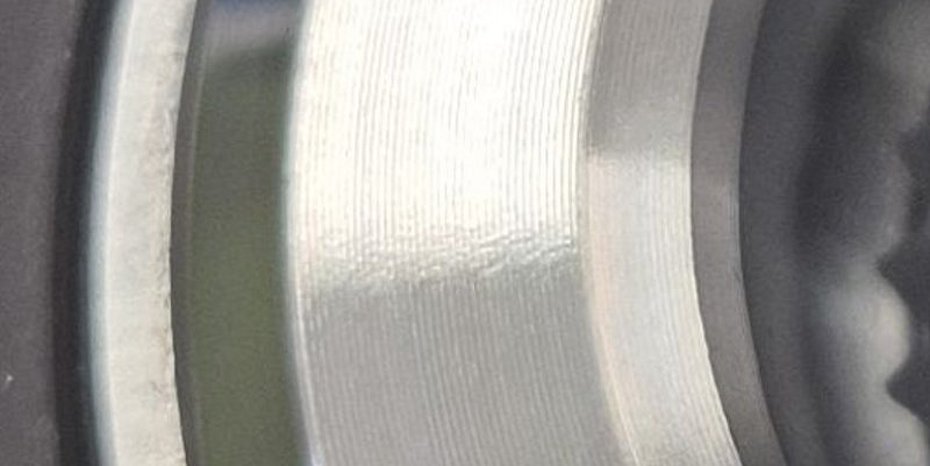
Noise disappears, interface remains stable
“EHLA was particularly appealing for this application because it combines very short processing times, low unit costs, and easy integration into existing production lines,” says Glushych. “At the same time, it creates a metallically bonded, PFAS-free functional layer that is precisely tailored to Iljin’s requirements for this interface and is superior to existing solutions in many respects.” In extreme high-speed laser cladding, the metal powder does not strike the surface cold. The laser beam melts it even before it strikes the component. As a result, EHLA combines high deposition rates with low heat input into the base material. For the wheel bearing, this was precisely what mattered.
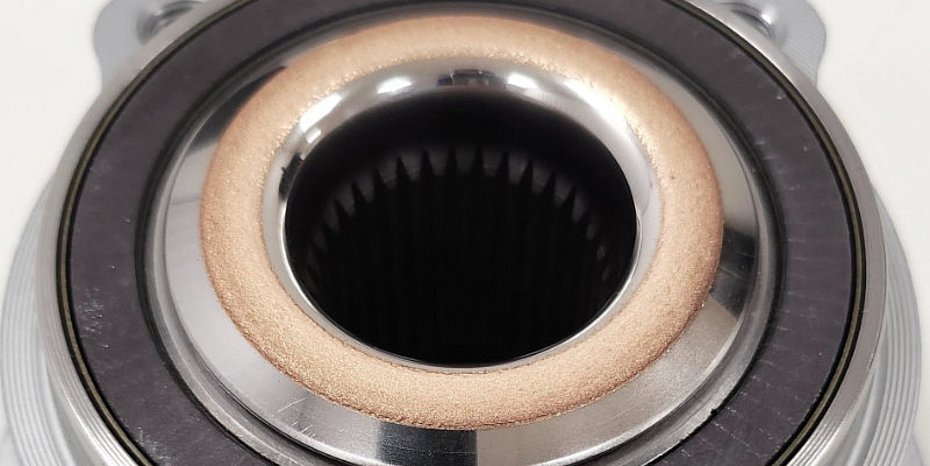
The surface had to be specifically functionalized, while the steel underneath had to retain its mechanical properties. The result was a thin functional layer that does not act as an additional component in the interface but instead becomes an integral part of the wheel bearing surface. “This makes the approach particularly interesting for applications where high demands on performance and component safety must be balanced against strict cost and quality criteria,” explains Glushych.
For Iljin, it wasn’t just technical feasibility that mattered, but also the path to the production line. A wheel bearing is not a laboratory demonstrator, but a component produced in very high volumes and at a strict production cadence. The coating therefore had to be successfully applied to the fully assembled wheel bearing, integrate into an existing highly automated process, and maintain the production cadence. After joining, assembly, and testing, there could be no slow, time-consuming special process that would slow down the entire line. The Fraunhofer ILT team therefore worked from the outset with the goal of applying the coating to the fully assembled wheel bearing in just a few seconds. Thanks to an appropriate process design, subsequent mechanical post-processing was eliminated. The coated surface itself also became part of the solution: Its roughness proved not to be a disadvantage but rather helped to absorb protective and lubricating substances and further stabilize the contact surface between the wheel hub and the drive shaft.
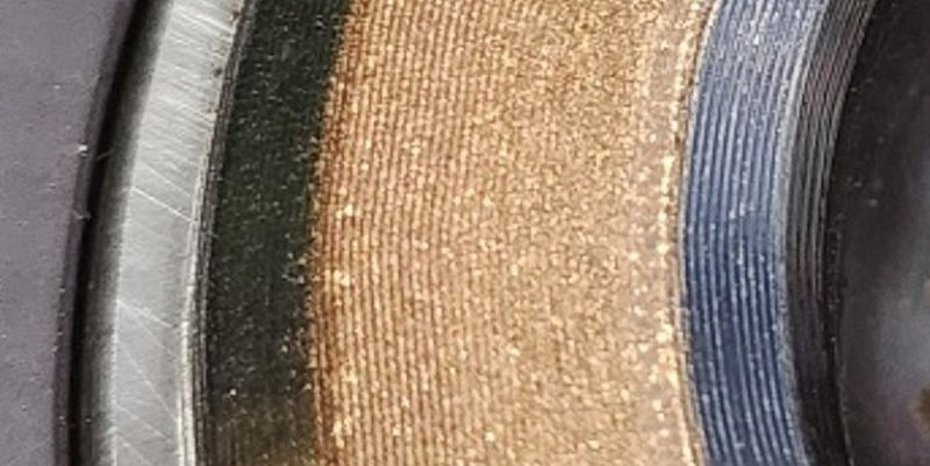
From the Lab to Automotive Production
Tests on test benches and in vehicles showed whether the approach is truly effective. What matters here is not just whether an EHLA coating meets the material criteria specified in the feasibility study. What’s crucial is whether it still functions properly after installation, load cycles, corrosion, contamination, temperature fluctuations, and many driving cycles. The coated contact surface held up. “In all the long-term tests we’ve conducted so far—both internally and with our customers—there were no issues with the applied coating,” explains Dmytryszyn. “It allowed for relative movement without the mating surface sustaining as much damage as before. The annoying “ping” noise disappeared, and the interface remained functional. Because of the thin coating thickness, the solution is directly suitable for many of our customers’ existing designs without requiring modifications to adjacent components.”
For Fraunhofer ILT, too, this application marks an important milestone in technology transfer. Following already established EHLA applications—such as the coating of brake discs—this represents another successful transfer from Aachen to series production in the automotive industry. Extensive testing and rigorous inspections have now led to a first customer placing an order for series production. Iljin is now implementing the coated wheel bearings for mass production in the millions. The Fraunhofer ILT team continues to support this step and is assisting Iljin in transferring the process into production in a stable, repeatable, and quality-assured manner. This is anything but a given. Especially when it comes to safety-critical automotive components, good test results alone are not enough. The process requires customer approvals, consistently controllable quality, and short cycle times. The fact that this approach has been successful demonstrates how far the work of Viktor Glushych, Eduard Weisser, and the Iljin team went beyond a traditional feasibility study.
“With the series application on the wheel bearing, we’ve shown that EHLA works even under very demanding automotive conditions,” says Glushych. “Now the goal is to transfer this knowledge to other products—not as a standard solution, but as a starting point for new, application-specific functional coatings.“ The application at Iljin demonstrates the successful transfer from Fraunhofer ILT to industrial-scale production. What began as a noise problem at an interface has evolved into a laser process that is making the leap into mass production in the automotive industry. In the future, Iljin also plans to use EHLA for functional coatings in other product areas, such as robotics and chassis and powertrain components—anywhere where specifically tailored contact properties offer advantages. (OM-9/26)
Contact
Fraunhofer Institute for Laser Technology ILT
Steinbachstraße 15
52074 Aachen (Germany)
Phone: +49 241 8906-194
Email: info@ilt.fraunhofer.de
www.ilt.fraunhofer.de
About Fraunhofer ILT
The Fraunhofer Institute for Laser Technology ILT is one of the world’s leading contract research and development institutes in its field. Under one roof, the Fraunhofer Institute for Laser Technology ILT offers research and development, system integration and quality assurance, consulting, and training. To carry out research and development projects, the institute has access to numerous industrial laser systems from various manufacturers as well as an extensive infrastructure.