

Automated surface processing in the automotive plant
Artificial intelligence in the automotive plant: For the first time, a manufacturer relies on end-to-end digitalized and automated processes for painted vehicle surfaces. AI-controlled robots process each vehicle individually according to objective quality standards.
The BMW Group plant in Regensburg is the first plant in the automotive industry worldwide to use a fully digitalized and automated process for inspecting, processing and marking painted vehicle surfaces in series production. The innovation: AI-controlled robots process each vehicle individually according to objective quality standards. This ensures more stable processes, shorter throughput times and a consistently high level of quality for vehicle surfaces. Data stored in the cloud also enables optimum analysis of the interactions - and is thus a further step by the BMW Group towards the digital and intelligently networked factory, the so-called "BMW iFACTORY".

Painting, sanding, polishing - with artificial intelligence (AI) to unique processes
The scene looks like a long-rehearsed spectacle: Four robots stand in the processing booth, with a freshly painted car body in their midst. As if on command, the robots begin to work on the surface of the body. They sand, apply polishing paste, polish, change the attachments and renew the sandpaper. Cameras follow the scenario. "The special thing is that the robots process each car body exactly where it is needed. This is because the tiny inclusions or unevenness that can occur after the topcoat process and that we want to eliminate are in a different place on each vehicle," explains Stefan Auflitsch, Head of Production Paint Application and Finish at the BMW plant in Regensburg. "Normally, you program robots to always run the same pattern until they are reprogrammed again. By using artificial intelligence, the robots now work in a customized manner. With up to 1,000 vehicles that we send through the finish in a workday, that's also 1,000 unique sequences."
Since March 2022, the so-called Automated Surface Finishing, or AOB, has been in series production at the BMW Group plant in Regensburg. The plant is the first automotive plant in the world to use the AI-based process on this scale. To ensure that it works smoothly, another automated process is upstream that has been considered "state of the art" in the automotive industry for some time: Automated Surface Inspection, or AOI for short, first identifies and records the features to be processed after the top coat.
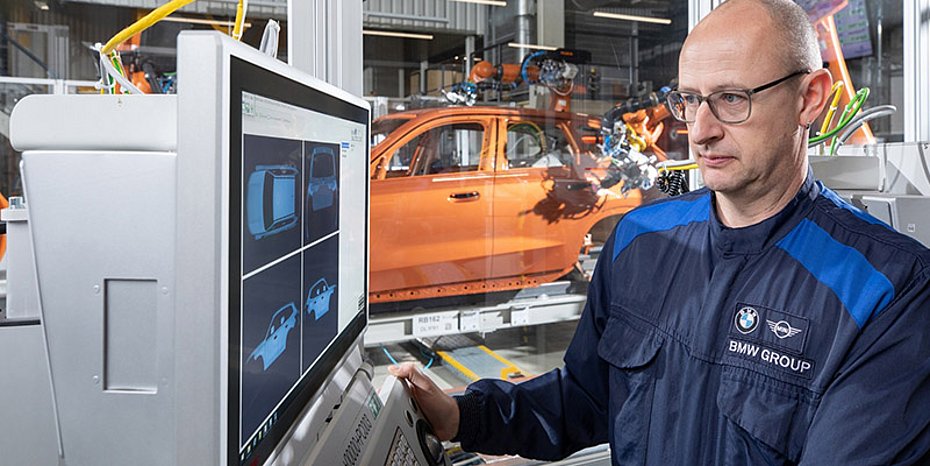
Black and white for more perspective: From light strip to digital feature
In Automated Surface Inspection, the system first identifies the deviating features using deflectometry. While large monitors project black-and-white stripe patterns onto the vehicle surface, cameras scan the same and detect even the smallest changes in the reflective paint through the shift in the stripe pattern. Like a perfectly trained eye, the camera registers the spots that deviate from the ideal and transmits them directly to the connected computer system. The computer stores the exact position, shape and size of the feature, constructs a digital 3D image from the data and classifies it on the basis of objective criteria. In this way, all vehicle surfaces are checked for quality in terms of the customer's needs and processed if necessary. "We finalized the system with the knowledge of our entire team, and its function is based on the unique expertise of our employees. We incorporated their experience into the programming - on this basis, the algorithm now objectively recognizes and decides which features need to be reworked," explains project manager Daniel Poggensee, structural planner in the technology surface. From the collected data, the system creates a separate feature profile for each body, which in turn serves as the basis for individual surface finishing. In this way, no unevenness, no matter how small, unintentionally falls through the cracks.
The new process has even more advantages than the reliable detection of all features and the shorter throughput time in the process: The automated surface processing not only processes all the detected features in the optimum sequence and speed, but also - stably and with repeat accuracy - always in the same processing quality.
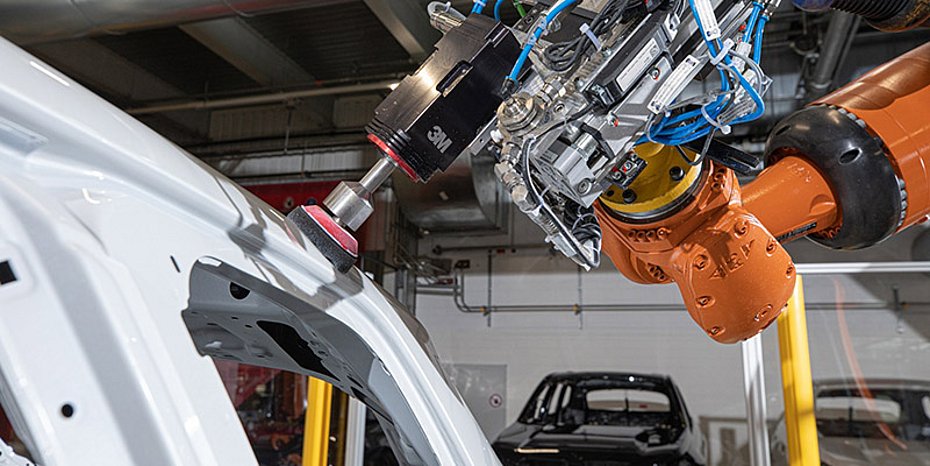
All data in the cloud - step by step to the networked factory
But the use of robots also has its limits. For example, they cannot process the edges of the car body or the last millimeters next to door and other joints. The fuel filler flap is also too fragile. And so, in the final stage, it is the trained employees who apply the final touches and remove the bodywork. The previously recorded data of the features supports the work here once again, because a laser projector digitally marks the respective points of the body surface and thus ensures that nothing is overlooked. Automated surface marking, or AOM for short, is thus the last step in automated finishing to date. But there are other ideas for the future, according to Poggensee: "For one thing, we expect that thanks to the data in the cloud, we will soon be able to intervene in the process even earlier in the event of inconsistencies, thus preventing a possible error from occurring in the first place." On the other hand, in the future the devices used will automatically record the work steps of the employees - thus sparing them from having to constantly switch back and forth between the body and the computer for documentation. In addition to saving time, this will reduce complexity and increase added value.
The BMW plant in Regensburg is the first to use the three-stage automated process in series production. A rollout to other plants is currently being examined. (OM-05/23)
Contact
BMW Group
Plant Regensburg
Herbert-Quandt-Allee
93055 Regensburg (Germany)
www.bmwgroup-werke.com/regensburg/de.html
About BMW Group
With its brands BMW, MINI, Rolls-Royce and BMW Motorrad, the BMW Group is the world's leading premium manufacturer of automobiles and motorcycles and provider of premium financial and mobility services. The BMW Group production network comprises 31 production and assembly plants in 15 countries; the company has a global sales network with representatives in over 140 countries. The Regensburg plant produces BMW models in the high-volume compact class for customers all over the world.