
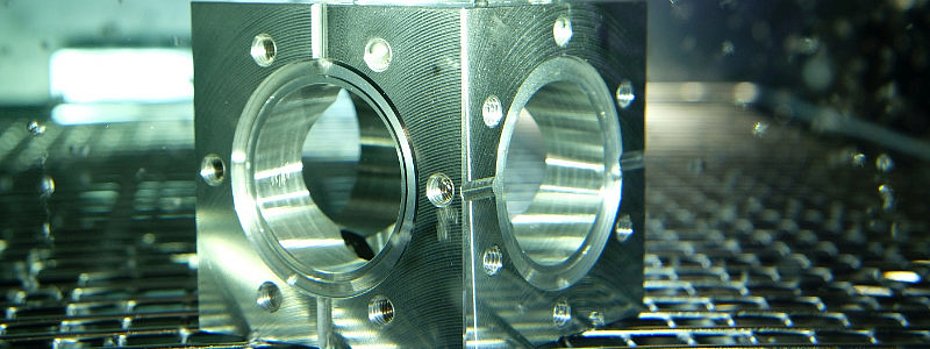
In order to secure a future-proof and competitive position in the market, many companies are restructuring their product range. The trend is towards sophisticated solutions for high-tech industries. This is associated not only with higher demands on the precision of components, but also with extremely strict requirements in terms of particulate and filmic cleanliness, which must be achieved reliably, economically and sustainably. This requires a different approach to cleaning as well as a critical view of the entire production chain and the manufacturing environment and an experienced partner.
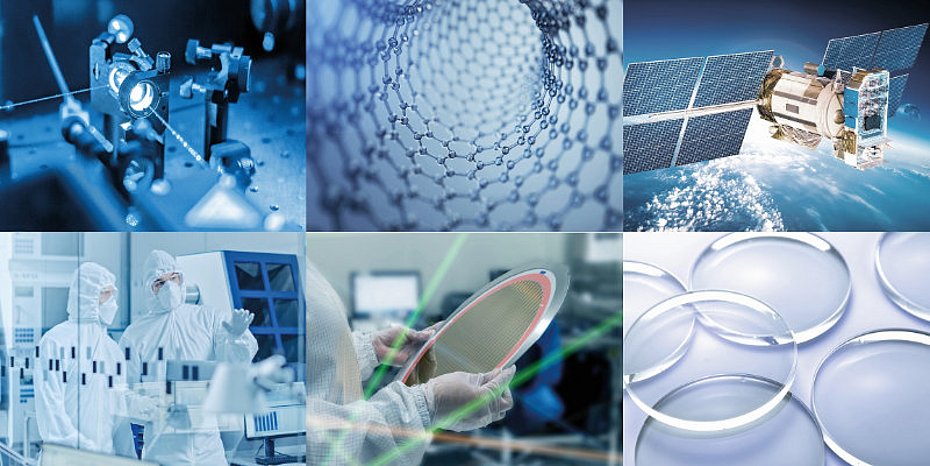
Very high demands on component cleanliness
As part of the industrial transformation, more and more companies are focusing on manufacturing high-quality products and components with good margins. The focus is on high-tech sectors that promise stable demand through growth in the future. The very high demands placed on manufacturing precision in these industrial sectors, such as the semiconductor supply industry, electronics manufacturing, e-mobility, the optical and optoelectronic industry, sensor technology, photonics, thin-film technology, vacuum, laser and analysis technology, aerospace, include the cleanliness of components. And this is true regardless of whether they are barely visible electronic parts, millimeter-sized connecting elements, precision optics or meter-sized structural components and regardless of the materials from which they are manufactured.
Define cleanliness according to needs
This trend presents parts cleaning with challenging tasks. In contrast to traditional component cleaning, where larger quantities of production residues, such as chips and processing media, usually need to be removed, ultra-fine and high-purity cleaning involves removing minimal residual contamination. The specifications for particulate cleanliness extend into the sub-micrometer range. In the case of filmic residual contamination, depending on the industry, component and its use, up to nanolayers of organic and inorganic residues, ionic residues and residues of microorganisms, for example, must be removed reliably and reproducibly. In high-purity applications, such as the production of components for EUV lithography, hydrogen-induced outgassing (HIO) substances must also be taken into account.
The specifications for particulate cleanliness to be met during cleaning are specified by the corresponding surface cleanliness class (ORK) according to EN ISO 14644-9 (SCP - surface cleanliness by particle concentration) or the corresponding VDI guideline 2083, sheet 9.1. The filmic-chemical, organic and inorganic surface cleanliness is usually defined by individual specifications or factory standards. These demanding tasks require a partner with comprehensive technological expertise and knowledge of the applications and physical relationships. On the other hand, experience in this field of cleaning and corresponding test facilities for cleaning trials under production-related conditions should be available. As an experienced full-service provider of future-oriented and globally available solutions for ultra-fine and high-purity cleaning, Ecoclean meets these requirements.
Selecting the right cleaning process and system technology
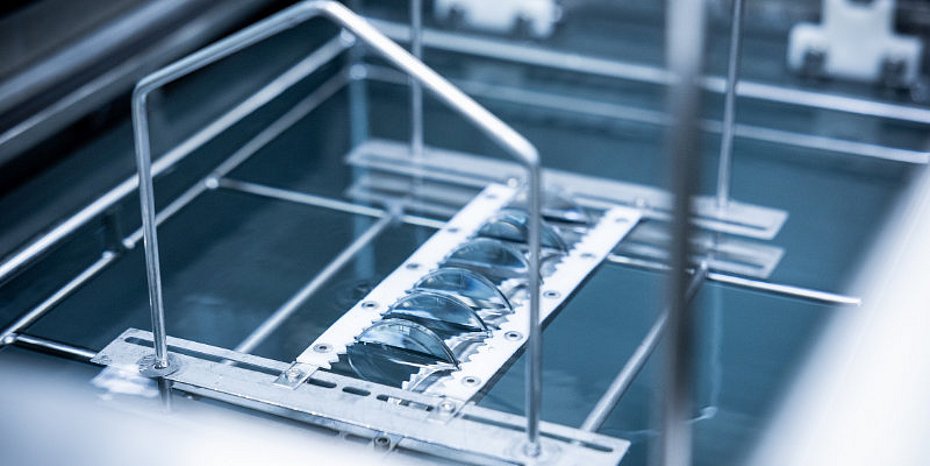
In order to meet these very strict cleanliness specifications in a reliable, reproducible and sustainable manner, several cleaning steps are usually required along the production chain. The following questions play a role in selecting the optimum solution for the respective cleaning process: What material is the part made of? What are the geometry, dimensions and weight of the component? What contaminants need to be removed? What cleanliness specifications must be achieved? Which cleaning process and chemicals are suitable? On this basis, it is possible to determine which and how many cleaning steps are required with which medium and which process technologies. Other aspects to be considered include the required quality of the rinsing medium and the appropriate drying technology, as well as cleanliness-compliant parts handling and the ambient conditions, such as connection or integration into a cleanroom.
Cleaning along the production chain
The basis for ultra-fine or high-purity cleaning is "oil and grease-free" parts. In order to achieve and maintain this level of cleanliness, a cleaning process is carried out after the various machining steps, for example machining, forming, grinding or polishing. The effect of the cleaning medium used is enhanced by various process technologies that can be combined in almost any way, such as steam degreasing, spray, high-pressure, immersion, ultrasonic and megasonic cleaning, as well as plasma cleaning, injection flood washing, pulsed pressure cleaning (PPC) or ultrasonic plus. These process options ensure that the required cleanliness is consistently achieved, even with geometrically complex workpieces.
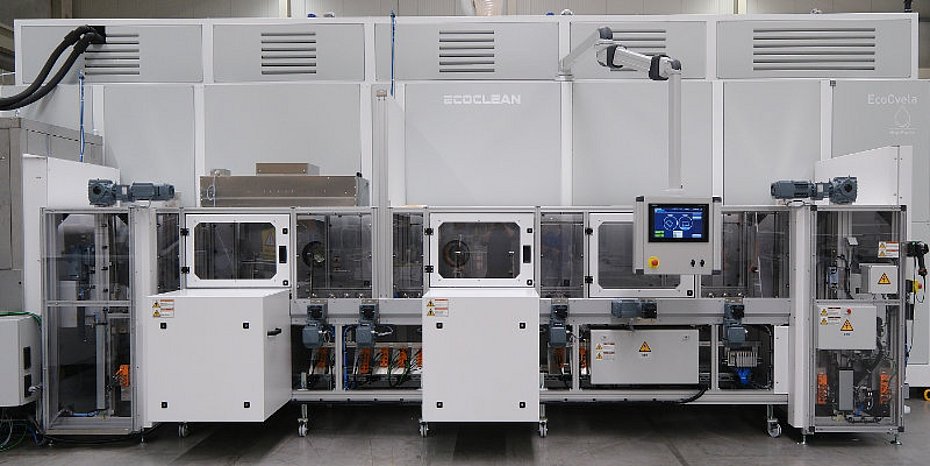
For intermediate cleaning processes or parts whose cleanliness specifications are not too stringent, modular single or multi-chamber systems, such as EcoCstretch or EcoCvela, which operate under a full vacuum and are operated with an environmentally friendly solvent, e.g. hydrocarbon or modified alcohol, or a coordinated water-based cleaning agent, depending on the processing medium used, are usually used. The construction, system technology, media routing and treatment of these systems are specially designed for ultra-fine cleaning and high purity applications. Thanks to the process mechanics concentrated in the working chamber, e.g. injection flood washing, ultrasound and PPC, this type of system also offers advantages when cleaning large and complex workpieces.
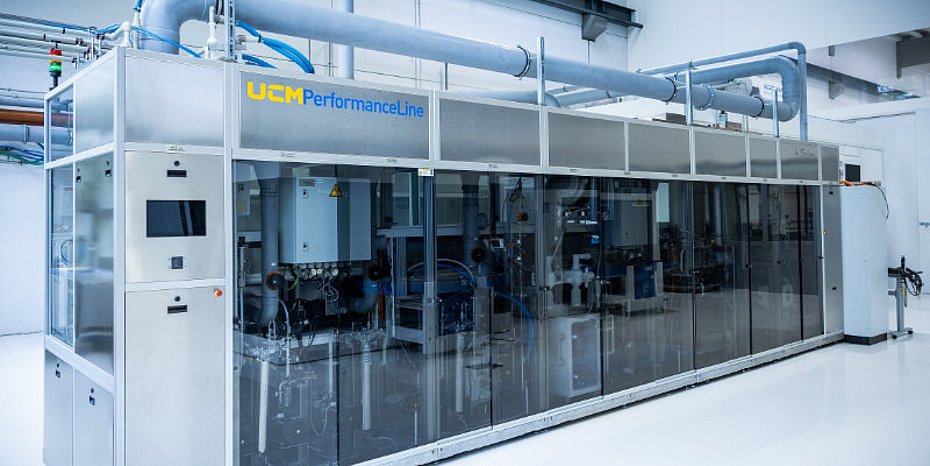
Ultrasonic multi-bath immersion systems are the ideal solution for parts with a large variety of materials, high throughput requirements and/or strict cleanliness specifications. In addition to individually designed cleaning systems for high-end applications, the system manufacturer offers an efficient solution with the UCMSmartLine and UCMPerformanceLine series of systems consisting of standardized modules. The electrical and control technology is integrated into the respective modules for the cleaning, rinsing, drying, loading and unloading process steps as well as for the transport system. As a result, and thanks to the equipment with process mechanics such as PPC that meet the requirements, the systems can be optimally adapted to the respective task. The option to expand the cleaning system at a later date ensures future-proofing in the event of increased requirements.
Test center for process design or contract cleaning
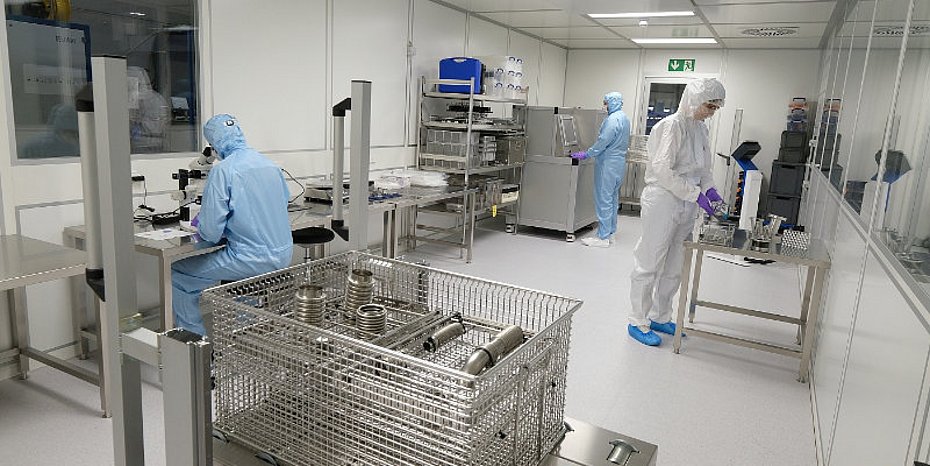
Ecoclean determines the right system concept for the respective application and the optimum cleaning process in its own High Purity Test Center. It has a class 7 cleanroom with class 6 zones as well as various measurement and analysis methods (e.g. microscopy, residual gas analysis, UV light and fluorescence measurement). In addition to the product-specific development of cleaning processes and parameters, the plant manufacturer also uses the Test Center to carry out contract cleaning orders. A packaging station for cleaned parts ensures that the high level of cleanliness achieved also reaches the customer (OM-4/26).
Contact
Ecoclean GmbH
Mühlenstraße 12
70794 Filderstadt (Germany)
Phone: +49 (0)711 7006-0
E-mail: info.filderstadt@ecoclean-group.net
www.ecoclean-group.net
About Ecoclean
The SBS Ecoclean Group develops, produces and sells future-oriented equipment, systems and services for industrial component cleaning and surface treatment. These world-leading solutions help companies around the globe to produce efficiently and sustainably with high quality. The group of companies is represented at twelve locations in nine countries worldwide and employs more than 900 people.