
Industrial parts cleaning trends and prospects for 2026 - Interview with Gerhard Koblenzer, CEO LPW Reinigungssysteme
Trends and prospects in industrial parts cleaning for 2026: Gerhard Koblenzer, CEO of LPW Reinigungssysteme, in a Trendbarometer interview with Oliver Missbach, Editor-in-Chief of Surface Technology Online.
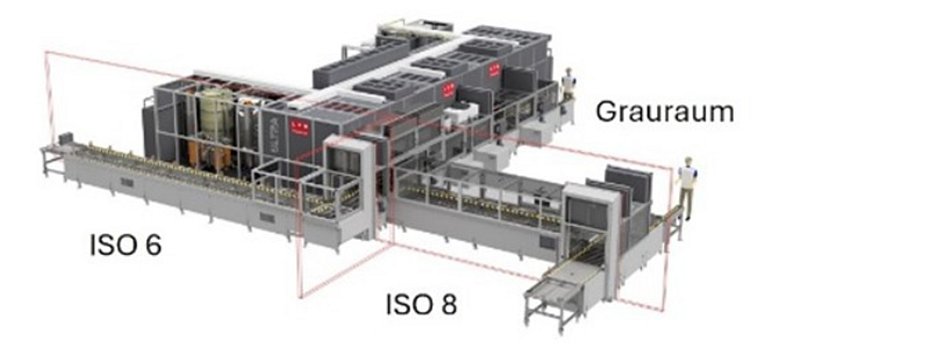
Gerhard Koblenzer: "Like the previous year, 2025 was very sobering. With the exception of the automotive sector, we had a high volume of project activity. However, the willingness to invest remained at a very hesitant level. But we are learning to deal with the crisis mode. Incoming orders have increased noticeably since the 4th quarter. Although it is clear that these are often the first results of government investment programs. One of our highlights is that we have also been able to make significant technological advances this year. For example, we designed independent methods for media and air supply systems in conjunction with high-purity requirements that did not yet exist on the market. We have also taken our automation solutions, which have been one of our core competencies for 20 years, to the next level in connection with cleanroom transfer. Our high-end high-purity system for Swacrit in Tyrol is also one of the highlights of the year. In the Netherlands, our PowerJet Compact achieved Pure Grade 1/ASML. And last but not least, we are of course delighted with the good order intake at the end of the year."
Gerhard Koblenzer: "The old driving force automotive is weak and currently has no prospects. However, there are many positive developments in key high-tech sectors, as well as in the field of additive manufacturing, which has long been our hobbyhorse. That sounds good at first and gives us hope. However, the various sectors are coming up against a capital goods industry that is still undergoing a process of change in many areas. In addition, the difficult order situation is leading to confusing competition at different skill levels, which makes it difficult for customers to separate the wheat from the chaff."
Gerhard Koblenzer: "The shortage of skilled workers is currently being masked by the rising unemployment figures and the lack of capacity utilization among machine and plant manufacturers. However, it still exists and will have an increasing impact in the coming years. It is essential to retain younger employees in companies in order to compensate for the age-related departure of experienced colleagues. There is also an increasing need for qualified young talent in the manufacturing and assembly environment and, of course, in the area of new digital requirements."
Gerhard Koblenzer: "The industry is dominated by SMEs and has few opportunities to operate worldwide like a global player. However, as we are now predominantly active internationally, these associations offer valuable support in terms of regulations, technical and fundamental work, market development and specialist qualifications. The expansion is in full swing. For example, we are currently working on the internationalization of activities in a newly established FiT working group. This is a very exciting project with high potential benefits for members. In addition, the association's work is increasingly focusing on the aspect of clean production processes, in which industrial parts cleaning has its place as a key operation. This represents a completely different mindset."
Gerhard Koblenzer: "The competitive situation must be viewed in a differentiated manner. In the high-quality, customized segments, direct competition can be found in the German-speaking neighborhood. In addition, there are those players who are being brought into the new high-quality segments by investors from outside the EU or who are being strongly supported financially in the implementation of a price-reducing standardization strategy. And if you look at the Chinese domestic market, for example, a strong and low-cost competitive environment has now developed there, particularly in the standard segment. This can only be met by local production. Nevertheless, the following still applies: Made in Germany is a seal of quality. Especially when it comes to high-end solutions. This is where we as LPW continue to see ourselves in an excellent position. This is not primarily a cost issue, but rather a performance and experience issue in terms of the required quality."
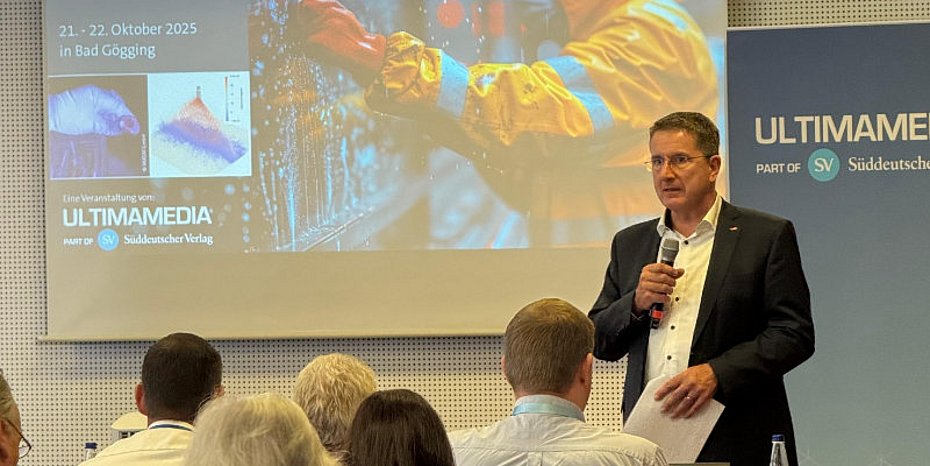
Gerhard Koblenzer: "In our view, the traditional trade fairs have not developed sufficiently in terms of internationality and industry focus. For visitors, there is a lack of key exhibitors who represent an overall picture of those suppliers who are required to set up and maintain clean production processes. Even if accompanying events, such as the parts2clean specialist forum, are becoming increasingly better, they do not compensate for the structural core problem. This is a fatal development, associated with disproportionately high costs for the exhibitor. This is why our focus is now on highly active industry or foreign regional trade fairs in the form of tabletop formats. The focus here is on networking and interaction. In one day we have more leads there than in three days at a traditional trade fair. And that at just 10-20% of the cost."
Question: "Structurally, the industry has been changing for several years now. Suppliers not only have to be good machine builders, but also service providers who support and advise their customers along the entire process chain. What role will monitoring play in the future, for example, and what about machine learning?"
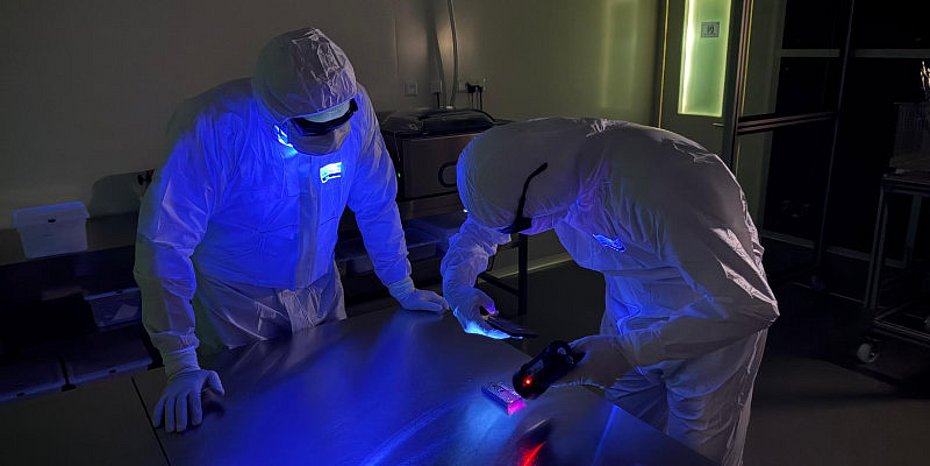
Gerhard Koblenzer: "Monitoring in terms of process transparency and traceability has always been a mandatory task in clean production processes. And not only when validation requirements exist. With ultra-fine and ultra-fine cleaning requirements, however, there are increasingly new questions that need to be answered. For example: Can risks and deviations in technical cleanliness be identified at an early stage and is it possible to take countermeasures in good time? How can process chains be integrated into monitoring across supplier boundaries? Can the pre-processes before cleaning be integrated into a monitoring system with regard to their influence on the cleanability of the components? Are there affordable solutions for the supply chains? Our activities have always been aimed at providing viable solutions for these tasks. Every aspect of a cleaning process generates information about its performance and progress itself, but also about the influences from upstream processes and the relevant framework and environmental parameters. As a consequence, this understanding is also an indispensable basis for a subsequent machine learning concept. The right sequence is important: first understanding the process, then implementing a digital or AI-based concept. That's why we decided ten years ago to combine these monitoring approaches with our cyclic nucleation cleaning process and filed a corresponding patent. It has since been granted and perfectly complements the existing portfolio. In 2015, LPW took over the existing European, North American and Asian patents and patent applications for the previously unsuccessful cyclic nucleation process and, following an intensive development process, developed it into a scalable and reliable building block for ambitious cleaning processes in all industrial sectors."
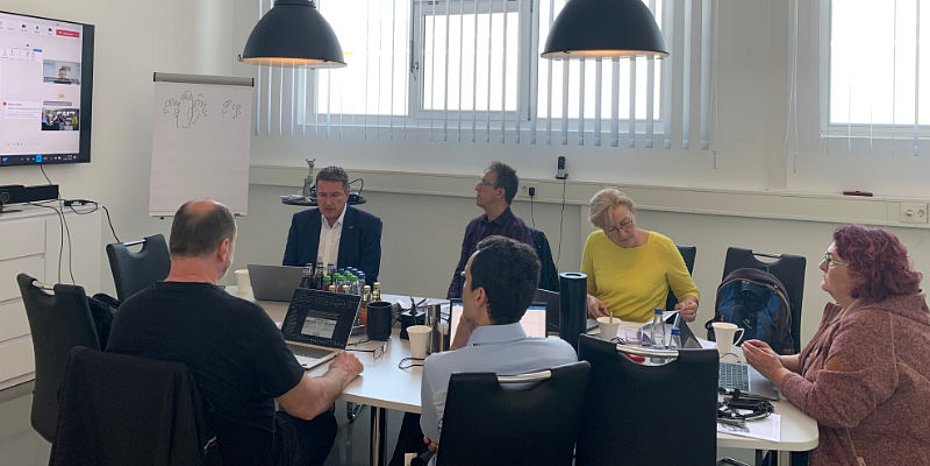
Gerhard Koblenzer: "A lot is being done in this regard and we are involved in those committees where the future is being shaped. That is exciting and valuable. For example, this topic is currently being developed in the FiT guidelines and in the DIN standards committee. This creates transparency and regulations that are urgently needed for the rapidly changing requirements and tasks. This helps the market. And, of course, it also helps us as a company that relies on certain standards. Among other things, we have been able to help ensure that terms such as cleanability, quality gate and process chains are no longer foreign words when it comes to technical cleanliness."
Gerhard Koblenzer: "The search for calmer waters. The continuous expansion of our networks and partnerships as well as the expansion of our range of standard and special plant construction and services. But above all of this is the wish that the impositions from outside and inside the industry and the people who work here will become less!"
About the person
Gerhard Koblenzer is the CEO of LPW Reinigungssysteme GmbH. The Riederich-based entrepreneur and his team are among the leading high-purity specialists in the industry. He can also be found on numerous national and international committees that deal with the future and corresponding regulations and standards for industrial component cleaning.
Contact
LPW Reinigungssysteme GmbH
Industriestraße 19
72585 Riederich (Germany)
P.O. Box 11 64, 72585 Riederich
Phone: +49 (0)71 23 - 38 04-0
E-mail: info@lpw-reinigungssysteme.de
www.lpw-reinigungssysteme.de
About LPW Reinigungssysteme GmbH
LPW Reinigungssysteme GmbH is one of the leading suppliers of high-quality systems and process technologies for industrial component cleaning with aqueous media. The systems are used in the mechanical engineering, automotive, aerospace and general industry sectors, among others. With its High Purity division, LPW is also a sought-after partner in sectors with fine and ultra-fine cleaning tasks such as the medical technology, optical and semiconductor industries.