
Fraunhofer FEP: Surface disinfection using plasma technology
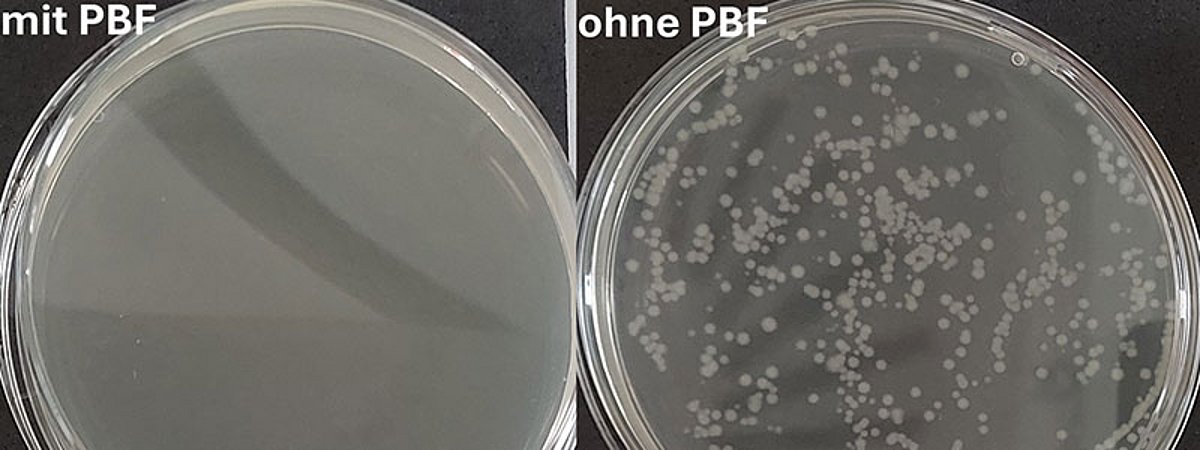
The Fraunhofer FEP is investigating plasma-activated water as a chemical-free alternative to conventional disinfectants for surfaces. The innovative solution remains active for over 300 days and is suitable for pharmaceuticals, the food industry and agriculture.
Scientists at the Fraunhofer FEP are researching a technology for the production of plasma-treated liquids (PBF) that can be used as an environmentally friendly alternative to conventional chemical disinfectants. Their suitability as surface disinfectants is being investigated in a current study. The research results show a shelf life of over 10 months and good antimicrobial efficacy against E. coli. The technology uses atmospheric pressure plasma sources to treat liquids, creating reactive oxygen and nitrogen species. "The plasma-activated water can be treated in advance and then transported to the point of use without the need for plasma sources or other treatment devices on site," explains Linda Steinhäußer, lead author of the Fraunhofer FEP study. In a comparison of two plasma processes, arc discharge showed up to 4-fold higher antimicrobial efficacy compared to dielectric barrier discharge. The tests with the model organism E. coli showed a reduction of up to 4 log levels, depending on the material, exposure time and PBF volume used.
Study documents antimicrobial efficacy
The plasma-treated liquids are suitable for various industries such as pharmaceuticals and clean rooms (chemical-free disinfection under sterile conditions), the food industry (cleaning-in-place process, e.g. for milk tanks and similar facilities) or agriculture (possible use as disinfectant and fertilizer by nitrogen species). The study documents a material-dependent antimicrobial effectiveness for the first time. For this purpose, polymer surfaces (ABS, PVC) and stainless steel surfaces were examined comparatively. These findings are relevant for industrial applications and enable targeted optimization for different surface materials and application scenarios. "The physico-chemical parameters show a durability of over 300 days with longer plasma treatment times," says Steinhäußer. While the long-term stability of the physico-chemical parameters has been proven, the correlation with the disinfection effect is still being investigated. The study was published in the specialist journal "Surface & Coatings Technology" and was carried out in collaboration between the Fraunhofer Institute for Electron Beam and Plasma Technology FEP in Dresden and the Fraunhofer Institute for Surface Engineering and Thin Films IST in Braunschweig.
Contact details and information on the companies and institutions presented here can be found in our interactive surface technology industry directory.