
Adphos: Drying plastic films energy-efficiently and without CO2 emissions
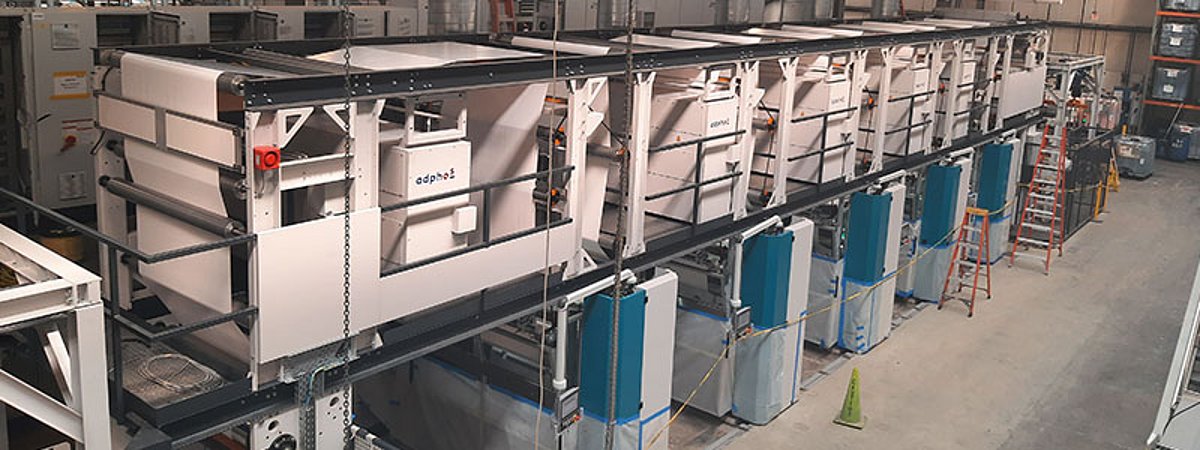
Thanks to the newly developed aLite (Advanced Light Initiated Thermal Emission) technology from Adphos, the energy-efficient and completely CO2-free production of water-based decors on PVC films is now possible. After just two weeks of commissioning, a commercial production line is now available to a leading international decor printing company.
The aLite drying solution from Adphos combines powerful photonic energy input with temperature-controlled impingement air to achieve local vapor absorption with defined moisture removal. For the first time, this enables quasi-spontaneous drying (in sub-seconds) with high register accuracy (virtually unmeasurable) on temperature-sensitive film materials (e.g. PVC). In all of this, production quality is maintained even during dynamic start-up and shut-down of the 5-color gravure printing system. The aLite-based decor printing system offers a convincing alternative for producing the wide range of decors on the market. Thanks to the AI-based, automated dryer performance controller aDC (advanced Dryer Control), the system works even more effectively and is also fully automated.
Another advantage of the new aLite drying solution is the significantly reduced dryer power requirement of only a fraction compared to today's conventional convection dryers, with a total drying length of only 1 meter (compared to the 6-8 meters required for hot air dryers) at a production speed of up to 200 m/min. aLite is the solution on the market today with the lowest operating costs and low investment requirements as a result of the possible machine savings coupled with reduced building expenses and infrastructure requirements. The retrofitting of existing decor rotogravure systems with aLite is also possible at short notice with typical amortization times of < 18 to a maximum of 24 months. The use of aLite technology in decor printing complements the well-known wide range of application possibilities in various surface coating processes.
Contact details and information on the companies and institutions presented here can be found in our interactive surface technology industry directory.