
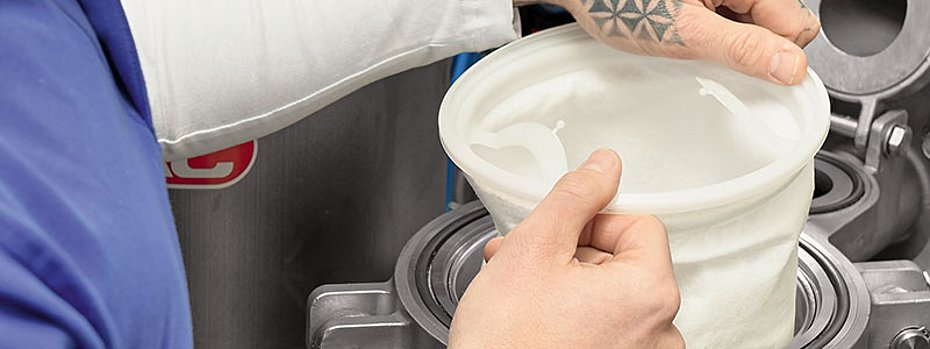
Cleaning process, temperature, water pressure and cleaning agent: Numerous parameters determine whether a system is optimally adjusted to the parts to be cleaned and reliably achieves the required level of cleanliness. This should be achieved as economically as possible. Considerable savings potential lies dormant in a parameter that is often neglected: the right choice of filter for the filtration unit.
The challenge in industrial parts cleaning is to get the parts to be cleaned as clean as required in the shortest possible time, with the least possible use of resources and using the most economical operating resources. In addition to the investment, maintenance and operating costs for the cleaning machine, plant operators are primarily concerned with its energy and water consumption. In contrast, hardly anyone thinks about consumables such as filter inserts, which are supposedly of little importance. Yet there is every reason to do so from a cost perspective.
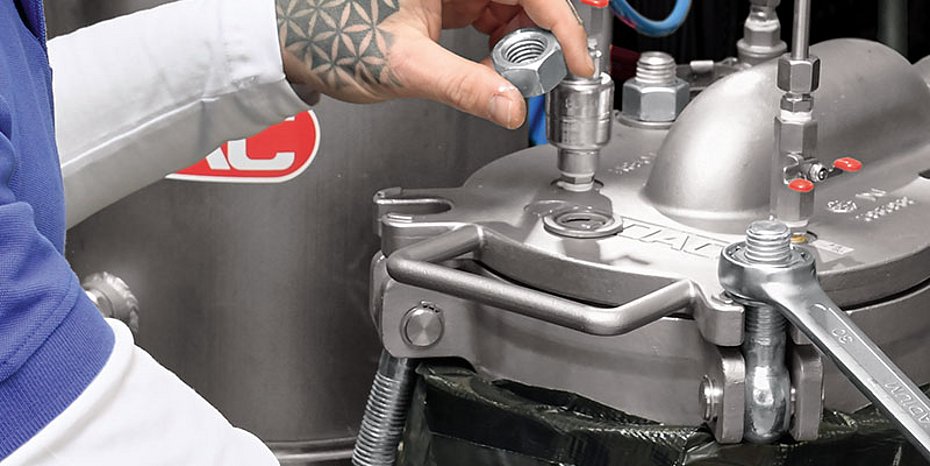
Know-how for efficient parts cleaning
How can the savings potential be leveraged? The engineers at Silberhorn Maschinenbau have developed a multi-stage process that results in an economically optimized filter configuration for individual cleaning requirements. Silberhorn achieves this not only through expert advice, for example in the selection of filter inserts, but above all with high-performance cleaning systems. The company, based in Lupburg in the Upper Palatinate, specializes in the development, manufacture and worldwide distribution of systems for industrial parts cleaning on an aqueous basis. The product portfolio includes chamber and continuous cleaning systems as well as rotary table, robot or immersion systems and high-pressure deburring. It also offers special services such as contract cleaning or technology trials and residual dirt analyses in the company's own test laboratory.
The test laboratory also plays an important role in the selection of filter inserts, but first things first. Silberhorn recommends that operators of industrial parts cleaning systems adopt a systematic approach to determining the optimum filter in terms of both cost and requirements. The reason: "The variety of filter systems and qualities as well as the wealth of individual requirement parameters to be taken into account is so great that there can be no generally valid filter recommendations," says Martin Seger, test manager and mechanical engineer at Silberhorn.
Many parameters, high complexity
Many different parameters must be taken into account in order to provide a solid answer to the question of the economic efficiency of different filter inserts. These include the filter performance itself, the quantity of parts to be cleaned per day, the requirement for cleanliness, the type and degree of part contamination, the cleaning agent, the flow rate and the differential pressure on the filter, the structure of the cleaning cascade and the total number of filter elements used.
In addition, there are other factors that can have a considerable impact on the overall costs. For example, who carries out the filter change? The machine operator himself or an external maintenance service? And what happens during the filter change: is the machine at a standstill or are there switchover filters so that machine downtimes can be avoided? "High machine availability is generally desirable, but not always necessary in practice," explains Seger and says: "When selecting filters, it's also not always about finding the highest quality solution, but the best individual solution. That's what makes it so complex."

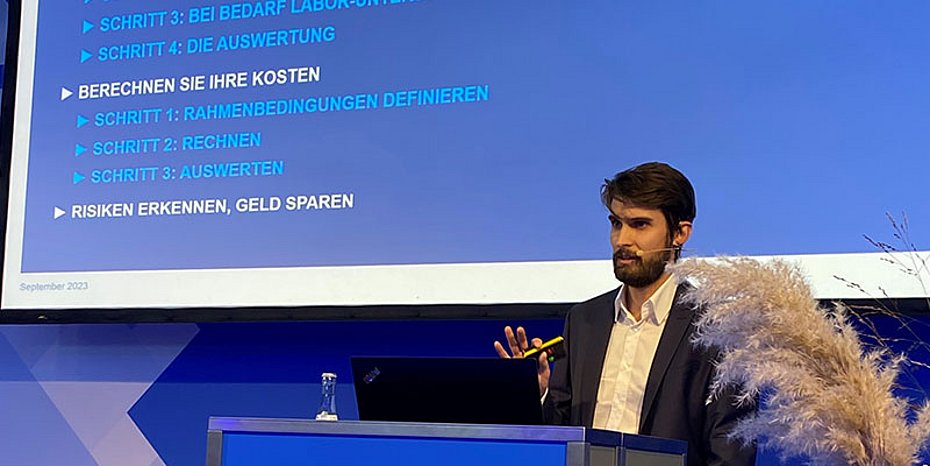
First of all, the criteria that are decisive for the selection of a filter should be defined in the form of a checklist. Silberhorn has defined three requirement fields for this. Field 1 describes criteria for the nature of the parts to be cleaned and the degree of cleanliness or tolerated residual dirt. Field 2 defines the service life limit values for the filter. Field 3 considers the cost criteria (see Fig. 1).
In order to be able to make the filter selection, users should always test under the same conditions. For this reason, a standard component is first defined in step 2 - one that is as close as possible to the real thing in terms of geometry and size, drill holes, undercuts, etc. and that has similar soiling to the parts that will actually be cleaned later. These standard components are then cleaned using the same cleaning program, whereby different filters are used.
The cleaning results can vary greatly depending on the filter used. In order to be able to assess the differences, the residual contamination must be measured. This is where Silberhorn's test laboratory comes into play: users can have residual contamination analyses carried out on the cleaned standard components.
Once the laboratory results are available, the cleaning results can be evaluated on a filter-specific basis and compared with each other. Important: The filter performance is not a constant; it decreases with the service life of the filter until a defined limit value is reached and the filter needs to be replaced. The service life is therefore another important parameter that needs to be taken into account.

Once all the parameters relevant to the filter selection are known, the costs are calculated in the final step. Fig. 2 shows an example cost calculation for two filter types in two different scenarios. In scenario 1, a changeover filter is used, which increases both the costs and the machine availability. In scenario 2, on the other hand, switching filters are not used.
Savings potential of several thousand euros per year
The fact is: Optimum filter selection can significantly increase both the bath service life and the filter service life. The consumption of filter elements is reduced and the time intervals until the next replacement of the cleaning medium are longer. If this type of optimization for the required purity level is also achieved with filter elements that only cost a fraction of the price of the products previously used, enormous potential savings can be made.
"Cost savings of 60 percent and more are not uncommon," says Seger. In order to realize this enormous potential, Silberhorn offers its customers comprehensive testing and laboratory services. Comparable services are rarely found on the market.
Testing and optimization with Silberhorn
Most manufacturers of machines and systems for industrial parts cleaning supply their products including standardized filter units - also with regard to the choice of filter elements used. At Silberhorn, the process is completely different on request: "We advise our customers to send us their original contaminated parts in advance," says Seger, "so that we can run through the entire cleaning process under real conditions with the desired system and optimize it individually - also with regard to filter performance."
Silberhorn also offers conversions and optimizations for systems that have already been installed. In addition to the manufacturer-independent filtration expertise of Silberhorn engineers, on-site tests on the machine are also the key to success in these cases. The cleaned components are then sent to the company's own laboratory in Lupburg, where they are tested for cleanliness. This allows the success of the optimization measures taken to be monitored directly and the overall process to be successively improved. The investment pays for itself immediately - after all, depending on the process, several thousand euros can be saved each year simply by choosing the right filter elements. Good to know: Silberhorn has just invested in a larger rinsing cabinet in order to be able to analyze an even wider range of components. (OM-2/24)
Contact
Maschinenbau Silberhorn GmbH
Eichenbühl 2, 8
92331 Lupburg (Germany)
Phone: +49 (0)9492 9425-0
E-mail: info@maschinenbau-silberhorn.de
www.silberhorn-gruppe.de
About Maschinenbau Silberhorn
Maschinenbau Silberhorn GmbH is part of the internationally active Silberhorn Group. The medium-sized company employs around 200 people. Maschinenbau Silberhorn specializes in the development and construction of systems for industrial parts cleaning and high-pressure water jet deburring.