
ZVO in political exchange on the energy transition
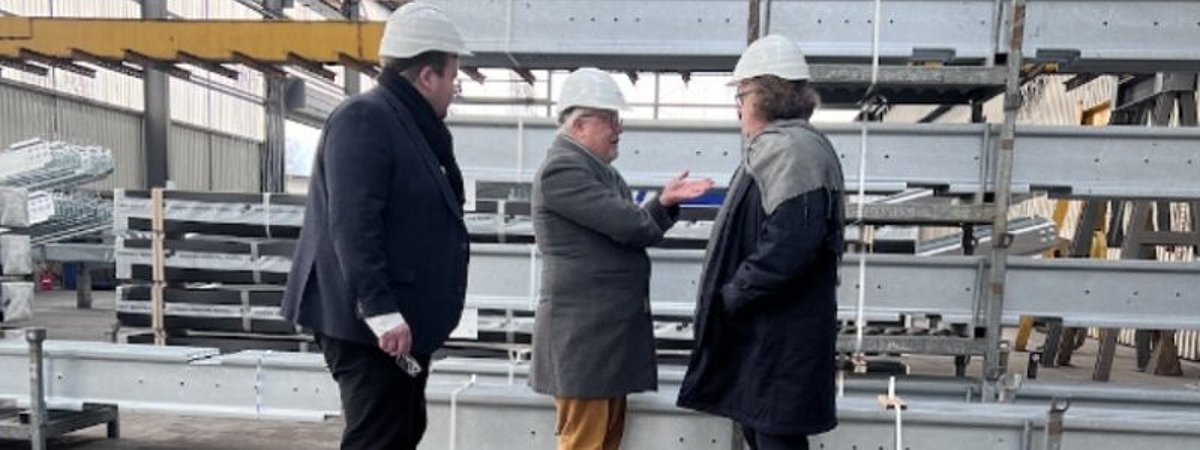
Jens Geier, SPD Member of the European Parliament, visited Lars Baumgürtel, ZVO Board Member and Managing Director of the Zinq Group, at the Gelsenkirchen site in mid-January 2026. They discussed the energy policy challenges facing medium-sized companies.
During a comprehensive tour of the Zinq plant, MEP Jens Geier gained detailed insights into the industrial practice of surface technology and the special energy policy challenges faced by energy-intensive SMEs. The tour was followed by an intensive political exchange. The German Surface Technology Association (ZVO) was represented by Lars Baumgürtel and Lukas Hanstein, ZVO Head of Policy. Wolfgang Jung from Klimahafen Gelsenkirchen completed the panel. The central topic of the discussion was the coupling of energy sources as a realistic and practical approach for the success of the industrial energy transition. There was agreement that the transformation of the energy supply in industry can only be successful if it is designed in a company-specific, technology-neutral and economically viable way. For many medium-sized industrial companies, a dual energy supply of electricity and gas is indispensable - both for reasons of security of supply and with regard to cost stability and process requirements. From the ZVO's perspective, three points in particular are crucial for this: maintaining the existing gas infrastructure as the backbone of a reliable energy supply in the transformation phase, expanding the grids in line with demand, based on real industrial load profiles, as well as incentives to increase flexibility on the demand side in order to be able to integrate industrial processes in a system-friendly and economical manner.
Surface technology plays a key role in the energy transition
The discussions made it clear that surface technology plays a key role in the energy transition. It is indispensable for numerous industrial value chains - from corrosion protection and functional coatings to applications in energy, mobility and future technologies. At the same time, it is itself dependent on a secure, affordable and flexible energy supply. The ZVO makes targeted use of such on-site meetings to familiarize political decision-makers with the reality of industrial processes and to feed practical solutions into the energy policy debate. The exchange in Gelsenkirchen has once again shown how important direct dialog between politics and industry is in order to make the energy transition competitive, SME-friendly and feasible. The ZVO will continue to intensify the dialog at European and national level and will continue to advocate for a realistic design of the energy transition in the interests of its member companies.
Contact details and information on the companies and institutions presented here can be found in our interactive surface technology industry directory.