
Saint-Gobain Abrasives: Almost completely CO2-neutral manufacturing process
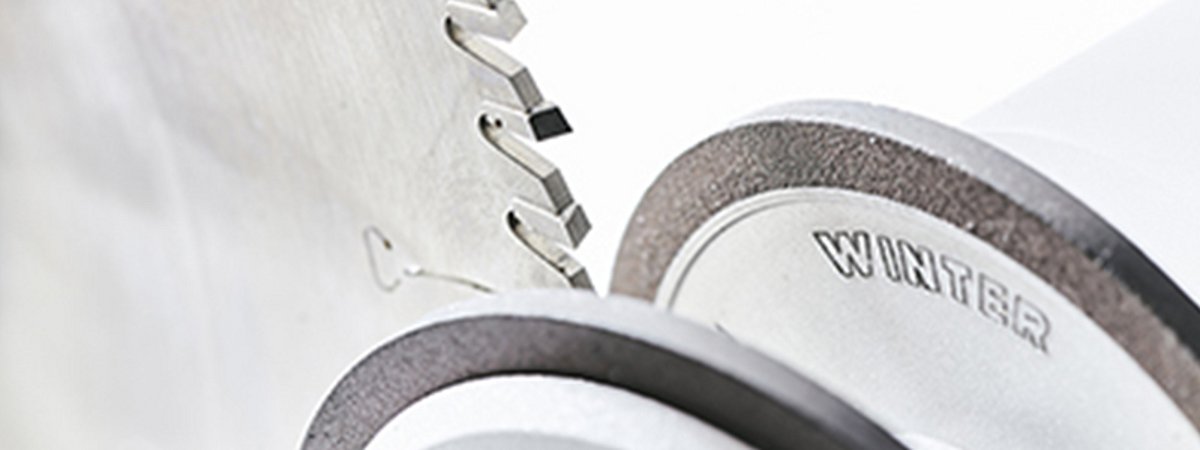
Since January 2023, Saint-Gobain Abrasives in Norderstedt near Hamburg has been producing diamond and cBN grinding tools of the Norton Winter brand with 100 percent "green" electricity. This made the plant the company's first site worldwide with an almost completely CO2-neutral manufacturing process.
As a leading manufacturer of abrasives and release agents, Saint-Gobain Abrasives has managed to avoid all "Scope 1" and "Scope 2" emissions, making Norderstedt the first site in the world to be able to produce almost CO2-neutral. This means that, compared to the 2017 values, around 5,000 metric tons of CO2 emissions are avoided each year. The focus of the successive conversion from fossil to sustainable energy was, among other things, the consistent replacement of all gas-consuming processes and installations. The Norderstedt plant currently has over 300 employees, covers a total area of 30,000 m2 and a production area of around 22,000 m2. "The realization of sustainable, resource-conserving production with all its processes represents an enormous challenge, not least from an economic point of view," emphasizes Christian Bako, Managing Director of Saint-Gobain Abrasives Central Europe. "At the same time, the efforts and investments are increasingly paying off on the market side, as many of our industrial customers are looking for solutions to reduce CO2 emissions themselves. The 'CO2 neutral' status achieved in Norderstedt offers real customer benefits and is a significant milestone on the important road to achieving our ambitious climate protection targets."
It took two years for all gas-consuming processes and installations at the Norderstedt plant to be first identified and then successively converted to sustainable electricity. At the same time, investments were also made in the plant's energy efficiency. "We started in 2020 with a comprehensive, holistic analysis and inventory to identify gas consumers and opportunities for improving energy efficiency," says plant manager Saqib Raja. "The measures derived from this ranged from minor changes to significant investments. For example, various building facades were insulated in line with the times, as well as pipes insulated, and the gas heaters in the electroplating shop were replaced with electric heaters." Another important step towards CO2 reduction was the implementation of variable controls that automatically adapt aggregates such as pumps, drives and compressors to the current workload and the resulting required process speed. "But we have not yet reached the end of our measures for environmental and climate protection. Further important investments are already planned for this year. For example, we will install an industrial heat pump for the heating and air conditioning of our plant, replacing district heating. Furthermore, photovoltaic potential analyses and corresponding installations are planned," Saqib Raja explains the next plans for the Norderstedt site.
Contact details and information on the companies and institutions presented here can be found in our interactive surface technology industry directory.