
PFAS restriction: ZVO and CETS promote practical solutions
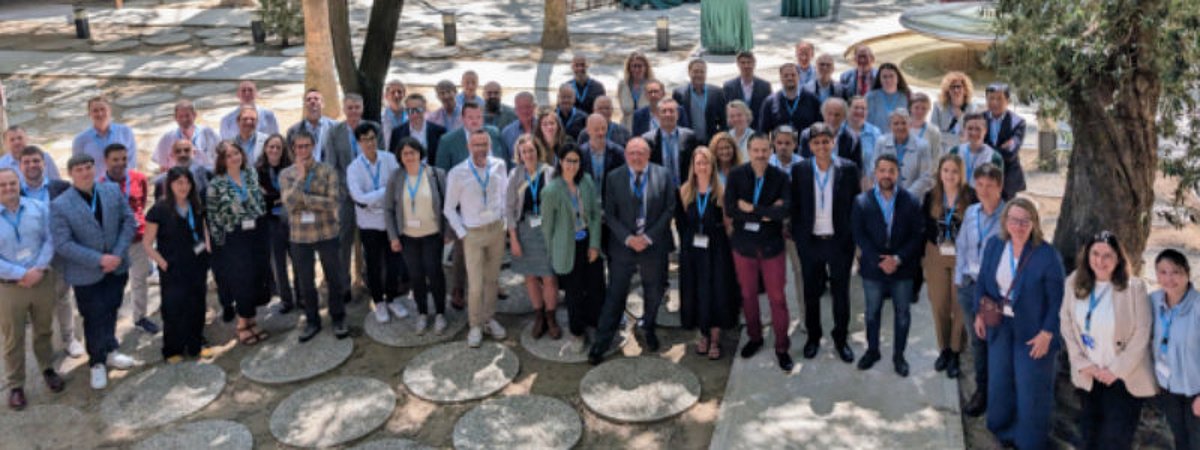
Representatives of CETS and ZVO took part in an exchange with representatives of the European Commission, industry, science, business and civil society organizations on the current PFAS restriction proposal of the European Chemicals Agency (ECHA) in Seville in May.
The talks on 5 and 6 May 2026 in Seville/Spain, which were attended by Dr. Malte Zimmer, President of the European umbrella organization CETS and ZVO Head of Environmental and Chemicals Policy, and Lukas Hanstein, ZVO Head of Policy, focused on the future regulatory structure for dealing with PFAS in Europe. It became clear once again that the debate on PFAS will increasingly become one of the key industrial policy issues in the coming years. A blanket ban on PFAS would have far-reaching consequences, particularly for European surface technology, which is indispensable in numerous key industrial value chains. The discussions in Seville showed very clearly that a large number of innovative technical solutions already exist today to specifically identify PFAS, reduce emissions and destroy substances in a controlled manner. Companies and technology providers from various countries presented specific processes and technical approaches that can enable responsible and economically viable handling of PFAS.
Solutions to the PFAS problem
In particular, it became clear that industry and research are working intensively on solutions to minimize environmental impact while continuing to enable essential industrial applications. Many of the technologies presented are already in practical use or are about to be scaled up for industrial use. From the ZVO's point of view, this underlines the fact that differentiated regulation is possible and that blanket bans are neither without alternative nor appropriate. In contrast, various NGO representatives continued to advocate the position of an almost complete ban on PFAS. However, hardly any concrete technical or economically viable alternative solutions for many industrial applications were presented. This is particularly problematic for industrial surface technology. PFAS are used in numerous processes for which no equivalent alternatives are currently available. This applies in particular to applications with high technical requirements where chemical stability, temperature resistance or special surface properties are absolutely essential. A regulatory approach that ignores these realities harbors considerable risks for industrial value creation and technological sovereignty in Europe.
Massive economic consequences of a total ban on PFAS
It became clear during the discussions that an almost blanket ban on PFAS would have considerable economic and social consequences. Small and medium-sized industries in particular, which are dependent on functioning and internationally competitive production processes, would be affected. In the view of the ZVO, there is a risk of production being relocated to non-European countries, a loss of industrial value creation in Europe and a threat to jobs in medium-sized industrial companies. Furthermore, in many cases a ban would not lead to an actual global reduction in PFAS, but rather to a relocation of production to regions with significantly lower environmental and safety standards. This would not help either environmental or consumer protection in the long term. From the ZVO's point of view, the talks in Seville made it clear that Europe needs differentiated, science-based and business-oriented PFAS regulation. The aim must be to reduce emissions where this is technically feasible, efficient and proportionate. A blanket ban approach does not do justice to the complexity of industrial applications and jeopardizes the competitiveness of Europe as an industrial location. Instead, we need regulation that is open to all technologies, realistic transition periods and greater consideration of industrial realities within European chemicals legislation. The ZVO and CETS will therefore continue to play an active role in the European PFAS debate and campaign for differentiated solutions.
Contact details and information on the companies and institutions presented here can be found in our interactive surface technology industry directory.