
Jowat Symposium 2026: Adhesives for the Circular Economy
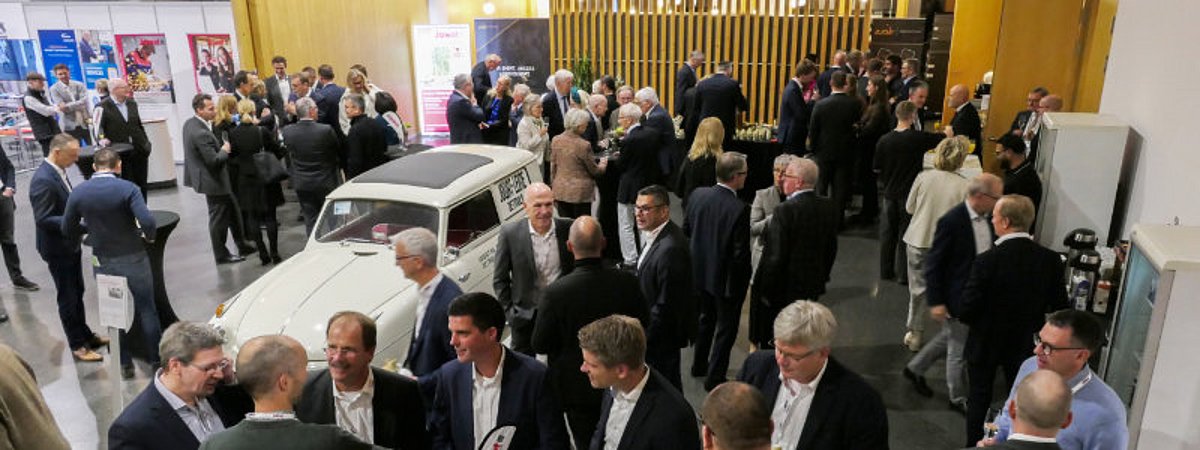
The 2026 Jowat Symposium focused on the role of modern adhesives in the circular economy. The symposium centered on bio-based materials, new raw material concepts, and innovative adhesive technologies.
How can adhesives help make industrial value chains more sustainable and resilient? The Jowat Symposium 2026 at the Haus der Technik in Detmold addressed this question. Experts from industry and academia came together to discuss current developments in adhesive technology and highlight new perspectives for the circular economy. For the first time, the focus was not on a single industry, but on adhesives themselves. Topics of focus included new sources of raw materials, bio-based materials, and recycled materials, as well as innovative approaches to resource-efficient and high-performance adhesive solutions. Presentations by experts from academia and industry provided insights into current research and development efforts. It became clear that the circular economy means far more than just the use of alternative or recyclable raw materials. Rather, the decisive factor is the interplay of material selection, product design, adhesives, and processes throughout a product’s entire life cycle. Alternative raw material concepts and new approaches to polyurethane development exemplified the possibilities that arise when established manufacturing and material solutions are reimagined. In-depth master classes also provided an opportunity for professional exchange.
Research Award for the Simulation of Adhesive Joints
Another highlight of the event was the presentation of the Jowat Adhesive Research Award. The award went to Felix Beule for his dissertation on predicting direction-dependent changes in the properties of adhesive joints due to relative displacements during curing. The thesis focuses on a challenge that arises, for example, when bonding steel and aluminum in automotive manufacturing: During curing, the materials can shift relative to one another due to their different thermal expansion rates, thereby influencing the subsequent properties of the adhesive bond. Felix Beule systematically investigated these effects and developed a methodology for experimental characterization and numerical prediction, as well as a simulation model. This allows manufacturing-related influences to be taken into account as early as the development and design stages of structural adhesive joints, enabling their behavior to be predicted more reliably.
Contact details and information on the companies and institutions presented here can be found in our interactive surface technology industry directory.