
Hansgrohe Wins Sustainability Award for Palladium Recovery
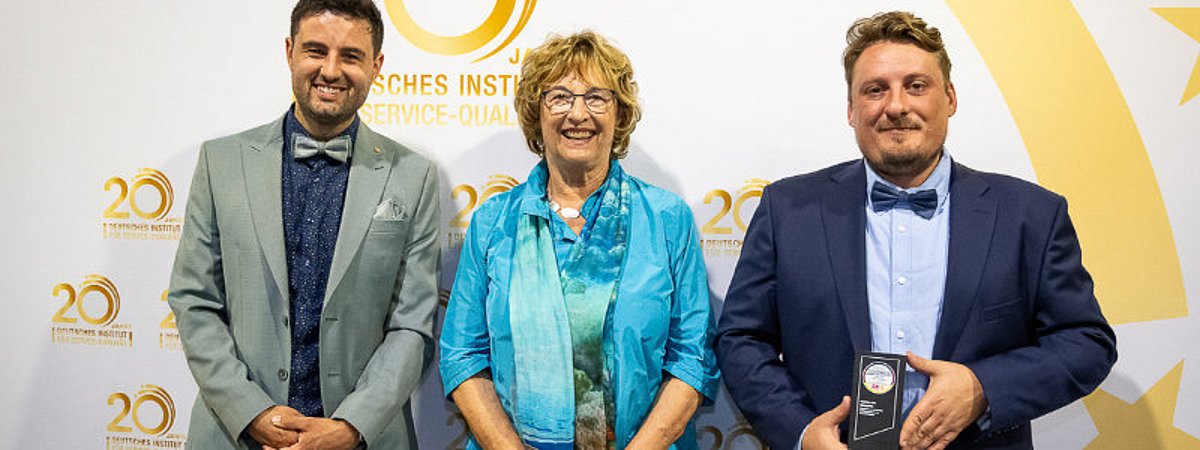
The Hansgrohe Group has been honored with the 2026 German Award for Sustainability Projects for its process for recovering palladium from process water used in plastic electroplating.
Thanks to this award-winning technology, Hansgrohe can recover the valuable raw material palladium directly during the production process and return it to the raw material cycle. In addition, the project is among the finalists for the 2026 Circularity Champion Award in the Recycling & Recovery category; the winner will be announced in October in Düsseldorf. Palladium is used in the electroplating process to make plastic surfaces conductive for subsequent metal plating. During the production process, small amounts of this precious metal end up in the rinse water. The challenge: The palladium, present in very low concentrations, must be recovered from a complex mixture of substances with a high degree of selectivity. To achieve this, the pretreated process water is passed through special adsorbent fleeces that selectively bind palladium.
Palladium Recovery from Process Water in Plastic Electroplating
Since 2018, process engineers at the Hansgrohe Group have been gradually optimizing the technology for industrial use. The German Textile Research Center North-West (DTNW) contributed its expertise in metal recovery as well as the adsorber fleece used; the technical implementation of the system was carried out by aqua plus Wasser- und Recyclingsysteme GmbH. Today, the technology is firmly integrated into the plastic electroplating operations at the Offenburg site. Each year, approximately five kilograms of palladium are recovered from process water and returned to the raw material cycle. In optimized closed-loop operation, up to 82 percent of the contained precious metal can be recovered. Compared to extracting the same amount of primary palladium, this results in a potential reduction of more than 150 metric tons of CO₂ equivalents per year. “Our palladium recovery process demonstrates how a circular economy can be successfully implemented on an industrial scale,” says Frank Semling, Chief Production Officer of the Hansgrohe Group. The approach also offers prospects for further applications in surface technology and the recovery of critical raw materials.
Contact details and information on the companies and institutions presented here can be found in our interactive surface technology industry directory.