
Fraunhofer IWS: Fluorine-free dry coating for batteries
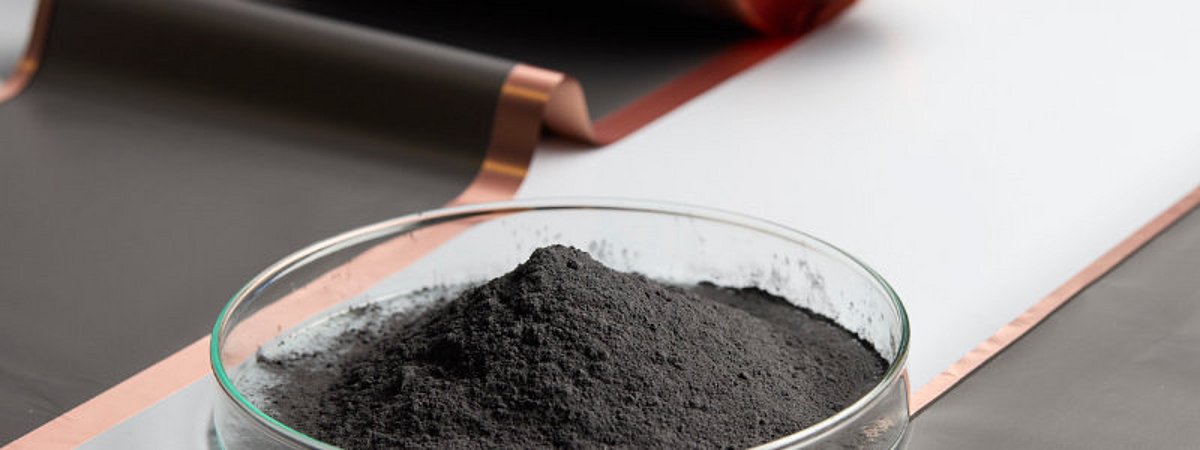
The "Fredy" project is developing new technologies for the dry coating of battery electrodes. Fraunhofer IWS and the Taiwanese ITRI are working together to develop fluorine-free binders and optimize active materials with atomic layer deposition (ALD).
The Fraunhofer Institute for Material and Beam Technology IWS is financing the work via the Fraunhofer ICON program, while the Industrial Technology Research Institute (ITRI) is contributing to the project from its own funds. The partners are targeting material manufacturers, plant manufacturers and cell producers and are aiming for industrial implementation within a few years of the end of the project. The Fraunhofer IWS is specifically promoting dry coating. The project "Fluorine-free binders and optimized active materials" increase the performance and improve the sustainability of cell production. Fredy combines new, innovative binders, modified active materials and industrial process chains for the first time. The aim is to achieve scalable production without fluorine-containing polymers while simultaneously improving electrochemical performance. "We link material development directly with process and system concepts and thus accelerate the transfer to industrial applications," says Dr. Benjamin Schumm, head of the Particle Technology department at the Fraunhofer IWS.
Dry coating as a key technology
Current dry coating processes often use binders based on polytetrafluoroethylene (PTFE), the production of which is based on perfluorinated and polyfluorinated alkyl substances (PFAS). This group of substances is the focus of regulatory and ecological discussions. The Fredy project is developing fluorine-free alternatives with comparable or improved processability. The Fraunhofer IWS is contributing its Drytraec technology and expanding it to include new material systems. The approach reduces the use of critical substances and strengthens the sustainability of electrode production. The manufacture of battery electrodes is one of the most energy and cost-intensive process steps in cell production. Conventional wet coating processes use solvents that have to be dried and recovered at great expense. This process requires large systems, high temperatures and a considerable amount of energy. Dry coating does away with these solvents. It significantly reduces energy requirements and simplifies the process chain. At the same time, it places high demands on the materials used, especially binders, additives and active materials. These must guarantee mechanical stability, electrical conductivity and uniform layer formation even without a liquid phase.
Atomic layer deposition technology
Against this background, new material concepts and integrated process approaches are becoming increasingly important. They will determine whether dry coating becomes established on an industrial scale and contributes to the economical production of modern battery cells. At the same time, the project is optimizing the active materials. The team is using ITRI's atomic layer deposition technology to apply defined coatings to particle surfaces. These "core-shell structures" increase the electrochemical stability and improve the performance of the cells. ITRI contributes its expertise in the development of such particle systems and complements the expertise of the Fraunhofer IWS in dry coating. The project is aimed at material manufacturers, equipment manufacturers and cell producers. The close integration of material, process and system development shortens development cycles and facilitates the transfer to industrial production. The collaboration also strengthens technological sovereignty in the battery sector in Germany and Taiwan. The project runs from September 2025 to August 2028.
Contact details and information on the companies and institutions presented here can be found in our interactive surface technology industry directory.