
Fraunhofer IST: Plasma simulation as the key to industrial processes
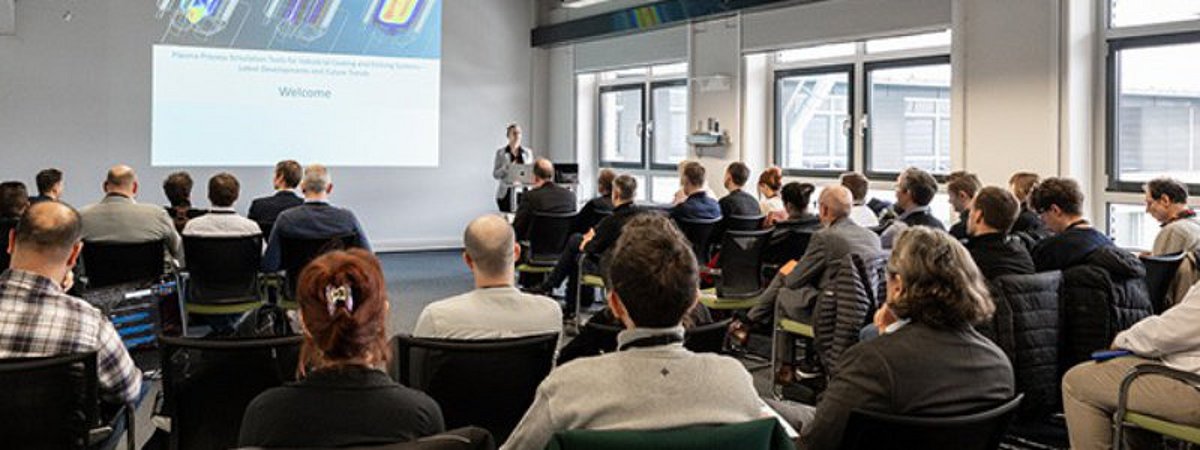
How can coating and etching processes be made more efficient, robust and data-driven? This question was the focus of the industrial workshop "Plasma Process Simulation Tools for Industrial Coating and Etching Systems - Latest Developments and Future Trends" organized by the Fraunhofer IST.
Almost 60 participants from twelve countries took advantage of the workshop "Plasma Process Simulation Tools for Industrial Coating and Etching Systems - Latest Developments and Future Trends", which the Fraunhofer Institute for Surface Engineering and Thin Films IST hosted together with Boltzplatz and PlasmaSolve in Braunschweig on January 28 and 29, 2026, to discuss the current status and future role of plasma process simulation. The focus was on practical solutions that combine simulation, data integration and industrial implementation. The first day of the workshop showed how simulation-based approaches are already contributing to the optimization of industrial processes and offered participants plenty of space for intensive exchange and networking in addition to specialist lectures and product presentations. Speakers from universities, industrial companies and research institutions highlighted topics such as data-integrated modelling, digital twins for thin-film processes, the simulation-based optimization of industrial coating systems and the use of modern simulation tools in real development environments. For the Fraunhofer IST, Dr. Dennis Barton presented how simulation-based models can be used to realistically map industrial sputtering processes and how digital twins can be used to optimize coating systems.
Simulations for industrial plasma and coating processes
The second day of the workshop focused on practical applications. In live demonstrations and hands-on sessions, participants were able to try out various simulation software directly. Open source plasma simulation tools, software platforms for simulation, data mining and machine learning as well as frameworks for coating profile prediction were presented. The workshop documented the great potential of simulation-based approaches for the further development of industrial plasma and coating processes. At the same time, it became clear how important the close exchange between research, software development and users is in order to exploit this potential in the future.
Contact details and information on the companies and institutions presented here can be found in our interactive surface technology industry directory.