
Fraunhofer IPA: Artificial intelligence avoids painting errors
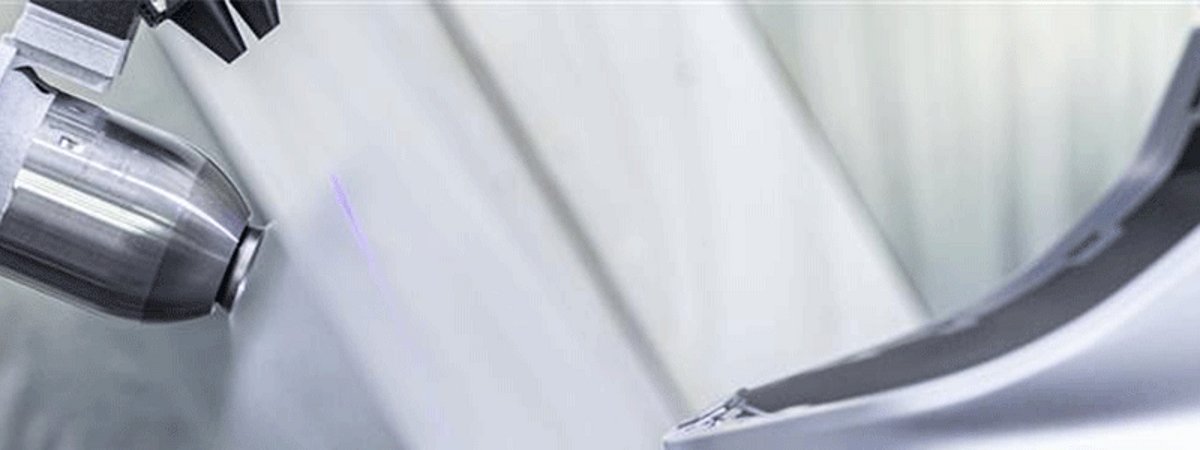
Intelligent algorithms could soon provide early warning of painting errors and machine failures. Fraunhofer IPA has carried out a series of painting tests on plastic components and trained an artificial intelligence with the resulting data.
The bumper of a car rests on a frame wrapped in aluminum foil. The arm of a robot approaches from the left, screeching. It assumes its starting position, pauses for a moment and then begins to spray paint. The robot repeatedly pauses briefly and changes position in order to paint the bumper evenly from all sides. However, the special feature of this scene from the Fraunhofer IPA paint shop remains largely hidden from the human eye: the painting process is monitored by artificial intelligence (AI). At most, the inline laser detector from the company AOM, which is mounted above the robot's spray nozzle, is conspicuous. It records the number, size and speed of the paint droplets. This information flows into a database. All measurement and process data from 30 different sensors are collected there. This includes data from the b+m system control: speed, voltage, valve circuits, the amount of paint used, the amount of air that directs the paint droplets, and so on. In addition, there are the results of the measurements taken on the finished painted bumper and the visual inspection by an experienced master painter: paint layer thickness (checked by Helmut Fischer), color tone, gloss, waviness, dirt inclusions.
Painting tests provide a database for artificial intelligence
Painting is still considered a process that cannot be consistently controlled. There is a risk of rejects, system failures and reworking because, for example, it is very often not possible to maintain the specified paint layer thickness everywhere. Oliver Tiedje, Head of the Coatings and Multifunctional Materials business unit at Fraunhofer IPA, has set himself the goal of reducing the number of errors in the painting process and machine downtimes with the help of AI in the "pAInt-Behavior" research project. Tiedje and his team therefore carried out a series of painting tests on plastic components from the automotive and commercial vehicle sector in the Fraunhofer IPA's painting technology center. Before each individual test, they changed the settings on the painting system, deliberately accepting errors. The inline laser detector and the other sensors on the painting system recorded everything and filled the database with quality data such as painting errors and coating thickness measurements, as well as with process data from the system control.
Results on painting processes transferable to other industries
A research team led by Brandon Sai, head of the Data-Driven Production Optimization research team at Fraunhofer IPA, had the database evaluated by two different machine learning methods. This resulted in a detailed AI behavior model that is now able to detect impending quality deviations in the painting process at an early stage and identify their causes. This allows the painting process to be continuously optimized without the need for manual intervention. "The results from our experimental painting processes can be transferred to any other products," says Tiedje. In recent months, the scientist has submitted a funding application for a follow-up project in which he would like to implement his AI-optimized painting process in practice. He is now looking for cooperation partners from industry. Further information on how artificial intelligence avoids painting errors can be found on the project page.
Contact details and information on the companies and institutions presented here can be found in our interactive surface technology industry directory.