
Empa: Thin intermediate layers strengthen multilayer materials
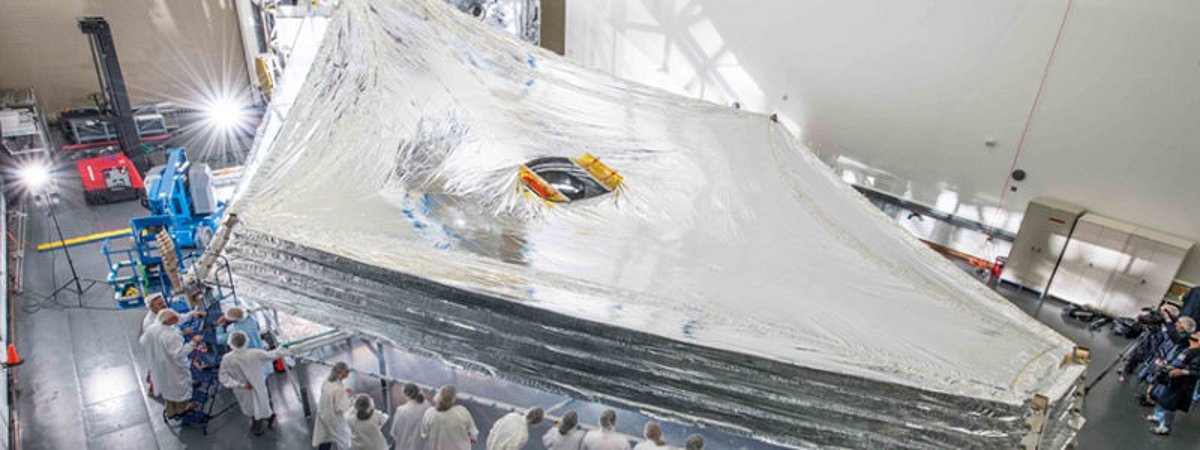
A polymer film coated with aluminum is used to protect satellites from temperature extremes. Researchers at Empa Thun are making the material even more resistant by using a wafer-thin intermediate layer.
Researchers at Empa in Thun are investigating multilayer insulation, a superinsulation consisting of several polymer layers with a mostly aluminum-containing metal coating, which is also known from rescue blankets. On board spacecraft, it protects the electronics from extreme temperature fluctuations of up to 150 degrees between the side facing the sun and the side facing away from it. As the insulation is directly exposed to space conditions, the resistant polymer polyimide is usually used. In addition to its temperature and vacuum resistance, this plastic is also characterized by the fact that the aluminium layer adheres particularly well to it. This is due to an intermediate layer just a few nanometers thick between the polymer and the metal, which Empa researcher Barbara Putz now wants to specifically investigate and exploit. The aim is to specifically adjust the properties of the superinsulation and thus improve both future satellites and flexible electronics on Earth. She received the Ambizione Grant from the Swiss National Science Foundation (SNSF) for this research project in 2020.
Five nanometer thin intermediate layer
Putz and her doctoral student Johanna Byloff are using a model system for their investigations: a 50-micrometre-thick polyimide film coated with 150 nanometres of aluminum. Between the metal and the plastic, the researchers apply a coating of aluminum oxide measuring just five nanometers. To ensure clean processing, the researchers use a coating machine from the Empa spin-off Swiss Cluster AG, which was founded in 2020 by researchers from the "Mechanics of Materials and Nanostructures" laboratory. The device makes it possible to apply several coating processes in succession to the same workpiece without removing it from the vacuum chamber. "Our combination of materials is the same as that used for space applications," says Byloff. "The only difference is that the intermediate oxide layer forms there naturally, whereas we produce it specifically, which allows us to adjust the properties." The solar shield of the space telescope, which measures 21 by 14 meters, also illustrates the demands placed on the material in space. In addition to the large temperature differences, the insulating layers are also exposed to mechanical stresses. "On the one hand, the solar shield was stowed away when the telescope was launched and had to unfold at the deployment site without the layers tearing or separating from each other," explains Byloff. "Secondly, particles and space debris can damage the film. It is important that the damage remains localized and does not spread as long cracks over the entire surface."
Thin intermediate layer makes the material more robust
The researchers put their model film through its paces, subjected it to stretching tests and temperature shocks and characterized it chemically and physically. The result: the intermediate layer makes the material more stretchable and significantly more resistant to tears and shear forces. Next, the researchers want to vary the thickness of the layer and apply it to other polymer substrates. "The natural intermediate layer only forms on polyimide and only in a thickness of five nanometers, which limits its usefulness," says Barbara Putz. "We expect that our artificial interlayer will enable multilayer systems on other polymers that were previously out of the question due to poor adhesion of the coating." Putz and Byloff also see a large field of application for their research in the area of flexible electronics, which is also based on metal-coated polymer substrates. Thin-film components for electronic devices usually have several layers of different materials. But here too, the mechanical properties could be improved through the targeted use of thin intermediate layers.
Contact details and information on the companies and institutions presented here can be found in our interactive surface technology industry directory.