
Busch Vacuum: Vacuum Technology Supports Manufacturing of CFRP Race Cars
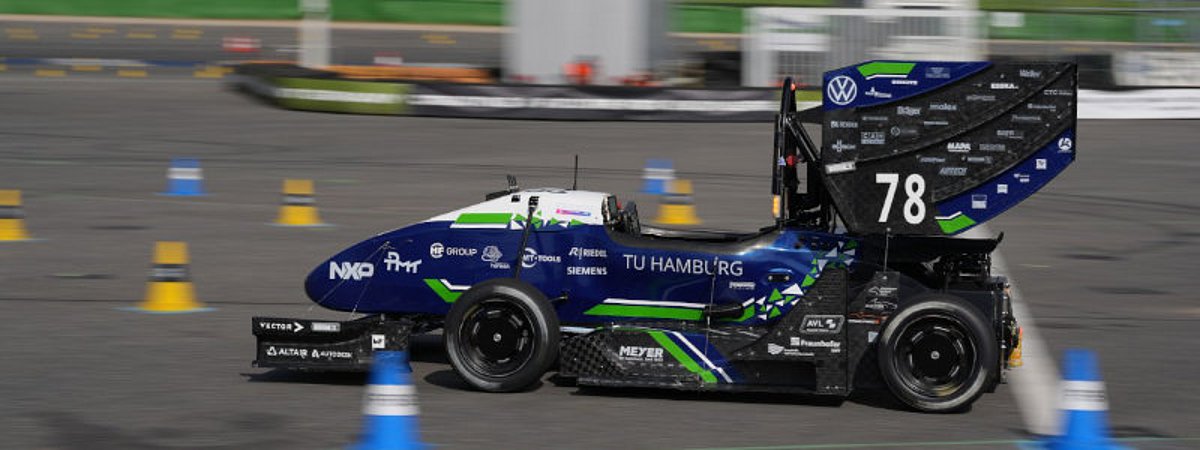
Busch Vacuum Solutions supports the Formula Student team at the Technical University of Hamburg with vacuum technology for the production of coated CFRP components. Precise vacuum processes improve the resin coating, enhance component quality, and reduce the weight of the race car.
Some time ago, Busch had already equipped the Formula Student team at the Technical University (TU) of Hamburg with a rotary vane vacuum pump. The students used it to manufacture carbon-fiber vehicle parts for their race car via vacuum infusion. Now the partnership is taking another step forward: Team E-gnition has also received the necessary accessories to ensure the long-term, reliable, and precise operation of the vacuum system. In the production of carbon-fiber-reinforced plastic components, carbon fibers are coated with resin and then bonded under vacuum. This process produces particularly lightweight and sturdy components. Minimizing the resin content improves the material properties and reduces the weight of the components—a decisive advantage in racing. Vacuum technology is crucial for these processes. The rotary vane vacuum pump provided by Busch Vacuum Solutions supports the team in various manufacturing processes, such as hand lay-up, vacuum infusion, or the so-called prepreg process. This process involves the use of fiber mats pre-impregnated with resin, which are compacted and cured under vacuum. The reliable vacuum helps reduce excess resin and trapped air. This improves component quality and reduces weight. The team also succeeded in reducing the weight of the aerodynamic package by about one kilogram on the current Egn25 race car.
Vacuum Technology for Lightweight and Stable CFRP Components
The accessories and consumables now provided to complement the pump help the Formula Student team maintain consistently high performance in their race car. These results are also evident in competition: In the Driverless Trackdrive discipline, the team took second place at the international Formula Student Germany competition in Hockenheim. In the driverless competition at the Hockenheimring, the students also took fifth place in the driverless category and currently rank eleventh on the global Driverless leaderboard. Formula Student is an international mechanical engineering competition that was launched in 1979 and in which more than 600 student teams from over 20 countries now participate. The goal is to provide students with practical experience in design, manufacturing, and project management.
Contact details and information on the companies and institutions presented here can be found in our interactive surface technology industry directory.