
AI for the coatings industry developed by researchers at Niederrhein University of Applied Sciences
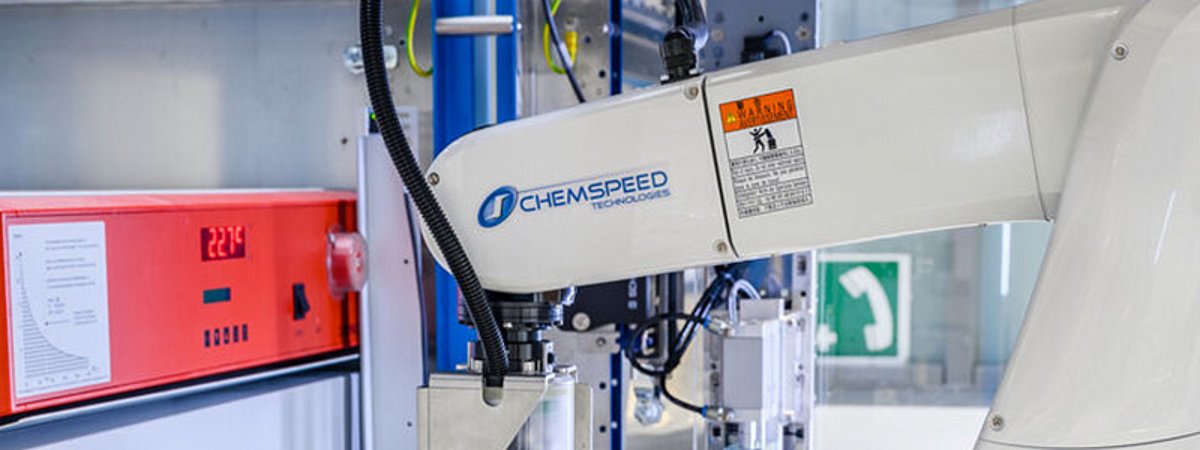
With the help of automation and artificial intelligence (AI), researchers at Niederrhein University of Applied Sciences want to be able to offer companies a more efficient and resource-saving way to develop new coatings and paints. The I²DACH project is funded by the German Federal Ministry of Education and Research with 1.4 million euros.
There is a great demand for environmentally compatible products in the coatings and paint industry. However, SMEs have to constantly adapt these to new requirements and legal regulations. These processes take too long from a competitive point of view. "In the chemical industry, digitization is also a crucial factor in the transition to a sustainable and competitive future," says Dr. Christoph Quix, Professor of Data Science at the Department of Electrical Engineering and Computer Science. "Normally, many different formulations are tested during development. We automate this process so that resources and also time are saved," says Prof. Dr. Quix. The project develops processes for formulating, applying and characterizing paints and coatings, which are then implemented on a modern high-throughput system at the Institute for Surface Technology HIT at Niederrhein University of Applied Sciences. Researchers from the fields of chemistry, automation and data science are working closely together on the project.
"We can additionally accelerate the development processes because artificial intelligence can calculate in advance whether a formulation is promising or should not be pursued further. So we are not only automating the mixing, application and testing of paints, but already the development of new paints," explains Prof. Dr. Quix. Currently, the Data Science expert is teaching the machine with data sets. Once a formulation has been developed, it can be applied in the system and tested for its properties. "In the process, the machine can already analyze a liquid coating for its properties in the dried state. So you save time here, too," Quix explains. After the coating is dry, other functions are checked, such as scratch resistance. "In a scratch test, the machine can objectively evaluate the quality. In the industry, manual test procedures are often still used, and the result is then very subjective. The machine always calculates the result based on the same criteria and is therefore more accurate," says Prof. Dr. Quix. In addition to the departments of chemistry and electrical engineering and computer science, Hesse GmbH & Co KG from Hamm and Orontec GmbH & Co KG from Dortmund are also project partners. The project will run for four years. Currently, the research is also producing four doctoral theses in cooperative doctoral programs with RWTH Aachen University and the University of Duisburg-Essen.
Contact details and information on the companies and institutions presented here can be found in our interactive surface technology industry directory.