
Aalberts develops chromium(VI)-free electrolyte for Selga-Coat
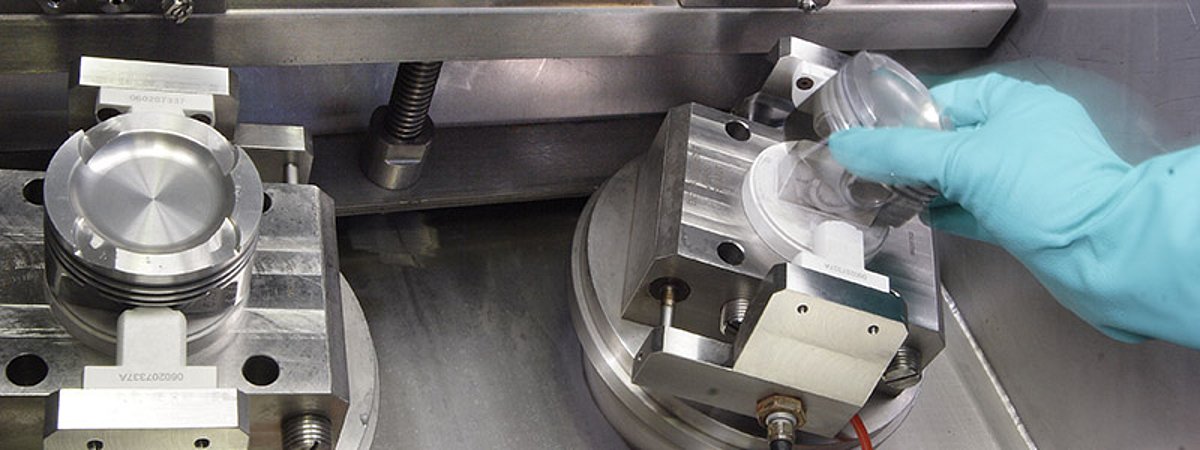
Until now, the use of an electrolyte containing chromium(VI) was unavoidable in Selga-Coat technology for the selective anodization of aluminum components in order to produce special coating properties. Due to the high toxicity of chromium(VI) oxide, a chromium(VI)-free electrolyte has now been developed for Selga-Coat.
The chromium(VI)-containing electrolyte previously used at Aalberts is characterized, for example, by the production of particularly smooth coatings even on aluminum casting materials with a high silicon content. Due to the high toxicity of chromium(VI) oxide and the legal requirements, the development of an alternative to the chromium(VI)-containing electrolyte has been the focus of research work at Aalberts Surface Technologies for some time. With the newly developed chromium(VI)-free electrolyte for Selga-Coat, it is now possible to produce anodic coatings with comparable properties in terms of coating thickness, hardness or roughness. The development thus secures the use of the process and contributes to sustainable and efficient anodizing. Selga-Coat is a technology for the selective electroplating of workpieces. In contrast to dip anodizing, only defined surface areas are selectively refined in selective anodizing. A delimited area of the component surface is flowed around by a rapidly circulating electrolyte, and accordingly only this delimited surface is anodized. This is because often a complete coating of the component is not necessary at all, but only certain surfaces on a component are to be functionally refined. In this case, it can happen that each partial surface to be coated is to have different coating properties. Another advantage of selective anodization is the short coating times, which can be less than 60 seconds for a layer thickness of 10 to 20 μm. Furthermore, if only those surface areas are anodized that also require it from a stress point of view, there are energy savings and thus fewer CO2 emissions.
The classic Selga-Coat electrolyte is characterized by the production of hard anodic coatings with lowest roughness even on high-silicon aluminum casting alloys. However, it contains chromium(VI) oxide, so it was necessary to develop a chromium(VI)-free solution that would continue to meet customer requirements by providing at least the same coating properties. After investigating a variety of acids and additives, a solution was found at Aalberts Surface Technologies: The new electrolyte is based on sulfuric acid with additions of molybdenum and tin compounds. It meets existing customer requirements, and the coating properties are comparable to those of the chromium(VI)-containing variant. Due to the material dependency of the anodic coatings, validation must be carried out by suitable sampling for new components and possibly additional coating requirements such as corrosion protection, in order to be able to evaluate individual material and component influences.
Contact details and information on the companies and institutions presented here can be found in our interactive surface technology industry directory.