
New Vehicle Paint Finish Achieves an Extremely Deep Black
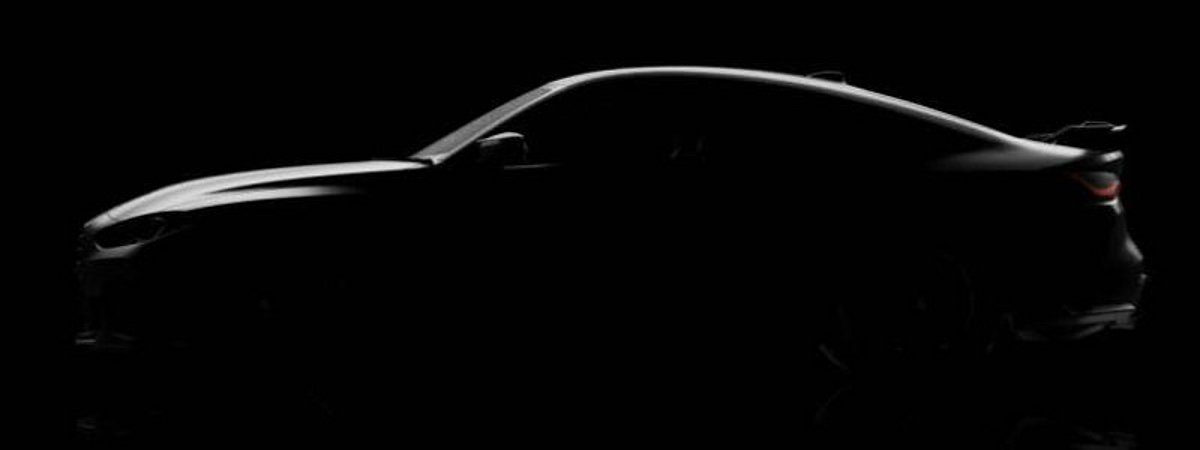
A newly developed automotive paint combines carbon black pigments with carbon nanotubes and nanostructures that absorb 99.9 percent of visible light. The technology is expected to pave the way for industrially producible, exceptionally deep-black automotive paints.
Chinese researchers have developed a novel automotive paint that produces an extremely deep black. The coating is based on a composite of nanoscale carbon black pigments and carbon nanotubes. By combining these materials with a special micro- and nanostructure, incident light is absorbed almost completely. This could enable the creation of exceptionally dark vehicle surfaces with a striking visual impact in the future. Unlike conventional automotive paints, the extraordinary blackness is not based solely on pigmentation, but on the interaction of light-absorbing nanomaterials and a structure that minimizes reflections. As a result, the surface appears significantly darker than conventional black automotive paints. A BMW concept car coated with Vantablack had already attracted attention back in 2019. The development now being presented, however, is explicitly aimed at industrial feasibility in automotive painting.
New Surface Technology for Jet-Black Automotive Paints
As reported by the journal *Matter & Light*, a key goal of the development was to ensure its transferability to industrial painting processes. The researchers integrated the composite of carbon black pigments and carbon nanotubes into a paint binder and applied it to a vehicle model using a spray coating process. Through the effect known as structural absorption, the coating achieves an average light absorption of 99.9 percent in the visible spectral range. It thus outperforms conventional black paints, whose light absorption relies solely on dispersions of carbon black pigments. The coating also demonstrated high long-term stability in water and moisture tests, underscoring its potential for industrial applications. Further work will now validate the coating’s processability and properties under real-world conditions. “In China, vehicle color has become a decisive selling point,” says author Zhiwei Liu, a research chemist at the Color Technology Group Core R&D Shanghai of the Nipsea Group. “Deep black paint finishes have long been the first choice and the signature color for luxury cars due to their elegant appearance, strong visual impact, and luxurious appeal. As a result, automotive paint manufacturers have been actively seeking innovations in color technology to develop production-ready, ultra-black paint solutions with extreme blackness.”
Contact details and information on the companies and institutions presented here can be found in our interactive surface technology industry directory.