
Lufthansa and Airbus Continue to Develop AeroShark Riblet Technology
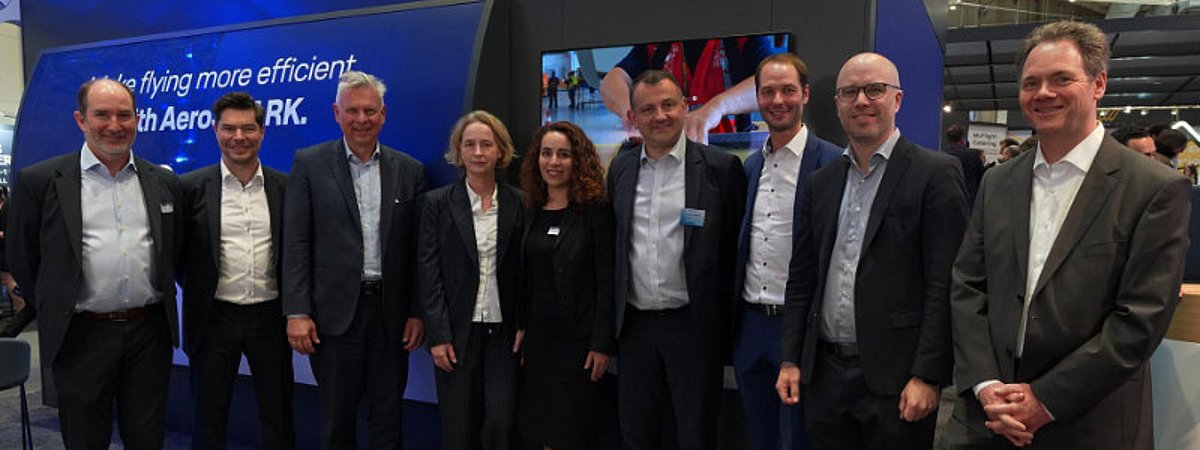
Lufthansa Technik and Airbus are collaborating on the development of AeroShark, a shark-skin-like surface technology for wings and tail surfaces. The goal of the collaboration is to obtain the world’s first commercial certification for this riblet technology.
Building on the ongoing AeroShark certification process for the fuselage and engine nacelles of the A330ceo, Lufthansa Technik is now expanding the technology to the wings and the horizontal and vertical stabilizers with support from Airbus. The project focuses on the technical feasibility and certification of AeroShark’s use on these surfaces. Following successful validation and approval by the European Union Aviation Safety Agency (EASA), the solution is slated for commercialization. Lufthansa Technik will hold the Supplemental Type Certificate (STC) and lead the certification activities. Responsibility for the overarching certification concept and its implementation lies with Lufthansa Technik’s engineering department, supported by Airbus’s engineering team, particularly through the provision of essential aircraft type data and safety-related assessments. From a technical perspective, the certification program will comprehensively evaluate the effects of the riblet application—including flight behavior, lightning protection, structural loads, maintenance aspects, and all relevant aircraft systems such as flight controls, autopilot, and navigation systems.
AeroShark Coating for Aerodynamic Surfaces
The application to the wings and horizontal stabilizer is intended to complement the AeroShark coating on the fuselage and engine nacelles, which is being developed separately by Lufthansa Technik and BASF Coatings. When applied to all relevant aerodynamic surfaces, a fully modified A330ceo is expected to achieve fuel savings of over two percent on typical long-haul flights—enabling airlines to achieve a significant reduction in operating costs and CO₂ emissions. By expanding AeroShark to additional aerodynamic surfaces, Lufthansa Technik aims to realize the full potential of riblet technology and contribute to more efficient long-haul operations of one of the world’s most widely used wide-body aircraft. “With the support of Airbus, we are developing a product solution that can contribute to the aviation industry’s decarbonization goals,” said Henning Linnekogel, Senior Director of OEM Partner Management at Lufthansa Technik. “Combining our expertise in modification and certification with Airbus’s in-depth aircraft know-how enables us to pave the way for a completely new application of riblet technology on the A330ceo.”
AeroShark Surface Technologies Reduce Fuel Consumption and CO₂
“AeroShark has already impressively demonstrated the potential of biomimetic surface technologies for reducing fuel consumption and CO₂ emissions in commercial aviation,” explained Andrew Muirhead, Vice President of OEM and Special Engineering Services at Lufthansa Technik. “Since our goal is to support as many airlines as possible in achieving their sustainability goals, we are continuously developing AeroShark—through certification for additional aircraft models such as the A330ceo, as well as by expanding its application to even larger and aerodynamically highly effective surfaces.” The functional film mimics the unique properties of shark skin and reduces aerodynamic drag thanks to its riblet structure. The principle of drag reduction through riblets has been scientifically recognized for decades. Lufthansa Technik and BASF Coatings have successfully adapted this principle for the demanding conditions of daily flight operations, making AeroShark currently the only certified solution for commercial aviation. To date, large-scale AeroShark modifications have been implemented on 30 Boeing 777s from various airlines, as well as on a Lufthansa Boeing 747 that served as a test platform. This number is steadily increasing and demonstrates the efficiency of the riblet film in daily operation. As of April 2026, aircraft equipped with AeroShark have already logged more than 350,000 flight hours, saving over 20,600 metric tons of kerosene and reducing CO₂ emissions by more than 65,000 metric tons.
Contact details and information on the companies and institutions presented here can be found in our interactive surface technology industry directory.