
AkzoNobel supplies protective coatings for energy project
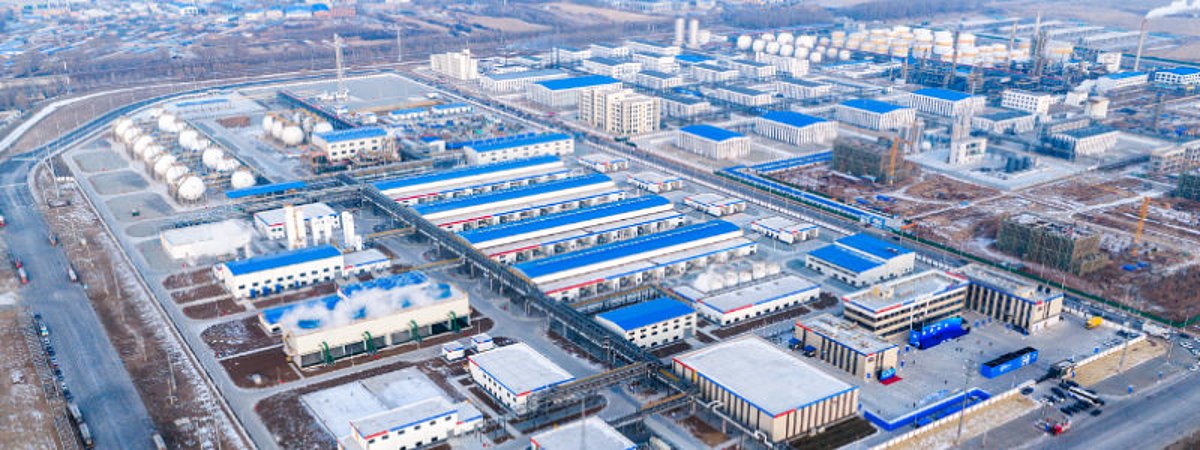
High-performance coatings from AkzoNobel protect a green energy project in an industrial park in China—which houses wind power and chemical processing facilities—from corrosion; it is the largest project of its kind in the world.
AkzoNobel’s International brand supplies durable anti-corrosion coatings as well as chemical- and heat-resistant coatings for the wind power and chemical processing facilities at the Songyuan Hydrogen Energy Industrial Park. Built by China Energy Engineering Group Co., Ltd., the industrial park is the world’s largest integrated project for green hydrogen, ammonia, and methanol. The industrial park, currently in its second phase, is powered entirely by renewable electricity and is currently focused on producing 45,000 tons of green hydrogen annually, as well as 200,000 tons of green ammonia and methanol. Wind turbines and chemical plants are exposed to harsh outdoor conditions such as severe corrosion and extreme temperature fluctuations. AkzoNobel’s International brand products offer a range of key benefits to address these challenges. The state-of-the-art steel structure is protected by a coating system comprising Interzinc 52E, Interthane 990E, and Intergard 475HS. This ensures lower VOC emissions compared to conventional products while providing excellent corrosion protection. For critical piping and ammonia tanks, Interbond 2340UPC was selected due to its ease of application and its global reputation for protection against CUI (corrosion under insulation), which is certified to the latest standards. Hydrogen storage spheres were coated with Interseal 670HS, combined with a topcoat.
Corrosion protection coatings for extreme production environments
“We are fully focused on helping our customers overcome the challenges of extreme production environments and complex operating conditions,” says Rob Leslie, General Manager of the company’s Marine and Protective Coatings business unit in China. “We will continue to tailor our protective solutions in China to support the energy sector’s ambitions for carbon neutrality.” AkzoNobel has reduced its own Scope 1 and Scope 2 emissions by 47% (compared to the 2018 baseline) and aims for a 50% reduction across the entire value chain by 2030. A key factor in this is the company’s increasing use of electricity from renewable energy sources, which reached 69% by the end of 2025. Construction work on the Songyuan project began in 2023. It encompasses the entire industrial chain, from renewable electricity to green hydrogen and green ammonia and methanol, thereby addressing a major global challenge: balancing the fluctuations in renewable electricity supply with the stability required for chemical production.
Contact details and information on the companies and institutions presented here can be found in our interactive surface technology industry directory.